Reflective Satellites Spark FCC Ecological Concerns
Reflective satellites face FCC review as scientists warn expanded LEO plans could disrupt light-dark cycles, ecosystems, and health.
Jason Kwon ·
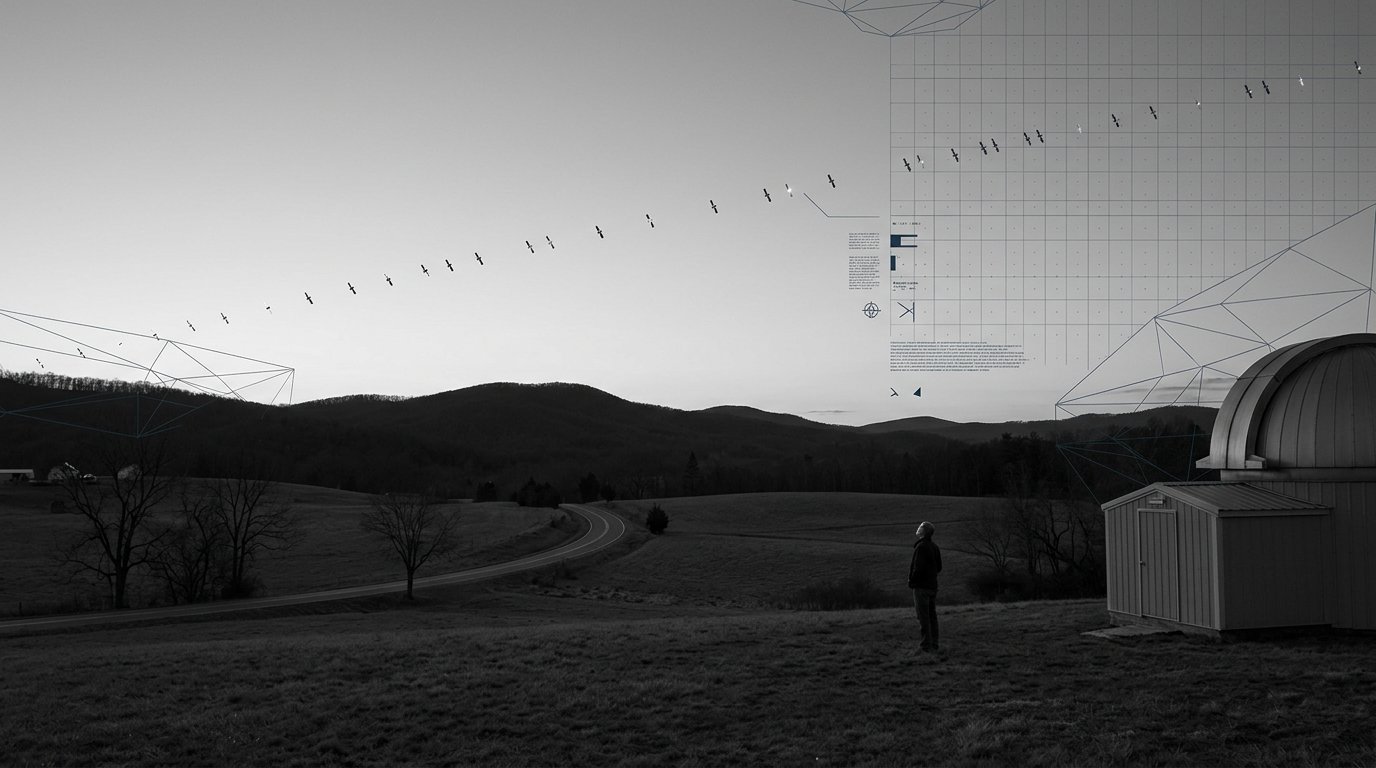
Four international scientific societies representing about 2,500 researchers in more than 30 countries have submitted formal concerns to the U.S. Federal Communications Commission (FCC) over proposals involving reflective satellites and a major expansion of low Earth orbit (LEO) satellite constellations. The groups said the plans could affect global ecosystems and human health by changing natural light-dark cycles that many species rely on.
The FCC is reviewing a proposal from Reflect Orbital to use reflective satellites to illuminate parts of Earth at night. It is also considering applications from SpaceX to launch up to one million additional satellites. Scientists said the combined scale of these initiatives, and especially the idea of intentionally brightening the night environment, would represent a significant shift in how artificial light is introduced into the natural world.
Researchers focused particular attention on Reflect Orbital’s concept, which they said could adjust brightness from “full moon to full noon” across areas about 5–6 km wide. They described this as a substantial alteration of the night-time light environment, with potential consequences that extend beyond astronomy and into biological systems that depend on predictable day-night patterns.
Scientists said disruptions to the light-dark cycle can interfere with biological clocks that regulate sleep and hormone secretion in humans and animals. They also warned that nocturnal species could see changes in migration behavior, while plants could experience disruptions to seasonal cycles. The researchers further pointed to marine impacts, noting that the rhythms of marine phytoplankton—described as fundamental to ocean food webs—could be affected by altered light conditions.
Prof. Charalambos Kyriacou, president of the European Biological Rhythms Society, highlighted potential global implications for food security and stressed that plants require natural night conditions. Separately, DarkSky International, a non-profit organization, said existing satellites have already increased diffuse night sky brightness by about 10%, underscoring that measurable changes are already being observed.
Additional projections cited by the researchers came from Dr. Miroslav Kocifaj of the Slovak Academy of Sciences. He estimated that satellite-driven night sky brightness, currently adding about 3–8 microcandela per square meter, could rise to about 5–19 microcandela by 2035. The scientists said this trajectory would bring conditions close to the threshold for preserving naturally dark skies.
In their submission, the researchers urged regulators to carry out comprehensive environmental reviews and to set limits on satellite reflectivity and cumulative night sky brightness. While the FCC’s review process continues, the scientists framed the issue as inherently global, arguing that changes to night-time light conditions can cross borders and affect ecosystems and human communities far from where satellites are licensed or operated.