Romania summons Russian envoy over drone incursions
Romania summons Russian envoy after three drones were destroyed in Romanian airspace in three days, including a Sunday F-16 engagement over the Black Sea.
Atlas Newsdesk ·
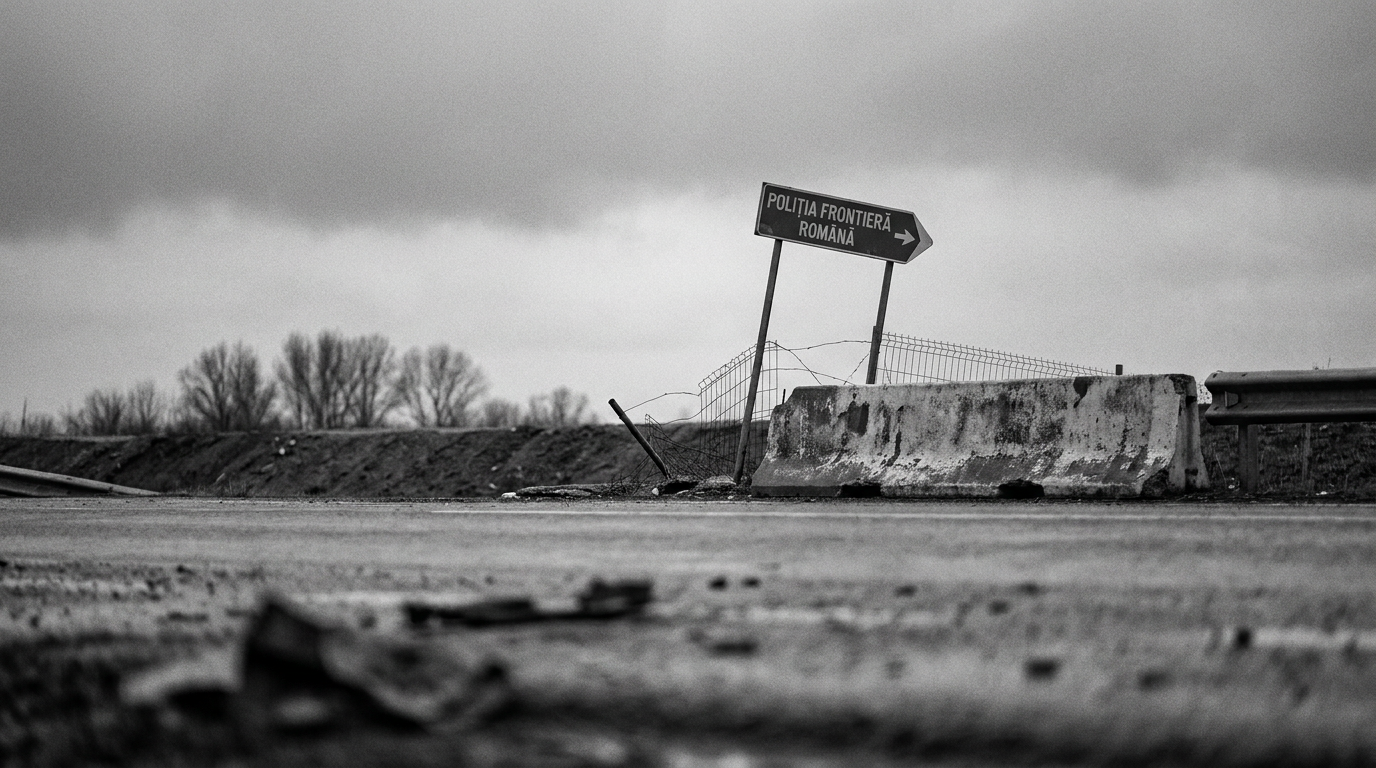
Romania’s Ministry of Foreign Affairs summoned the Russian ambassador on Monday after Romanian forces intercepted and destroyed three unmanned aerial vehicles that entered Romanian airspace over the past three days, officials said.
The latest incident took place on Sunday, when a Romanian F-16 fighter jet engaged a drone over the Black Sea. Officials described it as the third neutralization since Friday, underscoring what Romania portrays as a recurring airspace problem along its NATO-protected border.
Three drone incidents in three days
Officials said the recent incursions follow a mechanism Officials said the recent incursions follow a mechanism in which Russian-manufactured Shahed-model drones, linked to the war zone in Ukraine, drift into Romanian territory. Romania views these crossings as airspace violations that require a more direct operational response than in earlier cases. Romania’s approach has shifted from passive tracking to active engagement, according to officials. That change follows legislation enacted in 2025 that authorizes the destruction of unauthorized aerial targets inside Romanian airspace. Shift in defenses: F-16s and counter-drone systems In responding to the recent incidents, the Romanian military has used standard interceptor aircraft and the recently integrated U.S.-made Merops counter-drone system, officials said. The stated aim has been to reduce the risk posed by unauthorized drones entering Romanian airspace from the direction of the Black Sea and the nearby conflict zone.
Authorities said investigations into the origin of the Authorities said investigations into the origin of the drones involved on Saturday and Sunday are still underway. In contrast, officials confirmed that wreckage recovered from the Friday incident was from a Russian-operated model.
Procurement pressure across NATO’s eastern flank
Officials said repeated airspace violations are accelerating Romania’s procurement cycle for ground-based air defense systems. They also described a wider effect across NATO’s eastern flank, where the need to counter small, hard-to-detect aerial targets has become more urgent in operational planning.
Romania’s move to summon the Russian ambassador signals that the issue is being treated not only as a military matter, but also as a diplomatic one. The timing highlights how quickly tactical incidents can raise alliance-level sensitivities along the Black Sea border.
Unknowns and near-term readiness
Key questions remain unresolved while the Saturday and Sunday investigations continue, including the precise origin and route of those drones, officials said. Even with confirmed wreckage from Friday, Romanian authorities have not stated that every recent intrusion involved the same operator.
Officials said the pattern of incidents requires a sustained increase in NATO air patrol sorties and defensive readiness along the Black Sea border throughout the coming quarter. The emphasis, they said, is on maintaining consistent surveillance and a posture capable of rapid engagement when drones enter protected airspace.
Implications
Country Impact: Romania’s decision to summon the Russian ambassador elevates the incidents from an air-defense issue to a diplomatic dispute. The active-engagement posture, enabled by 2025 legislation, indicates Romanian authorities intend to keep intercept options on the table for future incursions.
Industry Impact: The reported acceleration of procurement for ground-based air defense systems points to increased demand for capabilities designed to detect and counter small unmanned aerial vehicles. The use of both interceptor aircraft and the U.S.-made Merops counter-drone system illustrates a layered approach that can shape requirements for further acquisitions.
Market Impact: Officials’ reference to a sustained increase in NATO air patrol sorties and readiness along the Black Sea border suggests continued operational tempo through the coming quarter. That posture can influence near-term defense planning and resource allocation across NATO’s eastern flank, based on the repeated airspace violations described.