Rick Rubin on AI as a co-pilot reshaping creative labor margins
Explore how AI acts as a creative tool, not a replacement. We analyze the shift toward curatorial skills and the labor-policy implications for creators.
Edward Mullen ·
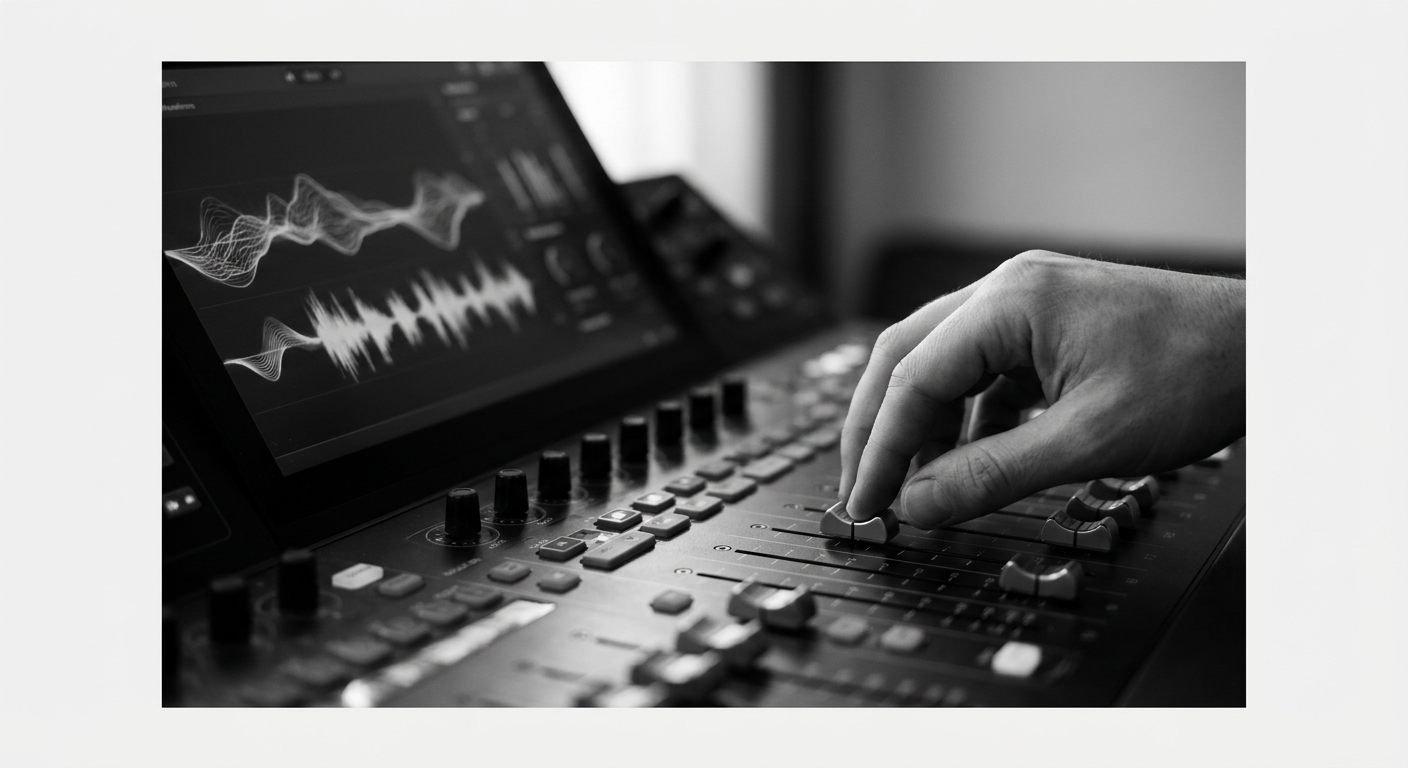
The common fear that artificial intelligence will supplant human creatives misses a crucial nuance: AI is better understood as a sophisticated co-pilot. This challenges the notion of AI as an existential threat, instead proposing a future where creative labor pivots from generating initial concepts to expertly refining and applying human taste to AI-produced options. The value isn’t in the machine’s output, but in the human hand that guides it.
The AI co-pilot, not a replacement Rubin’s framing places AI as an accelerant rather than a supplanting force. AI’s role is to generate options, surface possibilities, and explore design-space faster than human teams could alone. The value, then, rests on human curation: taste, intent, and the ability to steer AI outputs toward culturally resonant work. This implies a shift in labor demand from solitary generation to collaborative guidance, model-tuning, and rights-management, where humans translate AI suggestions into portfolio-worthy pieces. The signal from Rubin’s dialogue suggests that the core problem for teams is not “can the machine create?” but “how should humans edit, select, and sequence AI-generated material to maximize impact?”
Margin shift, not mass headcount If AI acts as a co-pilot, creative margins tighten in predictable ways: the cost of idea generation drops, while the premium on curatorial, narrative, and brand-aligned guidance rises. In practical terms, studios and agencies may reduce marginal spend on brute-force generation, yet increase investment in roles that assess AI outputs for taste, copyright strategy, and audience alignment. The labor-market effect is not zero-sum; it reallocates compensation toward skilled, high-signal activities—what we might call curatorial refinement and strategic direction. This aligns with the broader labor-policy lens: the value sits in governance, curation, and the ability to monetize AI-assisted output through distinctive artist-brand alignment rather than simply increasing volume of generated content.
What the source omits: the economics of value capture The primary signal emphasizes creative augmentation but offers little on how value is ultimately captured by individuals or organizations when AI becomes a common workflow. The missing piece is an explicit mechanism for translating AI-assisted outputs into recurring revenue for creators, studios, and platforms. Without clear models for licensing, royalties, authorship governance, and compensation tied to AI-generated work, margins may drift rather than rise. This is the load-bearing omission that a labor-focused lens highlights: if curatorial labor becomes the differentiator, how do agents, managers, and producers ensure a stable income stream for creative professionals amid democratized generation?
Signals to watch in the coming months
Three concrete signals would test the margin-shift thesis. First, major labels’ A&R functions would need to show measurable reallocation—from traditional scouting toward AI-assisted discovery and nuanced coaching of artists.
Second, streaming platforms would need to publicly catalog AI-generated content that achieves material listenership and revenue, validating a new category that hinges on guidance and curation rather than raw generation. Third, independent artists’ income surveys would need to reflect a meaningful impact—positive or negative—driven by AI tools, beyond philosophical debate about creativity.
If those signals fail to materialize, the co-pilot framing may prove overstated for labor-market outcomes.
Implications for studios, agencies, and freelancers
If the margin-shift thesis holds, leadership should reframe hiring, retention, and compensation around curatorial expertise and brand alignment skills—roles that amplify AI outputs rather than merely produce more content. For studios, this could mean longer-term partnerships with artists and managers who excel at guiding AI-driven projects through cultural filters.
For freelancers and small shops, the opportunity lies in building reputations as AI-savvy tastemakers who translate data-derived suggestions into distinctive, marketable works. The balancing act will require governance frameworks for authorship, royalties, and contract terms that recognize co-authored AI-human outputs.
In short, the next 12–18 months could crystallize a procurement-and-talent story rather than a pure technology one, with winners defined by the ability to translate AI-assisted generation into durable creative value.
A 6–month horizon: what to watch for in practice Executives should monitor whether AI-enabled workflows sufficiently augment editorial and artistic direction without eroding professional autonomy. If curatorial roles prove indispensable to scale, budgets should shift toward talent development, model-briefing processes, and licensing scaffolds rather than chasing ever-larger compute or more aggressive generation. The conversation moves from “can the tool create?” to “who guides the tool, and how is that guidance rewarded in the market?” That shift would signal a durable margin realignment across the creative economy, one where AI amplifies human capacity rather than simply replacing it.