Photographer Raghu Rai dies at 83 after decades of work
Indian photojournalist Raghu Rai has died at 83, ending a career that documented politics, crises, and culture for more than five decades.
Ayla Demirhan ·
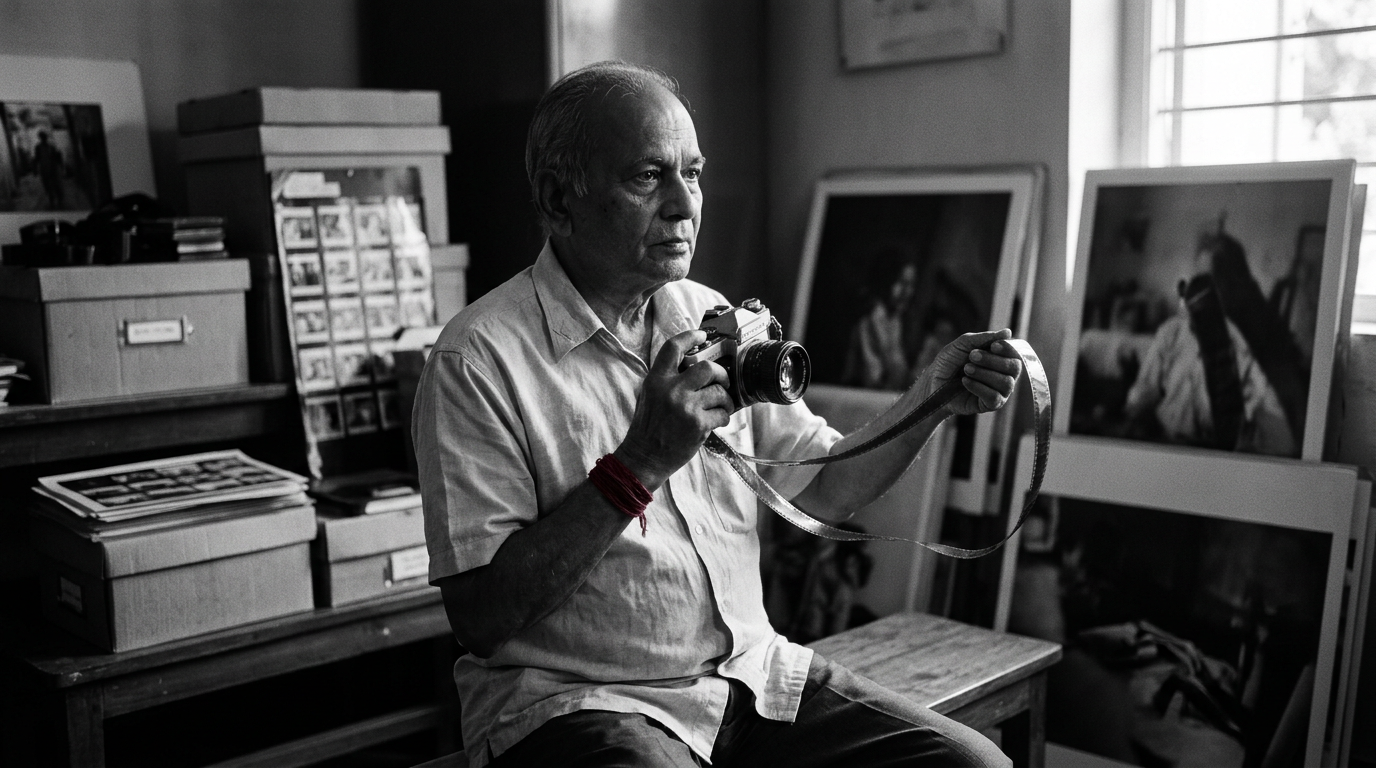
Raghu Rai, one of India’s best-known photojournalists, has died at the age of 83, closing a career that spanned more than five decades. His photographs documented political leadership and everyday life, shaping how major events and public figures were visually remembered.
Rai’s work circulated through newspapers, magazines, and international agencies, giving his images a reach that extended beyond India. Officials and institutions were not cited in the source material for the circumstances of his death, and no further details were provided.
From The Statesman to major magazine newsrooms
Rai began his professional career in 1966 at The Statesman India Today Sunday Those roles placed him inside India’s fast-changing news and magazine environment during a period marked by significant political and social shifts. The source material describes his position as central to the country’s evolving editorial culture.
Magnum Photos and international recognition
In 1977, Rai joined Magnum Photos For global audiences, the source material notes that Rai’s career illustrates how national histories can be interpreted through photographs that travel across borders via agencies, magazines, and archives.
Political leaders, national crises, and cultural figures
Rai’s archive includes widely recognized photographs of former Prime Minister Indira Gandhi, taken during election campaigns and party meetings. His work also covered major crises, including the 1984 Bhopal gas tragedy.
He produced images connected to the 1980s militancy in Punjab, reflecting the risks and responsibilities associated with frontline visual reporting. Beyond politics and conflict, Rai photographed cultural figures including singer Lata Mangeshkar and filmmaker Satyajit Ray.
Together, these assignments and portraits formed what the source material describes as a broad visual map of Indian society, spanning leadership, tragedy, and the arts.
Method, style, and questions around the archive
Rai described his approach as requiring deep involvement with the people he photographed, at times characterizing the process as a spiritual connection. His body of work has been recognized for combining journalistic documentation with careful composition, producing images that function both as news records and crafted visual statements.
The source material adds that the full scope of Rai’s legacy will depend on how his extensive archive is preserved, organized, and accessed in the years ahead. It also notes uncertainty over which parts of his long record will receive the most attention through future curation and retrospectives.