US Drought Grips 80% of Nation, Breaking Records
U.S. drought reaches record reach, affecting 80% of the contiguous country in late 2026, raising risks for crops, fires, and water supplies.
Ayla Demirhan ·
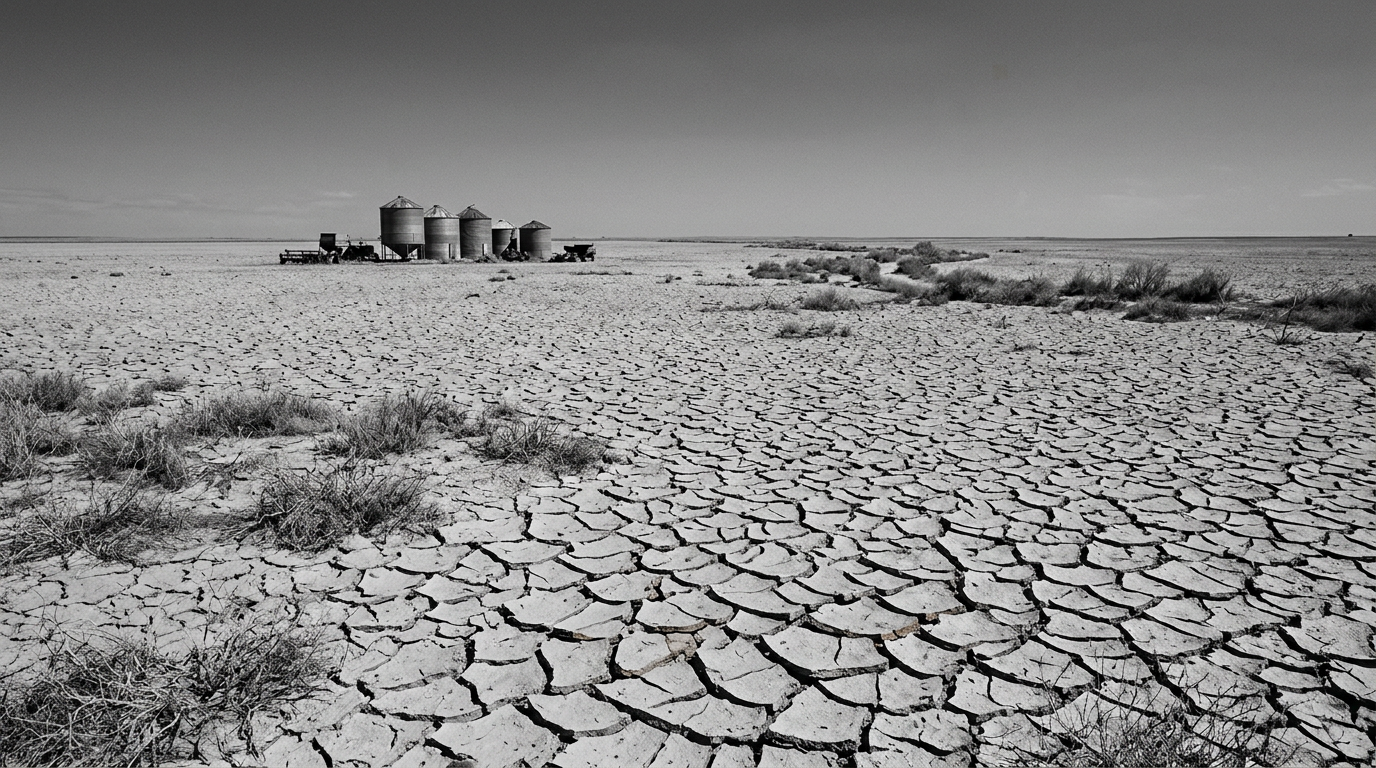
The contiguous United States is facing its broadest drought in more than two decades, affecting 80% of the country as of late 2026. The scale of the dry conditions is raising alarms about farm production, wildfire danger, and pressure on water supplies across multiple states. Officials and stakeholders are treating the situation as a major step up from recent years, with effects expected to extend beyond the current season.
The drought has been linked to persistent high-pressure systems combined with below-average precipitation across large parts of the nation. Those weather patterns have contributed to critically low reservoir levels in western states, while river flows have fallen and soils have dried out in key agricultural areas. The Midwest and Plains regions are among the areas described as having parched farmland, adding to concerns for crop and livestock operations.
Authorities and market participants are watching the next growing season closely, as the severity of the drought is expected to continue into that period. If conditions persist, the strain on agricultural output could deepen, with reduced crop yields and shortages of livestock feed cited as key risks. The source material describes these pressures as likely to translate into higher food prices, reflecting tighter supply conditions tied to the drought’s reach.
Beyond agriculture, the dry spell is also increasing the risk and potential intensity of wildfires, particularly in western and southwestern states. The elevated fire threat is described as a danger to communities and ecosystems, adding another layer of disruption alongside water scarcity.
The combination of low moisture, stressed vegetation, and ongoing heat and dryness can create conditions in which fires spread more quickly and become harder to contain, according to the concerns outlined in the source.
Water management authorities are responding with stricter conservation measures aimed at protecting both urban and agricultural supplies. With reservoirs described as critically low in parts of the West and river flows reduced, the drought is forcing difficult allocation decisions across competing uses.
The source material does not specify which states have adopted which measures, and it does not quantify reservoir declines, leaving uncertainty about how unevenly the impacts are distributed and how quickly conditions could change if precipitation patterns shift.
Internationally, the drought’s scale matters because the United States is a major producer of agricultural commodities, and changes in output and pricing can ripple through global food markets. The same conditions that heighten wildfire risks and strain water systems can also affect logistics and regional economic activity, with potential knock-on effects for insurers, utilities, and public budgets.
For now, the central unknown remains how long the high-pressure pattern and precipitation shortfalls will persist into the next growing season.