Ray Dalio Warns U.S. Debt Strain Could Bite by 2028 Election
Ray Dalio warned that U.S. fiscal gaps, Treasury demand and election gridlock could create a fragile period between 2026 and 2028.
Cuneyd Erdogan ·
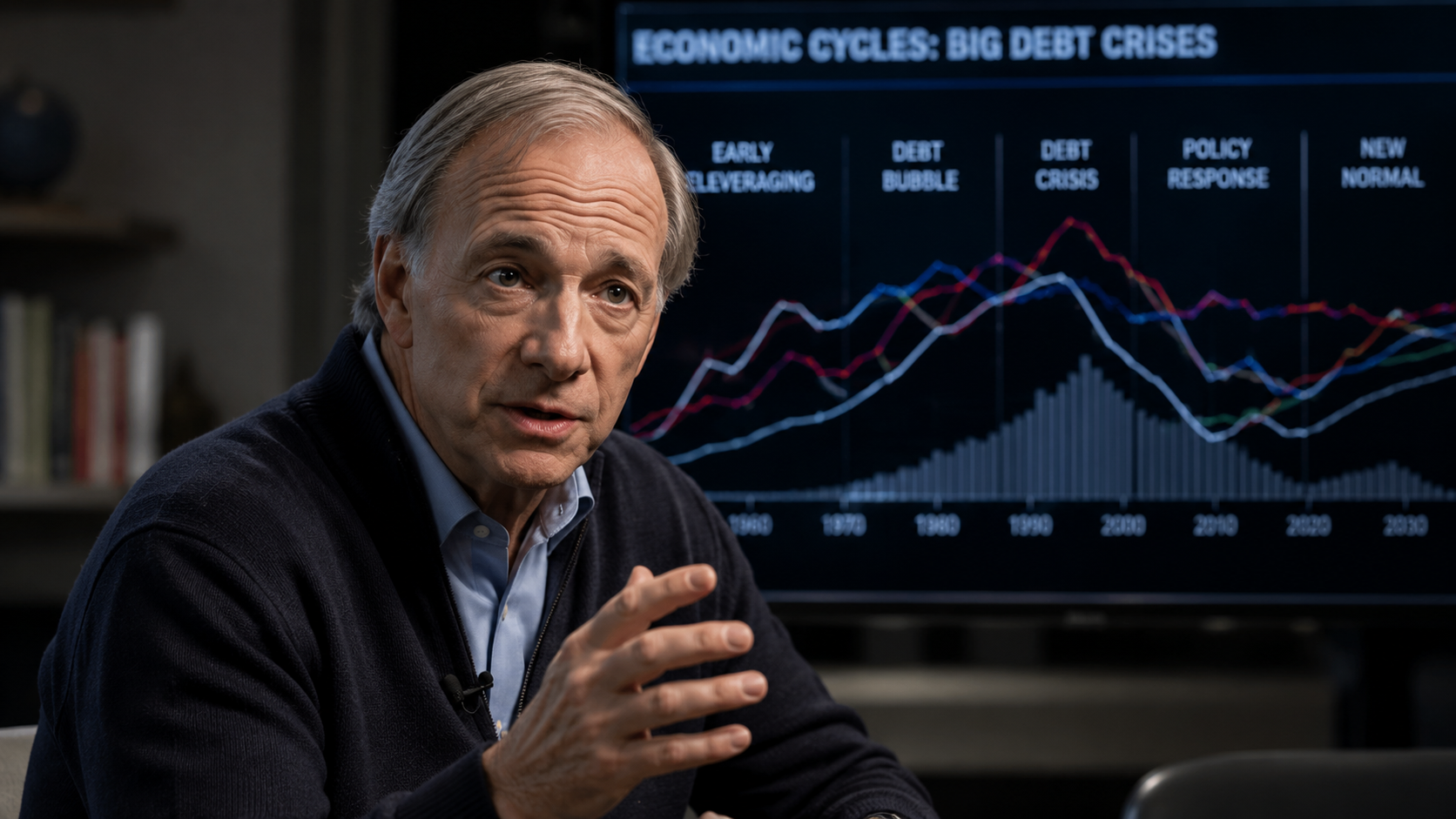
Ray Dalio warned investors that U.S. debt strains could collide with election politics from 2026 to 2028. He tied the risk to Treasury demand and Fed limits.
The Bridgewater founder made the case in a recent Prof G Markets discussion, framing the next election cycle as a pressure point for the United States. His argument rests on a collision of fiscal deficits, tighter monetary room and a more cautious foreign buyer base for U.S. government debt.
Election calendar raises fiscal stakes
Dalio's warning centers on the period between the 2026 midterms and the 2028 presidential election. The timing matters because a weaker economy entering the midterms could reduce Washington's ability to make budget decisions during a heavy refinancing period.
He pointed first to the federal cash gap. Dalio said, "The US government spends $7 trillion. It takes in about $5 trillion. So it has, it's 40% overspending," describing a shortfall that must be funded through debt issuance.
That math leaves roughly $2 trillion in annual financing needs before considering how existing debt rolls over. The policy problem is not only the size of borrowing, but whether investors will keep absorbing supply without demanding higher compensation.
Bond market leaves less room
Figures cited with Dalio's comments put the 10-year Treasury yield at 4% on April 28, 2026. The same data placed that yield in the 79.5th percentile of the prior 12 months, a level that can raise the cost of funding for households, companies and the government.
The cited figures also put the 10-year/2-year Treasury spread at 1%, while describing the curve as compressed. A flatter curve can signal concern about future growth, even when it does not show a full inversion.
Monetary conditions add another constraint. M2 money supply was cited at $22.69 trillion as of March 1, while core PCE was described as sitting at a 12-month high, in the 91.7th percentile.
That combination matters for the Federal Reserve. If inflation pressure stays elevated, policymakers have less room to ease financial conditions just as the Treasury needs steady demand for new and refinanced debt.
Foreign demand becomes the hinge
Dalio's second concern is the foreign bid for U.S. debt, especially from countries running trade surpluses with the United States. He argued that China and other holders may be less willing to recycle dollar balances into Treasuries if sanctions risk or trade friction changes their incentives.
The cited trade figures show why the flow matters. The U.S. trade balance was listed at a $57.3 billion deficit in February 2026, while first-quarter imports rose 21% against export growth of 13%.
When imports outpace exports, dollars accumulate abroad. The question in Dalio's framework is whether those dollars return to the Treasury market on terms that keep U.S. borrowing costs manageable.
Growth data shape the politics
The domestic backdrop in the cited data is soft enough to sharpen the political risk. Real GDP growth for the first quarter was listed at 2%, and consumer sentiment was cited at 53.3.
If those conditions weaken before the 2026 midterms, fiscal talks could become harder. Potential Republican House losses, as framed in the source material, would raise the chance of divided government and slower budget action.
Three paths now define the risk. If Treasury demand holds near current yield levels, the global macro effect is contained, Dalio's warning remains a risk-management framework for Bridgewater's founder, and the asset-management industry keeps focusing on duration and inflation hedges rather than funding stress.
If foreign buying fades while inflation stays sticky, the mechanism changes. Higher yields would tighten global dollar funding, increase pressure on U.S. debt service, amplify Dalio's case for caution, and push bond managers to demand more term premium.
If growth slows enough to force policy easing, the Fed could regain flexibility, but only if inflation cools first. The open questions are whether buyers keep financing the deficit, whether election results produce gridlock, and whether inflation data give policymakers space before the 2028 vote.