Trump says US Navy controls Strait of Hormuz
Trump says US Navy controls Strait of Hormuz; no immediate operational update followed, with markets watching for official comments by Aug. 11, 2026.
Mateo Fernandez ·
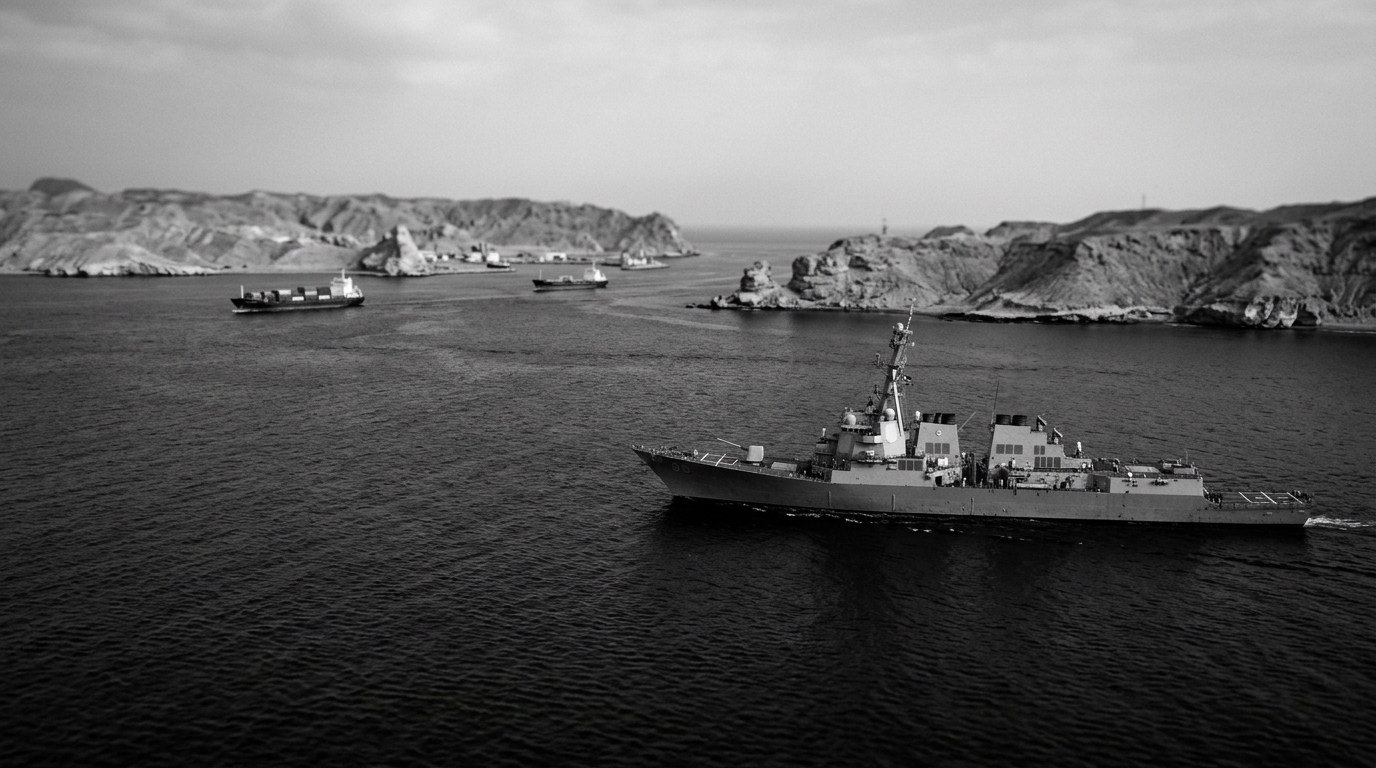
President Trump said on August 10, 2026 that the US Navy controls the Strait of Hormuz, presenting the claim as a safeguard for oil shipments and a factor that elevates the geopolitical weight of energy transit through the region. The president framed the statement as placing a US military role at the centre of a maritime chokepoint that, he said, underpins regional energy exports.
Immediate market reaction to the remark was not yet clear. The statement nonetheless drew rapid attention because the Strait of Hormuz is among the world’s most closely watched sea passages for energy and maritime trade.
Operational questions after the August 10 statement Officials Operational questions after the August 10 statement Officials did not provide an immediate operational update Officials did not provide an immediate operational update connected to the president’s comments. With no accompanying detail, focus shifted to whether any formal confirmation, clarification, or related military messaging would follow. Analysts said public statements about transit security can quickly influence how commercial actors interpret risk. They added that even without a confirmed operational change, messaging alone can shape near-term decisions tied to shipping schedules. Shipping, insurance and tanker routing under scrutiny Analysts said the assertion could affect commercial behaviour around the strait, including tanker routing choices, freight-cost calculations, and insurance premiums for vessels using the waterway. They said energy-market participants track such remarks because they can alter short-term logistics and risk assessments. For companies moving crude and refined products, analysts added, shifts in perceived risk can translate into immediate adjustments to cost expectations and timing. That can feed into how firms plan liftings, manage deliveries, and schedule vessels even when there is no confirmed change in operations.
Diplomatic and defence signals in focus
Officials said the claim also redirects attention to diplomatic and defence signals from Washington and regional capitals. They said any shift in naval posture or public messaging could lead shipping firms and insurers to revisit routes and pricing. Officials added that these decisions can have knock-on Officials added that these decisions can have knock-on effects for suppliers and refiners that rely on seaborne flows from the Gulf. In practical terms, they said, this can prompt reviews of logistics, procurement, and inventory plans as companies seek to manage uncertainty.
What markets may watch by August 11
Market participants and maritime stakeholders are expected to watch for official comments and shipping-traffic reports by August 11, 2026. Additional statements or data releases could help determine whether the remark points to an operational change or is better read as rhetorical positioning.
Until more detail emerges, the gap between the president’s claim and the absence of an immediate operational update leaves room for differing interpretations across shipping, insurance, and energy-trading communities.