President Trump approves Saudi deal that may allow uranium enrichment
A CBC report says President Donald Trump approved a pact that could enable Saudi Arabia to develop uranium enrichment for a civilian program.
Edward Mullen ·
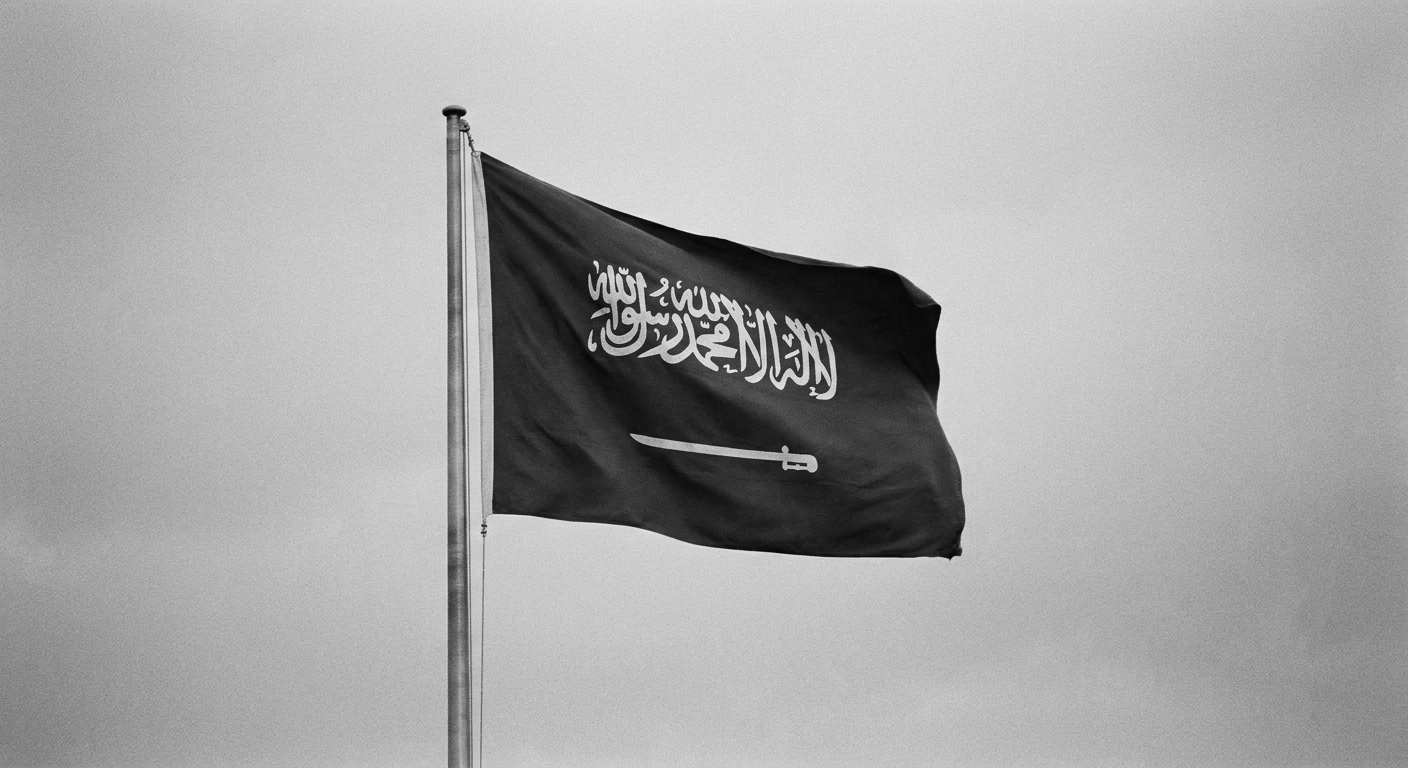
The common diplomatic interpretation of the reported Trump-era nuclear agreement with Saudi Arabia hails deeper strategic alignment. Yet, this view fundamentally misprices the escalating liabilities. The absence of public safeguards within this accord, rumored to allow uranium enrichment, shifts a geopolitical gambit into a regulatory quagmire for corporations and their legal counsel.
What CBC actually reports and why it matters
The CBC story says "U.S. President Donald Trump has approved an agreement with Saudi Arabia that could potentially provide the kingdom with uranium enrichment capability for its civilian nuclear program, according to two people familiar with the matter." That phrasing is cautious: the report cites unnamed sources and frames the development as a possible outcome, not a fait accompli.
The immediate consequence for executives and legal teams is that a bilateral accord with implications for controlled nuclear-cycle activities exists in the wild, but its text and safeguards are not publicly available.
What the claim does — and what it does not show The report does not publish the agreement; it does not list verification measures such as International Atomic Energy Agency (IAEA) safeguards, limits on enrichment levels, duration clauses, or triggers for inspections. CBC's account therefore demonstrates a policy decision in principle (administration approval) without the treaty-level detail needed to assess compliance with the Nuclear Non-Proliferation Treaty (NPT) framework or U.S.
domestic export-control law. For regulatory teams, that absence matters as much as the headline.
Why the obvious diplomatic read misprices risk
The prevailing, sympathetic take will frame this as a geopolitical win: deeper ties, energy cooperation, and strategic alignment in the Middle East. That read assumes the agreement will be constrained by robust safeguards and that international verification will be straightforward.
But without the agreement text, executives should assume the opposite risk profile: a latent pathway to fuel-cycle capability that can be dual-use. Mispricing this as a purely diplomatic achievement ignores the contingent liabilities — potential sanctions, supply-chain disruptions for firms working in the region, and reputational risk for contractors — that follow if third parties judge the safeguards inadequate.
What the source omits and why the omission is load-bearing CBC's report omits three load-bearing items: the exact guardrails on enrichment (if any), the legal mechanism tying enrichment to purely civilian ends, and the timescale for technology transfer or facility construction. Those gaps are the levers that convert a diplomatic gesture into a proliferation pathway or into a durable civilian-energy partnership.
Absent those clauses, investors, insurers, and compliance chiefs cannot price political risk or insurance exposure, and export-control counsel lack the document needed to clear technology transfers.
Who benefits, who is exposed, and the under-noticed middle Diplomatically, U.S. policymakers seeking regional leverage and Gulf energy partners stand to gain immediate influence.
But defense contractors, nuclear supply-chain firms, and banks that underwrite projects in the region face a widening regulatory tail-risk. The under-noticed middle is professional services: law firms, compliance teams, and insurers will see elevated workload and potential liability if the agreement leads to contested IAEA findings or Congressional pushback.
That structural shift raises real costs even if no illicit weapons program emerges.
Signals that would falsify this concern over the next 6–12 months Watch for a public State Department release publishing the agreement text and IAEA-approved safeguards; an IAEA statement confirming no changes to Saudi enrichment capability; explicit congressional action restricting cooperation; or certified third-party audits of any new facilities. If any combination of those appears and is verifiable, it would materially reduce the mispriced-risk argument.
In their absence, treat the reported approval as a policy risk that has not yet become a legally constrained outcome.
The skeptic's counter-read
A clear counter is that unnamed sources are unreliable and that the administration may have signaled approval in internal channels without committing to any transfer of enrichment technology. That argument is plausible: many diplomatic negotiations include contingency language and approvals that never translate into implemented transfers.
Still, the skeptic does not obviate the practical problem for corporate actors: regulatory and reputational exposure mounts when high-stakes capabilities are tied to an agreement whose safeguards are unknown.
Executives in finance, defense contracting, and energy should treat this CBC report as an early warning, not as settled policy. Until the agreement text and IAEA assessments are public, plan for increased compliance costs, potential Congressional scrutiny, and insurance friction tied to any projects linked to Saudi nuclear activities.