
Pope Leo XIV Marks First Year Amid Middle East War
Pope Leo XIV completes his first year as pontiff, balancing discreet mediation with sharper remarks as Middle East war and Iran tensions persist.
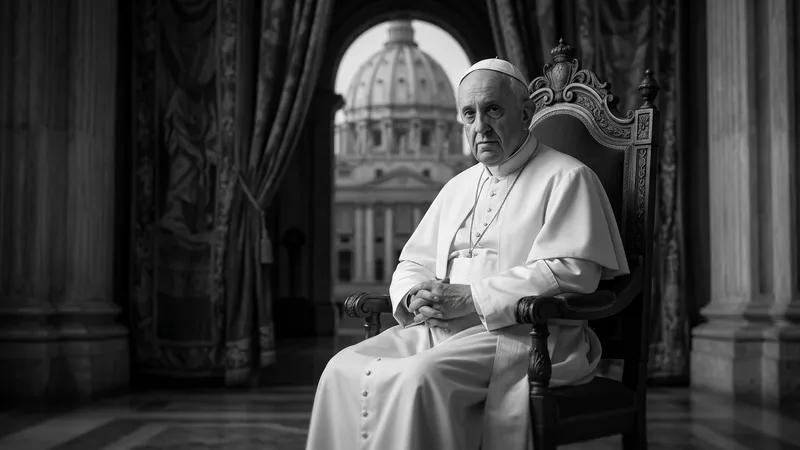
Pope Leo XIV has completed his first year as pontiff , closing the period with his first Easter while major international conflicts continue, including war in the Middle East following US-Israeli strikes in Iran. The anniversary has drawn attention to how the new pope is positioning the Vatican in a tense diplomatic environment, where public statements can carry political weight and private channels can shape outcomes.
Officials and observers have described Leo XIV as diplomatic and mild-mannered. In his first year, he has leaned toward measured steps and discreet mediation rather than frequent, high-profile interventions. This approach has been presented as a contrast with Pope Francis, whose style was more outspoken in public messaging.
Even with a preference for calibrated action, Leo XIV has issued indirect rebukes related to the conduct of US President Donald Trump and Israeli Prime Minister Benjamin Netanyahu. On Palm Sunday, he condemned leaders with “hands full of blood,” a formulation that did not name individuals.
On Tuesday, he went further by explicitly naming President Trump and voicing hope for an “off-ramp” to end the conflict in Iran, a move that reflects a departure from the Vatican’s traditional reluctance to identify world leaders directly.
Some Catholics have said they want the pope to speak more forcefully about global turmoil. Joanne Coleman, a religion teacher from Ireland, and Gabriele, a souvenir shop worker, were cited among those expressing a desire for a more vocal stance. Their comments highlight a recurring tension for the Vatican: balancing moral clarity in public with the practical constraints of diplomacy during active conflicts.
Vatican correspondent Iacopo Scaramuzzi said Leo XIV’s strategy emphasizes the effectiveness of actions over the impact of rhetoric. In that framing, the pope’s public language is only one part of a broader toolkit that includes quiet engagement with governments and intermediaries, especially when the Vatican believes it can help reduce tensions or open communication channels.
The Vatican has pursued behind-the-scenes mediation efforts in Venezuela and Cuba, according to the account. It has also reportedly influenced Israeli authorities to issue an apology after an incident involving Cardinal Pierbattista Pizzaballa in Jerusalem. These episodes have been presented as examples of the Vatican’s preference for low-visibility interventions that aim to produce concrete outcomes.
As Leo XIV enters his second year, uncertainty remains over how far he will go in naming leaders directly while conflicts persist, and how his blend of public signals and private mediation will be received by Catholics seeking stronger denunciations. The Vatican’s role, as described, continues to sit at the intersection of faith leadership and international politics, with its choices resonating beyond the Church in a period of heightened geopolitical strain.
Implications
Country Impact: The pope’s comments referenced US President Donald Trump and occurred amid war in the Middle East following US-Israeli strikes in Iran, placing Vatican messaging in direct proximity to high-stakes state decisions. The reported Vatican engagement in Venezuela and Cuba underscores continued attention to politically sensitive environments in the Americas.
Industry Impact: For religious institutions and faith-based diplomacy, Leo XIV’s first-year approach highlights a model that prioritizes discreet mediation alongside selective public statements. The reported apology involving Cardinal Pierbattista Pizzaballa in Jerusalem illustrates how religious leadership can intersect with security and access issues around holy sites.
Market Impact: Ongoing conflict in the Middle East following US-Israeli strikes in Iran is a key backdrop for global risk sentiment, and Vatican interventions can influence diplomatic tone even when they do not change policy directly. The pope’s shift toward naming leaders may affect how political actors and stakeholders interpret Vatican signals during periods of heightened geopolitical uncertainty.
More stories
- Nollywood Star Urges Investment in Ghanaian Actor LilWin
- Marvels' Box Office Flop Still Pivotal for MCU's Future
- Hefner's Ex-Wife Defends Legacy Amid Film Controversy
- Hanuman Ansh Film Earns ₹2.45 Crore on Day 65
- Cappu Films to Distribute Australian Dramedy 'Her Last Laugh'
- Usher, Chris Brown Tour Prospects Weigh Performance Metrics
- Judge Trims Blake Lively's Lawsuit Against Justin Baldoni
- Pope Restores Ancient Foot-Washing Rite for Holy Thursday
- New season of The Bachelorette cancelled after Taylor Frankie Paul domestic abuse allegations
- PEN America announce 2026 World Voices festival with Judith Butler and Bill McKibben