

Police stop ruling narrows evidence in 2022 D.C. murder case
Judge Rainey Brandt suppressed evidence after finding a stop based on clothing violated Howard Fritts’ Fourth Amendment rights.
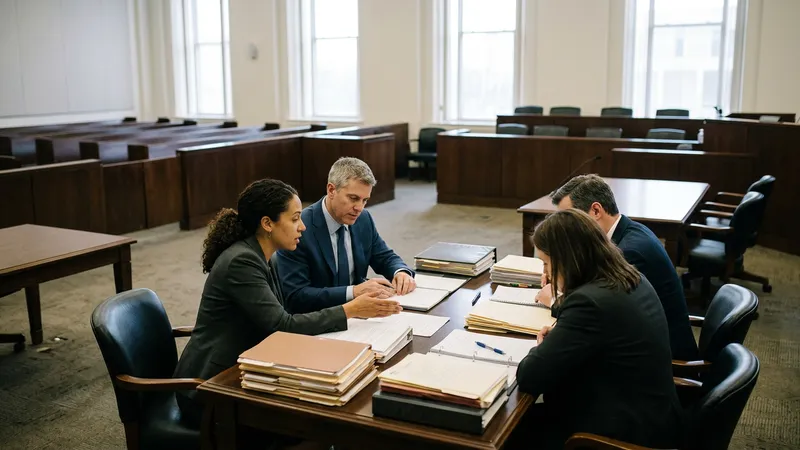
At a D.C. Superior Court hearing, Judge Rainey Brandt on October 15 suppressed evidence against Howard Fritts, 60, in a 2022 homicide case tied to the 900 block of 9th Street NW.
The ruling matters for Mount Vernon Square and downtown residents because it limits what prosecutors can use at trial; Brandt also vacated the October 28 trial date and set a November 6 hearing.
Fritts is charged with first-degree felony murder while armed and attempting to commit robbery in the May 29, 2022 fatal shooting of Charlie Miller, 46. Court documents say Fritts allegedly took Miller’s cellphone before the two fought in the street and Miller was shot in the head.
Brandt found that U.S. Park Police violated Fritts’ Fourth Amendment rights when they stopped him on June 1, 2022, on the 1300 block of M Street NW. The Fourth Amendment protects against unreasonable searches and seizures.
The judge said police relied on surveillance footage showing a person in a light-colored T-shirt, khaki shorts and black sneakers, but did not have a name or a visible face. She described the resulting evidence as “fruit of the poisonous tree,” a legal doctrine that can exclude evidence derived from an unlawful stop.
“Our DC Court of Appeals has been consistently skeptical of identification based solely on clothing alone,” Brandt said.
Brandt cited gaps in testimony from an October 9 hearing, including answers such as “I can’t recall,” “not sure” and “I think.” She said one officer testified he saw a man wearing the same clothing on May 30, but the officer was “not sure” it was the same person shown in the video.
The judge also said a detective could not say whether he gave Park Police the surveillance video, the lookout description or both. According to Brandt, the lookout described the person as a Black shooter; she said Fritts, who is White, would not have been stopped had officers relied on that description.
Brandt contrasted the case with a 1997 D.C. Court of Appeals ruling that upheld a stop shortly after a drug sale, when only two men nearby matched the lookout. She described “Black male, white pants, possible juvenile” as the type of description she viewed as too broad.
Fritts’ attorney, Jessica Willis, said prosecutors confirmed by email the night before the hearing that no one tried to preserve radio runs in the case. She asked Brandt to note a Jencks Act violation on the record; the law requires prosecutors to turn over certain prior statements by government witnesses.
“We would move for the court to consider sanctions and also dismissal with prejudice,” Willis said. Brandt said she would consider the request.
The prosecutor said the government plans to appeal the suppression ruling and that the “30-day clock has started.” Brandt said her Fourth Amendment ruling is partial and that the defense may seek reconsideration.
The suppression decision follows Brandt’s October 9 finding that prosecutors violated discovery rules, for which she imposed three sanctions. She denied the prosecution’s request to reconsider that discovery ruling on October 14.
“I’m not done yet. The case is not over,” Brandt said.
Brandt ordered the parties to file any further papers on the disputed issues by October 28. The parties are scheduled to return to D.C. Superior Court on November 6.
Source: D.C. Superior Court hearing, October 15.
More stories
- Dupont drag pageant broadens reach with 38th Halloween show
- Lime bans nearly 1,000 DC accounts in safety crackdown
- Maryland football fires Mike Locksley after 2-5 opening
- Marshall Heights gets energy plan through March 2028
- DC job growth lifts payrolls as unemployment falls to 5.6%
- DC Throws Its Biggest Startup Party Yet, 103,900 Jobs Into the Worst Year on Record