SpaceX Falcon 9 debris hits Moon near Einstein Crater
SpaceX Falcon 9 rocket debris struck the Moon on Wednesday near Einstein Crater, prompting NASA and South Korea’s Danuri to document the site.
Atlas Newsdesk ·
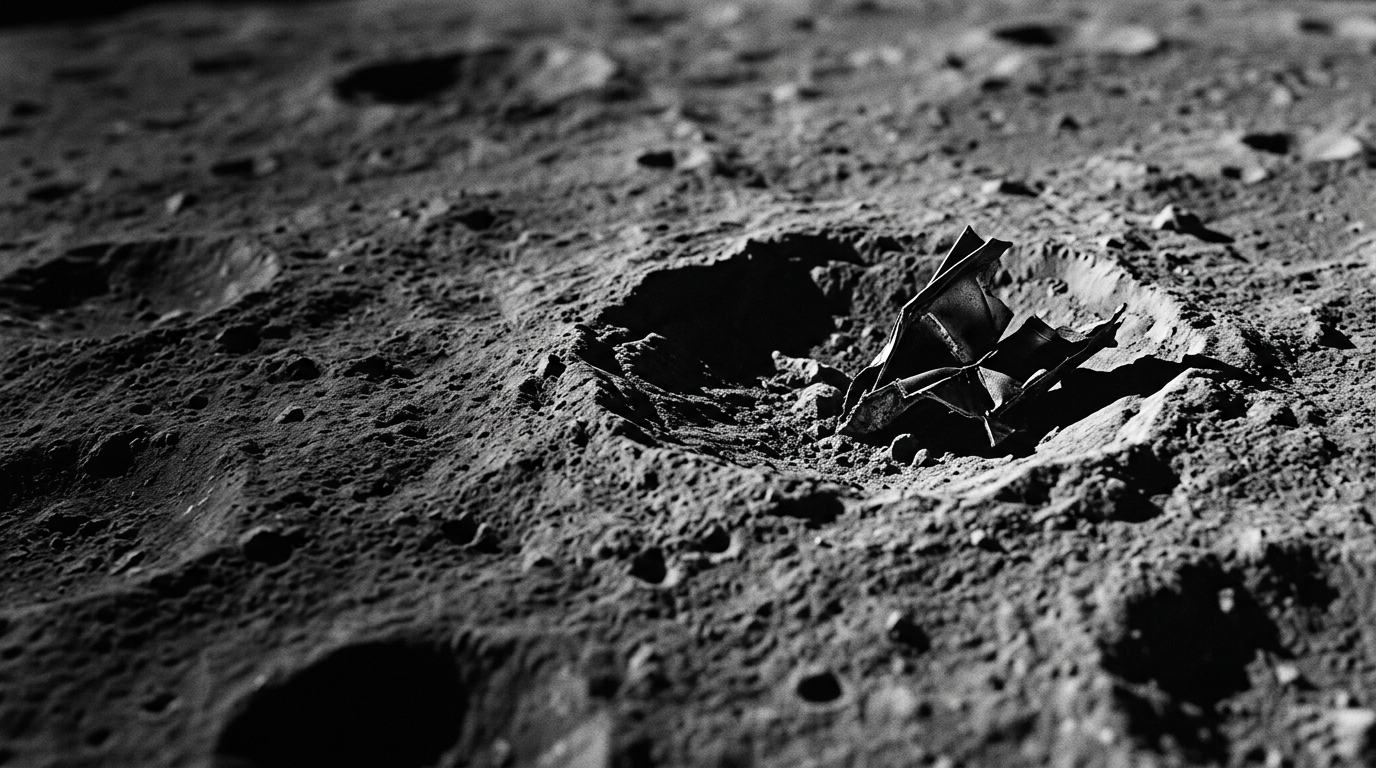
A four-tonne piece of a SpaceX Falcon 9 rocket hit the Moon on Wednesday, creating a fresh crater near the Einstein Crater. Officials and researchers described the collision as a rare, documented impact involving discarded space hardware.
The debris came from a 2025 launch and reached the lunar surface at about 8,700 kilometres per hour. The impact energy was described as comparable to roughly three tonnes of TNT, based on the reported force of the collision.
Tracking the Falcon 9 stage and how it reached the Moon SpaceX said the crash was not planned and reflected the practical limits of managing spent hardware once its mission is complete. The company attributed the outcome to orbital mechanics and limited remaining fuel reserves on the rocket stage.
Researchers said the stage’s path shifted over about 18 months due to complex gravitational interactions between Earth and the Moon. Those interactions altered the object’s trajectory until it intersected the lunar surface.
The incident was described as only the second recorded case of discarded space hardware impacting the Moon. The event has added attention to how space agencies and private operators track and manage objects that remain in space after launches.
NASA and South Korea’s Danuri move to document the impact site NASA’s Lunar Reconnaissance Orbiter and South Korea’s Danuri spacecraft adjusted their sensors to help observe the area. Their is to capture imagery and other measurements that can confirm the precise location and assess the crater’s characteristics.
Researchers plan to study the dust plume that was thrown outward and to analyze high-resolution images of the new crater. They said the data can help improve understanding of what happens when objects strike the lunar surface at very high speed.
Such observations can be valuable because the Moon has no substantial atmosphere to slow incoming objects, allowing impacts to occur at high velocities and leave distinct surface signatures. The documentation effort is intended to connect the measured crater and ejecta patterns to the known speed and mass of the impacting debris.
Debris management questions resurface as space traffic grows
The impact has renewed scrutiny around orbital debris management as space activity increases. Researchers and officials pointed to the growing volume of objects in space as a factor that keeps questions of tracking, forecasting, and end-of-life handling in focus.
For now, the documentation work by NASA’s Lunar Reconnaissance Orbiter and South Korea’s Danuri is expected to clarify the crater’s size and shape and provide a clearer record of the event. Further findings will depend on what the spacecraft can confirm at the site and what the imagery reveals about the ejecta and the newly formed crater near Einstein Crater.