AVer says AI vision will shift drone procurement toward integrated autonomy
ElectronicsMedia reports that AVer Information Inc. is expanding into commercial drones with a stated focus on "AI Vision Intelligence.
Edward Mullen ·
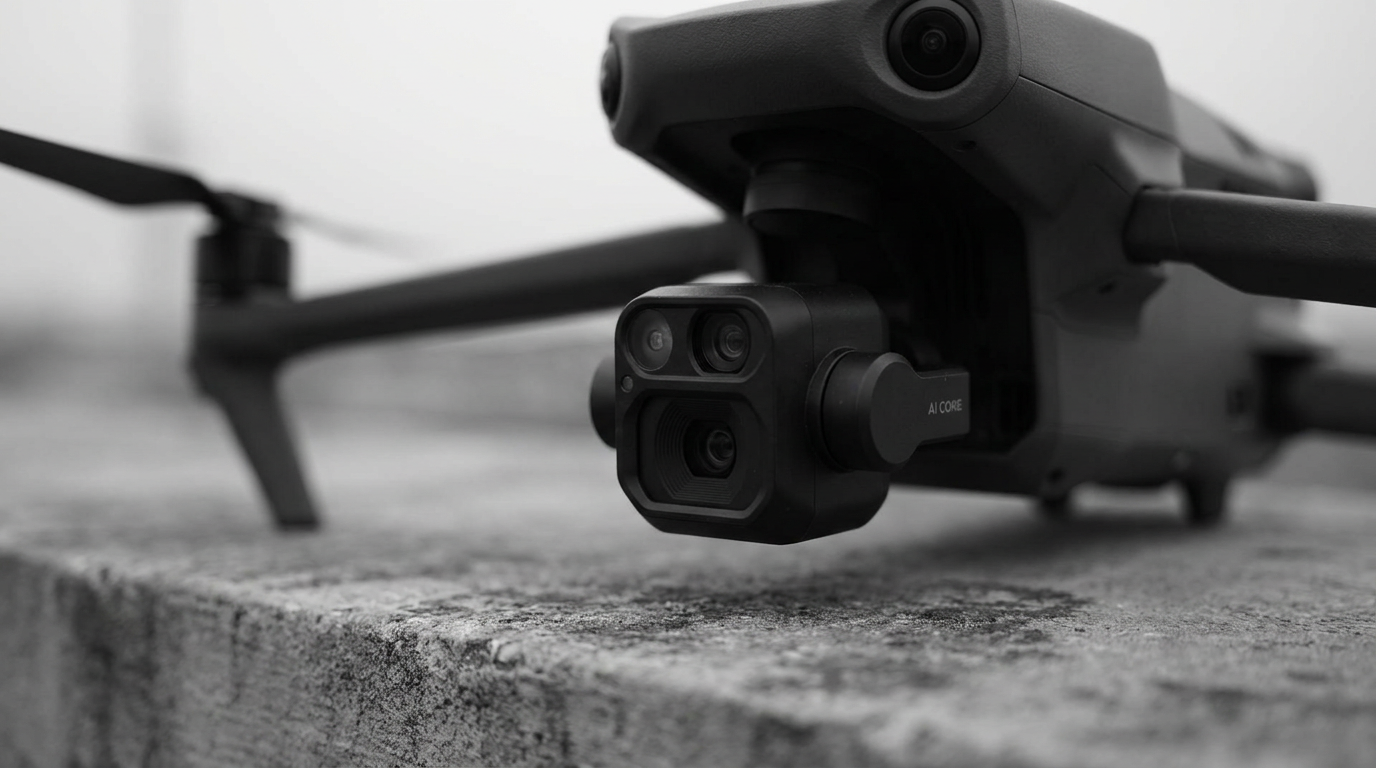
A drone operator, inspecting miles of pipeline daily, previously focused on camera resolution and sensor refresh rates. Today, that same operator evaluates unmanned aerial vehicles less on discrete specifications and more on the integrated AI Vision Intelligence that promises autonomous, outcome-driven performance. This nascent shift moves procurement from individual components to bundled, intelligent capabilities.
What AVer announces and what it actually wrote
The ElectronicsMedia story summarizes AVer's move as an expansion “into the commercial drone market by focusing its R&D on AI Vision Intelligence — the intelligent vision systems that power autonomous unmanned aerial vehicles (UAVs).” That phrasing presents capability — autonomy-enabling vision — not incremental sensor upgrades. The article frames AVer as an AI audio-video vendor moving from fixed installations to flight systems; it does not publish technical benchmarks, integration partners, or procurement terms.
Treat the announcement as a vendor-market claim, not validated field performance.
Why this reads like a procurement problem, not a component upgrade When a supplier pitches "AI Vision Intelligence" rather than a faster sensor or higher-megapixel camera, the buyer’s decision problem changes. Procurement no longer compares discrete line items (camera X vs.
camera Y) but evaluates whether a bundled capability—autonomous detection, tracking, and decisioning—meets an operational outcome, such as reducing human piloting or automated inspections. That shifts contracts from one-off hardware purchases toward outcome-driven systems contracts, with different SLAs, acceptance tests, and lifecycle support expectations, and it raises the importance of software-update paths, model retraining, and data rights in negotiations.
The source frames AVer's expansion in capability language, implying this shift without documenting how buyers will be asked to pay for it.
What the announcement leaves out that matters for buyers ElectronicsMedia does not provide specifics on the algorithms, the compute footprint, edge-versus-cloud split, or the integration model between perception stacks and flight-control systems. Those details determine whether a procurement officer is buying an incremental sensor or a certified autonomy stack that must be validated against safety and regulatory regimes.
The article also omits information on commercial models—will AVer sell hardware with royalties for vision models, a subscription for updates, or a services-heavy integration contract? Those choices directly reprice margins for vendors and operating budgets for buyers.
The counter-read: hardware still matters, and some buyers will insist on it A plausible counter is that many enterprise buyers—especially large fleets with established maintenance chains—will continue to specify sensors and subsystems rather than whole-system autonomy because it preserves vendor competition on price and spare-parts logistics. ElectronicsMedia does not engage that skeptic; it offers only the vendor framing.
Procurement teams that prioritize replaceability, repairability, or existing supply-chain commitments may reject bundled autonomy on principle, forcing vendors to offer componentized options alongside integrated stacks. That outcome would blunt any margin compression from a wholesale shift to capability-based contracting.
What changes for procurement in the next 12–18 months If AVer's framing resonates with enterprise buyers, procurement teams should prepare to evaluate autonomy as a deliverable: rewrite RFPs to include scenario-based acceptance tests, require model provenance and update schedules, and insist on explicit data-rights language for flight-collected imagery. Conversely, if buyers resist, vendors will need hybrid offers that allow component-level procurement plus an optional autonomy suite.
Either way, the commercial terms—warranty periods, software-update commitments, and long-term support—will become the primary battleground for margin negotiation between drone OEMs and systems providers. The ElectronicsMedia piece signals a vendor positioning that, if replicated across suppliers, will push procurement toward capability-first contracting; the article itself does not prove that behavior will follow.
Signals procurement and finance teams should watch now
Watch whether AVer publishes technical integration guides, partner certifications, or prototype acceptance-test results; whether enterprise RFPs begin to list "autonomous inspection capability" or scenario-based performance metrics rather than camera resolution; and whether vendors start offering subscription pricing tied to model accuracy or uptime rather than one-off hardware fees. Each of those moves would confirm a shift toward bundled, autonomy-focused procurement; their absence would indicate buyers still prefer componentized buying.
ElectronicsMedia's report starts the record for AVer's intent but does not yet demonstrate either outcome.
ElectronicsMedia's coverage is the only public signal in this packet; until AVer or a buyer publishes integration specifics, procurement teams should treat the announcement as a vendor statement of strategic intent rather than evidence of a market-wide procurement pivot.