France-Spain wildfires force 325,000 evacuations
France-Spain wildfires have forced more than 325,000 evacuations as of July 27, 2026, with Gironde and areas near Madrid, Avila and Toledo hit.
Atlas Newsdesk ·
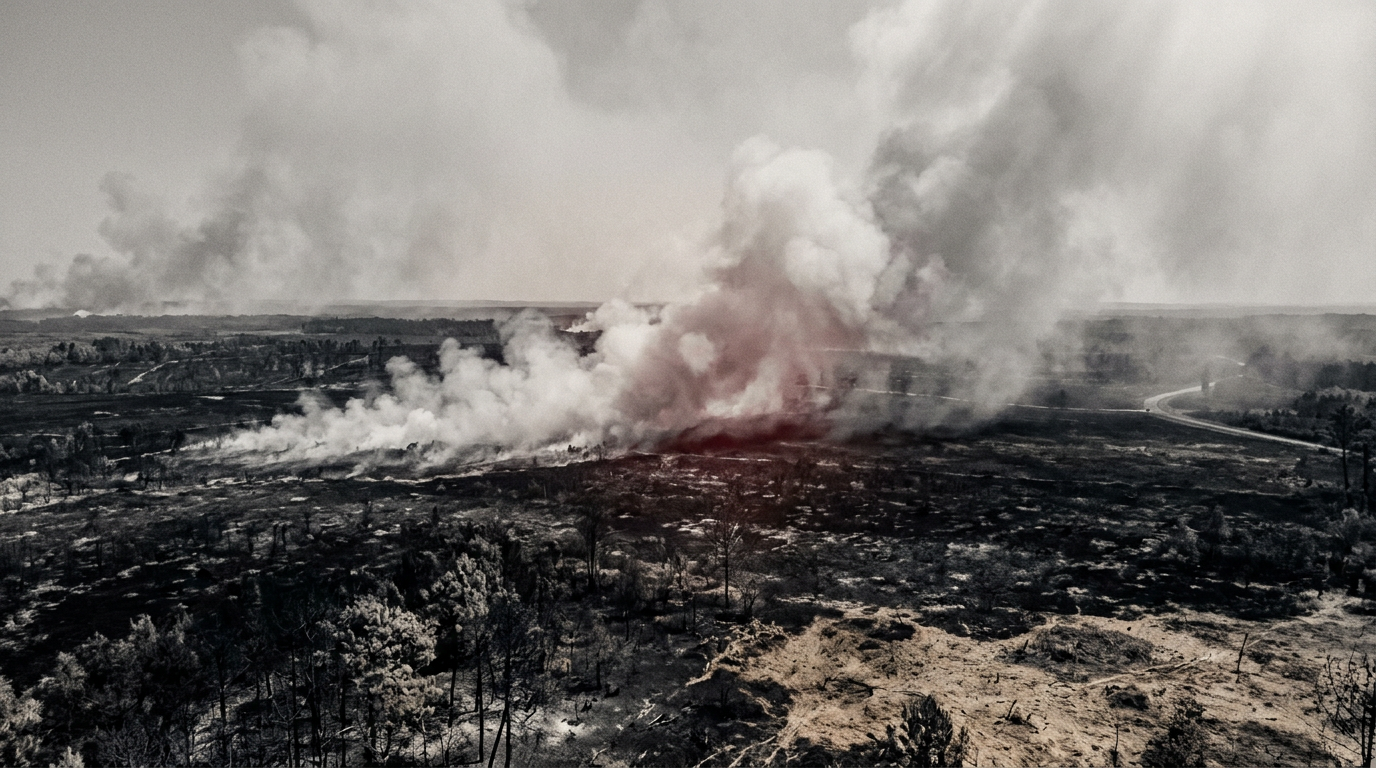
Emergency services in France and Spain are working to contain large wildfires that have already driven more than 325,000 people from their homes across the two countries. Officials said the most heavily affected zones include the Gironde region in France and areas around Madrid, Avila, and Toledo in Spain, as firefighting operations continued on July 27, 2026.
Authorities said the blazes have burned extensive areas of woodland after months of unusually dry conditions. Meteorologists have linked the rapid spread to prolonged drought and successive heatwaves that have left forest vegetation highly flammable since May, making containment more difficult even where crews have been reinforced.
Heat-driven fire behavior complicates containment
Officials in France said extreme heat is intensifying fire behavior beyond typical patterns. The conditions have led to the formation of pyrocumulonimbus clouds, a phenomenon generated by powerful heat from the fires, which can produce localized winds and lightning.
Emergency responders said those sudden winds can change the direction of a fire front quickly, while lightning can trigger additional ignitions. Together, they have added uncertainty to planning and forced crews to adjust tactics frequently as conditions evolve.
Spain reports vast perimeter near Avila
Spanish officials reported that one fire perimeter near Avila has expanded to 280 kilometers, with the affected area estimated at about 77,000 hectares. Authorities said the fire activity has put pressure on local response capacity as crews work to limit further spread toward populated areas.
In France, officials said the Gironde region remains among the worst-hit locations, prompting additional emergency measures. Authorities suspended holiday camps in Gironde as a precaution while fire activity continues and access to some areas remains restricted for safety reasons.
Government response and warnings of more heat
With firefighters still engaged on multiple fronts, the scale of the destruction has triggered intervention at higher levels of government, officials said. Some officials described the environmental damage as incalculable, underscoring the difficulty of assessing full ecological losses while fires remain active.
Meteorologists warned of another incoming heatwave that could worsen the situation, potentially accelerating fire spread and increasing the likelihood of new starts. Officials have not provided a firm timeline for when all affected communities might be able to return, citing ongoing risks and changing weather.
Climate signals cited by scientists
Scientists have increasingly attributed the rising frequency of extreme weather events to long-term climate shifts, according to officials referencing the broader scientific consensus. While that framing does not determine the immediate course of the current fires, it has shaped how authorities describe the longer-term challenge of managing wildfire risk under persistent drought and recurring heat.