U.S. Defense Secretary ties faith to Iran conflict
U.S. Defense Secretary Pete Hegseth cast the Iran conflict in religious terms after a Feb. 28 strike killed over 175 at a school in Minab.
Lauren Collins ·
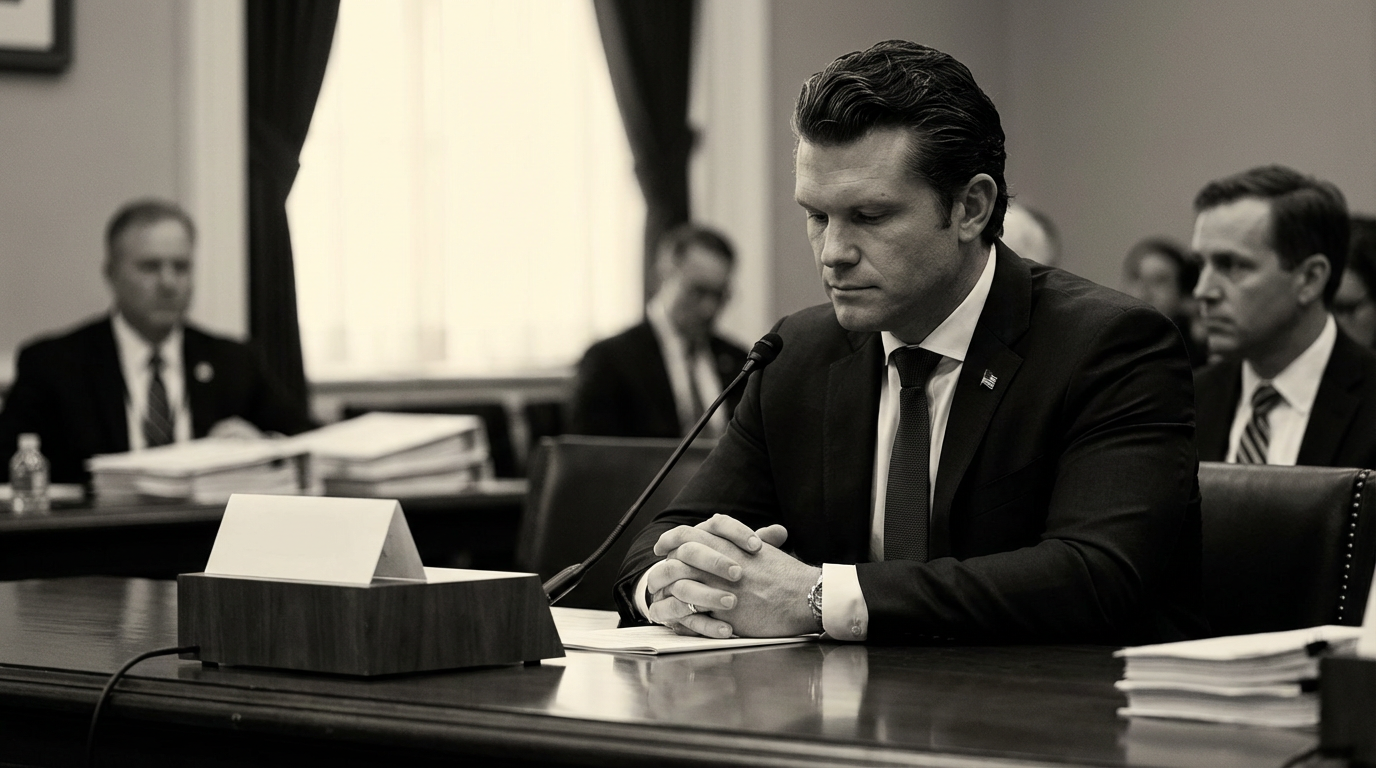
U.S. Defense Secretary Pete Hegseth has publicly described the ongoing conflict with Iran in religious terms, presenting it as aligned with divine intent after a missile strike on February 28 that killed over 175 people , mostly children, at the Shajareh Tayyebeh elementary school in Minab, Iran .
Officials said Hegseth’s framing follows themes promoted in a sermon delivered at the Pentagon by his spiritual adviser, Brooks Potteiger , nine months before the incident. The sermon emphasized divine sovereignty over world events, including military actions, and it has been cited as part of the context for how Hegseth has spoken about the conflict.
Hegseth, a former Fox News host and U.S. Army veteran, has repeatedly invoked what he calls “God’s almighty providence” and has expressed confidence that divine support is on the side of the U.S. military. He has also called for prayers for victory “in the name of Jesus Christ” and has advocated what he described as “overwhelming violence of action against those who deserve no mercy,” according to the account provided.
The approach has prompted criticism from religious and academic figures. Pope Leo delivered what was described as an apparent rebuke, preaching against leaders whose “hands are full of blood” from warfare. Separately, academics who study Reformed Christianity, including Julie Ingersoll of the University of North Florida , said Hegseth’s language aligns with a Calvinist evangelical tradition that treats all events, including war, as part of God’s will.
Ingersoll and other specialists cited in the account said this theological framework holds that outcomes are determined by divine will regardless of human intervention or the consequences of military action. The description places Hegseth’s public statements within a broader religious worldview that emphasizes predestination and providence as guiding principles for interpreting global events.
On the operational side, the U.S. military’s preliminary investigation indicates U.S. responsibility for the bombing of the school. However, the account says neither Hegseth nor former President Donald Trump has accepted responsibility or expressed remorse.
Key uncertainties remain because the information cited refers to a preliminary investigation and does not describe final findings or any subsequent accountability steps. The episode has also highlighted how senior officials’ public rhetoric can intersect with military actions that carry significant civilian consequences, drawing attention from religious leaders and scholars as well as observers focused on the conflict’s international ramifications.