PepsiCo profit rises, but U.S. snacks and drinks lose steam
PepsiCo earnings missed profit expectations as North American snack and beverage volumes softened, even as quarterly revenue beat estimates and international…
Atlas Newsdesk ·
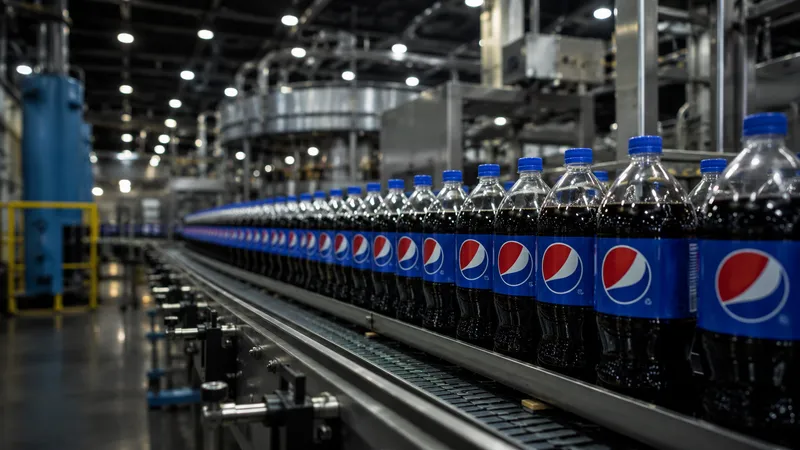
PepsiCo earnings showed a split quarter: revenue beat estimates, but U.S. snacks and drinks weakened. International demand kept volumes positive.
For the quarter that closed June 13, PepsiCo reported adjusted earnings of $2.20 a share, one cent below the $2.21 expected in an LSEG analyst survey. Revenue reached $24.18 billion, ahead of the $23.95 billion consensus.
June quarter split widens
Profit attributable to PepsiCo rose to $2.98 billion, or $2.18 a share, from $1.26 billion, or 92 cents a share, a year earlier. The adjusted figure excluded restructuring, impairment and other items, according to the company’s quarterly update.
Net sales increased 6.4%, while organic revenue, which strips out currency effects, acquisitions and divestitures, advanced 2.4%. The gap between reported sales growth and organic growth showed that the headline revenue beat did not fully translate into stronger underlying demand across the business.
Global volume still improved: food volume rose 3%, and beverage volume increased 2%. The company said the strength came from international markets, while the U.S. business remained the weak point.
North America loses momentum
North American food volume was flat in the quarter, and North American beverage volume fell 4%. Volume matters because it removes pricing and currency swings, giving investors a clearer view of how many snacks and drinks consumers are actually buying.
Chief Executive Ramon Laguarta linked the pressure to tighter household finances. “Results were tempered in the quarter as U.S. food and beverage category performance moderated with consumer budgets tightening due to rising inflationary pressures,” he said in prepared remarks posted by the company.
PepsiCo has already moved to defend share in U.S. snacks after two years of weaker demand tied to higher prices. In February, the company cut prices on Lay’s, Tostitos, Doritos and Cheetos by as much as 15%, according to the source material.
The company has also been refreshing major brands, including Gatorade and Lay’s, to support sales without relying only on price. The strategy points to a more difficult consumer environment in which packaging, brand identity and promotions all carry more weight.
Guidance keeps recovery conditional
Chief Financial Officer Steve Schmitt signaled that the U.S. rebound is taking longer than planned. “Our North America business was softer than we anticipated in the second quarter, and we now expect a more gradual improvement in performance trends for the balance of this year,” he said in prepared remarks.
PepsiCo left its full-year targets unchanged, calling for organic revenue growth of 2% to 4% and core constant-currency earnings-per-share growth of 4% to 6%. Keeping that range intact places more weight on international demand, cost control and any improvement in North American volumes during the rest of the year.
If U.S. volumes stabilize, PepsiCo can lean on brand resets and selective price cuts while international markets support the top line; that would keep pressure contained for the broader packaged-food and beverage sector. If North American weakness persists, the company may face a harder trade-off between protecting margins and spending more on promotions, which could pull competitors into a more price-sensitive fight.
The macro signal is narrower but still useful: U.S. consumers are showing more resistance to higher prices in everyday food and beverage categories. For the industry, the next read will come from whether shoppers respond to lower snack prices and whether beverage volume can stop falling without deeper discounting.