Why nearly ninety percent of countries failed to meet 2025 air quality guidelines
Pakistan led 2025 PM2.5 pollution levels at 67.3 µg/m³, about 13x the WHO guideline, as most countries missed the standard.
Ayla Demirhan ·
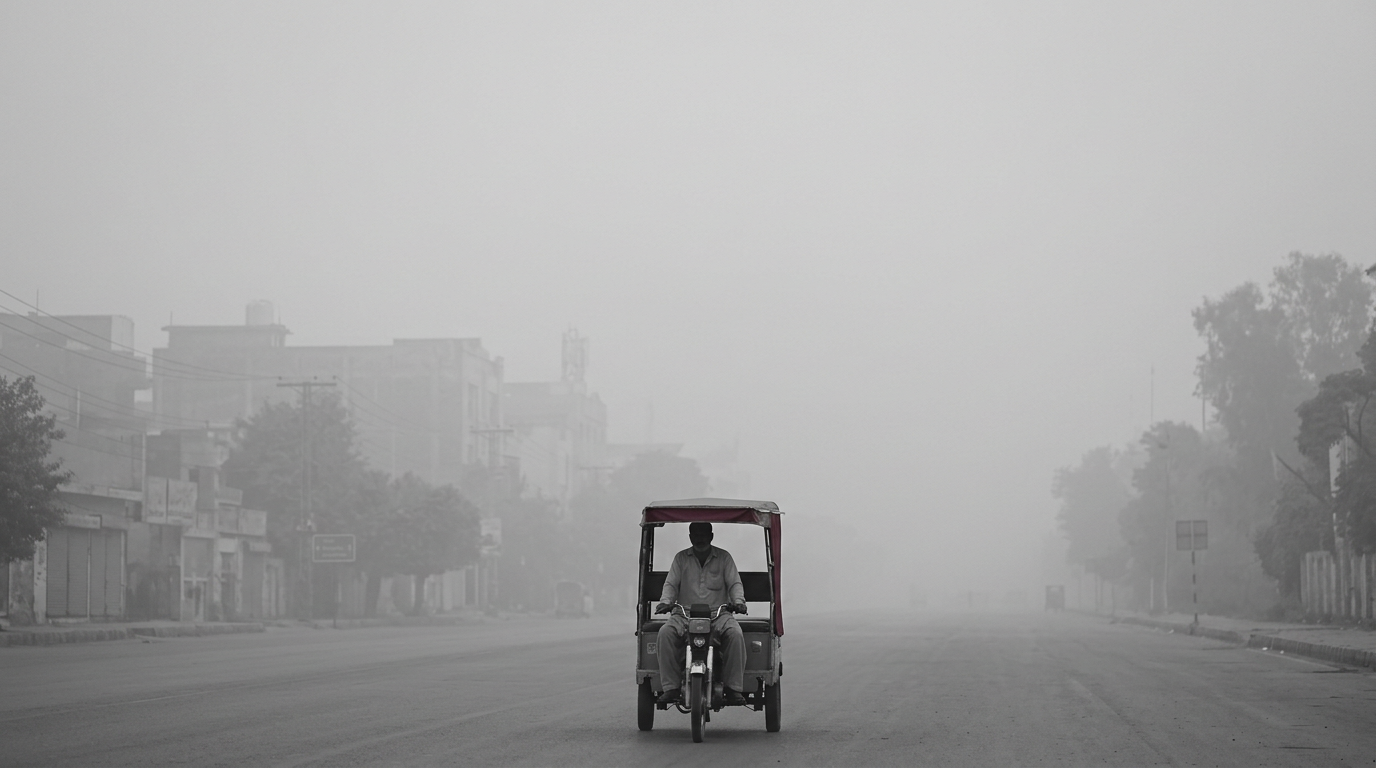
Geneva, Switzerland – Pakistan recorded the world's highest national average exposure to fine particulate pollution in 2025, according to a new global assessment released by IQAir, a Swiss air-quality technology company. The report highlighted persistent air quality challenges across many nations, with only a small fraction meeting international health guidelines.
Pakistan's average PM2.5 concentration reached 67.3 micrograms per cubic meter. This figure significantly exceeds the World Health Organization's (WHO) guideline of 5 micrograms per cubic meter for safe air quality.
Understanding the Report's Scope
IQAir's annual review gathered air-quality data from 9,446 cities across 143 countries, regions, and territories. The study specifically focused on PM2.5, which are tiny airborne particles measuring less than 2.5 micrometers in diameter. These particles are small enough to penetrate deep into the lungs and enter the bloodstream, posing significant health risks.
Exposure to PM2.5 has been linked to various adverse health outcomes. These include premature births and an increased likelihood of neurodegenerative conditions, making it a critical public health concern.
Global Compliance Remains Elusive
The assessment revealed that 130 out of 143 monitored entities failed to meet the WHO's PM2.5 guideline in 2025. This underscores the widespread difficulty in achieving recommended air quality levels globally.
Only 13 countries and territories successfully met the benchmark, an increase from seven in 2024. While the report acknowledged this as incremental progress, most locations continued to exceed the recommended threshold.
Cities with the Most Severe Pollution
At the city level, Loni, India, registered as the most polluted city in 2025. Its PM2.5 concentration stood at 112.5 micrograms per cubic meter. Hotan, China, followed closely with 109.6 micrograms per cubic meter.
Notably, all 25 of the most polluted cities identified in the report were located within China, India, and Pakistan. This concentration highlights that the most acute urban exposure to air pollution is centered in South and East Asia.
Factors Influencing Air Quality
The report identified weather patterns and fire activity as key factors influencing particulate levels across borders. Some countries, including Laos, Cambodia, and Indonesia, experienced lower PM2.5 readings. This improvement was partly attributed to La Niña conditions during the assessment period.
Wildfires also significantly impacted air quality. The study estimated that fires released 1,380 megatonnes of carbon in 2025. This figure serves as an indicator of climate-related events that can intensify haze and particulate pollution across vast regions.
Limitations of the Dataset
IQAir noted that data coverage was reduced in certain areas following the conclusion of a U.S. global monitoring program. This reduction may mean that the 2025 air quality picture is less complete in some regions compared to previous years.
While the report did not provide country-specific estimates of health outcomes, it emphasized the ongoing importance of measurement and international cooperation. These efforts are crucial as governments formulate public health policies and environmental controls.