Oil prices hold above $100 as Saudi repairs limit fall
Oil prices fell about 2% as Saudi cargoes through Oman eased supply concerns, while pipeline damage and diesel records kept energy markets tight.
Atlas Newsdesk ·
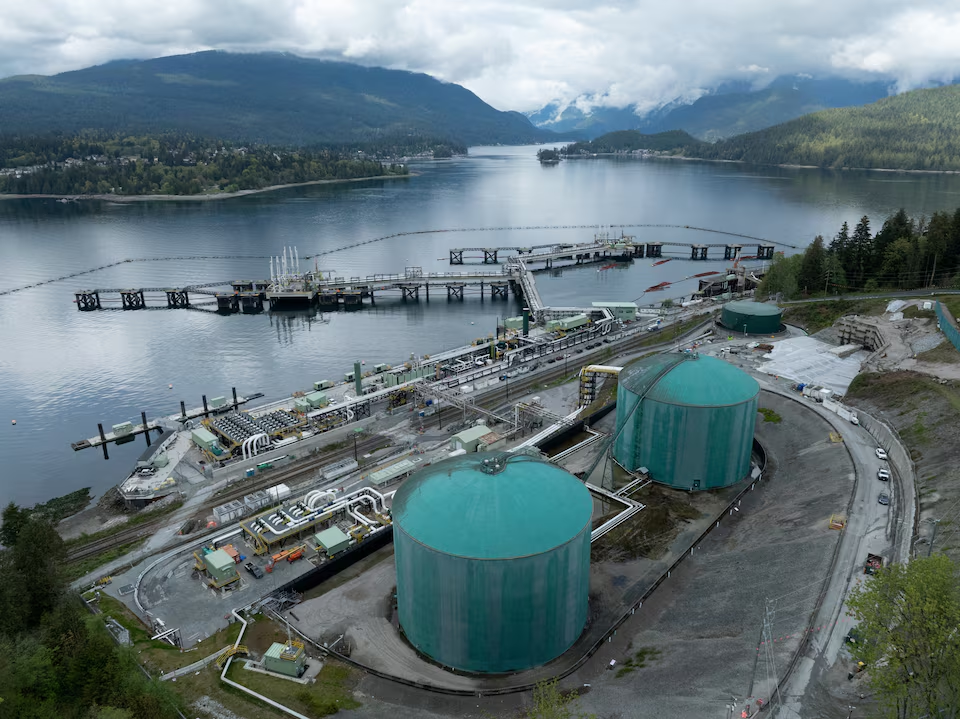
Oil prices fell about 2% Thursday as extra Saudi cargoes through Oman eased supply concerns, but Brent stayed above $100.
Brent crude futures were down $2.67, or 2.5%, at $103.13 a barrel at 12:03 p.m. ET, after touching the lowest level since September 10. US West Texas Intermediate fell $1.61, or 1.6%, to $100.82, its weakest level since September 11.
Both contracts had lost about $3 on Wednesday, leaving Thursday’s decline as an extension of the retreat from weekly highs. The move followed accounts that Saudi Arabia was offering more crude cargoes to Asian refiners through ship-to-ship transfers off Oman’s Sohar port, according to people familiar with the shipments.
Oman cargoes redirect supply
The additional cargoes are intended to offset part of the disruption from attacks on the East-West pipeline, which carries Saudi crude to the Red Sea export hub of Yanbu. Three pumping stations serving the line were damaged last week, according to assessments from three oil and security sources, and the repair timeline remains unclear.
US Energy Secretary Chris Wright signaled Tuesday that crude could move through the pipeline again within days. Separate reports said Saudi Arabia was seeking to restore about half of the route’s capacity over a similar period, though Riyadh has not issued a public restart timetable.
Tim Waterer, chief market analyst at KCM Trade, attributed the pullback from weekly highs to Wright’s comments and to the additional Oman loadings. The combination reduced immediate fears that lost Red Sea flows would leave refiners short of prompt barrels.
Yanbu disruption keeps premium
Crude had climbed to around four-month highs earlier this week after shipping industry sources said loadings at Yanbu had been suspended. Riyadh also canceled some cargo deliveries to European customers, according to the source material, adding pressure on buyers already monitoring Middle East shipping routes.
Traders said a prolonged closure of the East-West route could remove as much as 4% of global oil supply, which keeps the repair schedule central to pricing. Christopher Tahir, senior market strategist at Exness, said increased offshore loadings through Oman and repair efforts had eased concern over supply interruptions to some extent.
Tahir also said the physical market remained tight, limiting the room for further price declines. He pointed to falling tanker traffic through the Strait of Hormuz and continuing exposure of Red Sea shipping and regional energy infrastructure to Saudi-Houthi tensions.
Diesel records widen strain
Fuel markets added pressure beyond crude as diesel supplies tightened. European gasoil futures, a benchmark for diesel prices, settled at a record high on Tuesday, while US ultra-low sulfur diesel futures also closed at a record high.
Russia added a separate supply risk after a Ukrainian drone attack damaged a refinery in the city of Yaroslavl and caused a fire. Regional Governor Mikhail Yevrayev said Thursday that the fire had been extinguished, placing the incident alongside Middle East infrastructure disruptions already watched by fuel traders.
DBS frames Brent range
DBS Bank said its fourth-quarter base case assumes US-Iran tensions ease and Brent stabilizes in an $85 to $95 a barrel range, compared with Thursday’s level above $100. That view depends on restored Saudi flows, steadier tanker routes and no further damage to regional export infrastructure.
If Oman transfers continue and Saudi pipeline capacity returns within days, lower crude risk premiums would ease one source of global inflation pressure, improve feedstock certainty for Asian refiners and reduce emergency rerouting demand across shipping. If repairs stall or Red Sea and Hormuz traffic weakens further, Brent could remain above DBS’s range; Saudi export reliability, refinery margins and diesel prices would face renewed pressure through tighter physical supply.