Oil prices climb as US-Iran talks follow tanker strike
Oil prices rose after a reported US-Iran agreement to halt attacks, as a tanker incident near the Strait of Hormuz renewed shipping risk concerns.
Atlas Newsdesk ·
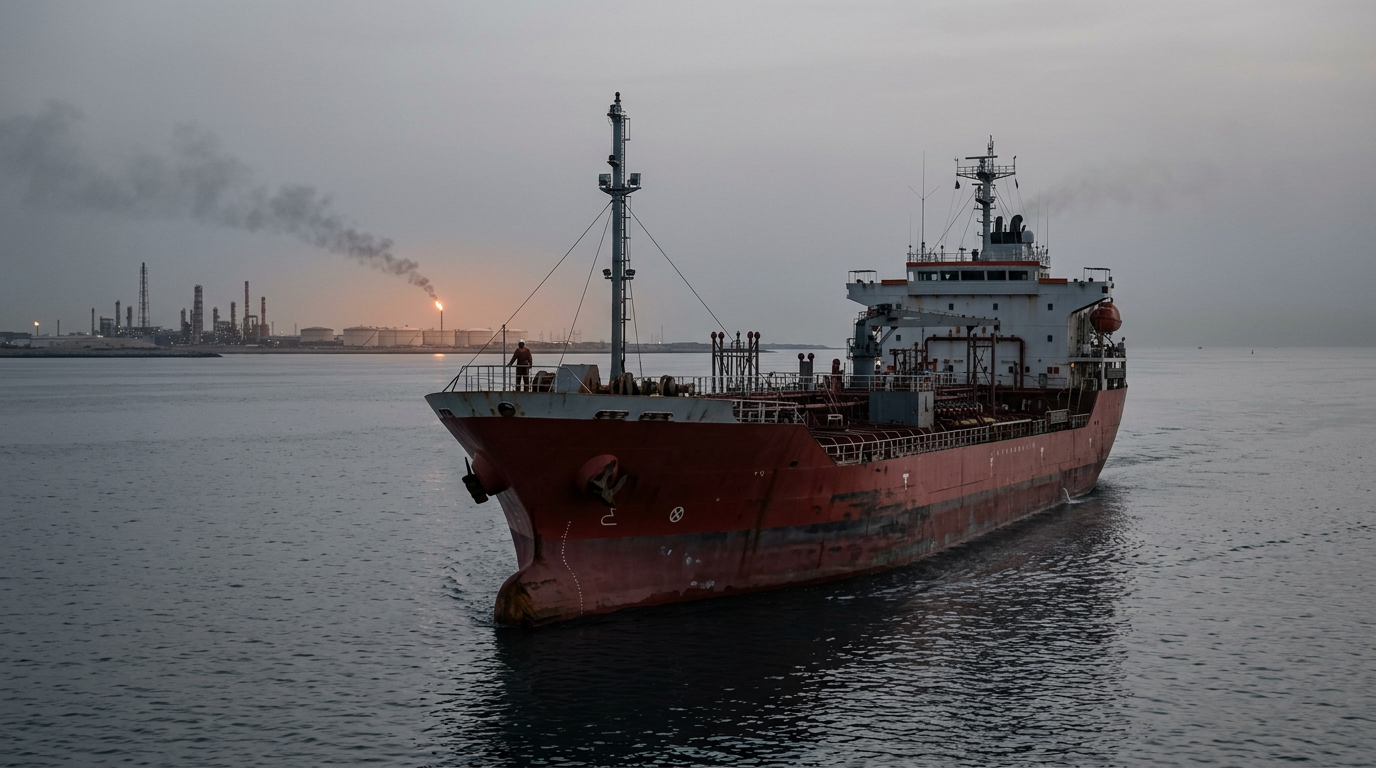
Oil prices rose Monday after a report said the US and Iran agreed to stop attacking each other, easing immediate escalation fears despite fresh disruption near the Strait of Hormuz.
Brent crude briefly gained as much as 1.9% to $73.39 a barrel before trimming advances, while West Texas Intermediate traded near $70. The move followed a weekend flare-up that included damage to a supertanker carrying Qatari crude.
Doha meeting reported as weekend strikes spur volatility
Axios reported that US and Iranian officials plan to meet Tuesday in Doha, citing unnamed US officials. The report described an understanding to pause attacks between the two sides after a burst of tit-for-tat actions.
Over the weekend, the US struck Iranian military targets, according to the account of events surrounding the latest clash. The action came after Tehran was linked to an attack on a commercial vessel near the critical shipping corridor.
The Strait of Hormuz is one of the world’s most important energy chokepoints, connecting the Persian Gulf to the Gulf of Oman and broader global routes. Even limited incidents in or near the strait can ripple quickly into oil pricing because they raise the risk of disrupted flows and higher shipping costs.
Kiku supertanker incident raises near-term shipping concerns
The vessel involved, the Kiku, is a very large crude carrier that was transporting about 2 million barrels of oil. Ship-tracking data showed it last signaled a position off Fujairah in the United Arab Emirates, a key port on the Gulf of Oman.
The Kiku listed its navigation status as “not under command,” a designation typically used when a ship cannot maneuver as required. The extent of damage and the timeline for resuming normal operations were not immediately clear.
It was also uncertain how much the incident altered crude and fuel shipments through the strait. Market participants have been watching whether recent improvements in traffic—seen after an interim de-escalation—can hold amid renewed security threats.
Traders treat swings as tactical, but transit remains fragile
Some analysts say the market is increasingly viewing geopolitical shocks as short-lived unless they change physical supply patterns. Haris Khurshid, chief investment officer at Chicago-based Karobaar Capital LP, said traders have been willing to fade both sharp rallies and quick sell-offs without a “fundamental” shift.
Still, the shipping picture remains delicate. The US Central Command said Saturday that commercial vessel transits through the Strait of Hormuz continued, signaling that the lane remained operational despite the weekend escalation.
At the same time, there were signs of hesitation among operators. Some tankers reportedly aborted attempts to exit the gulf, and shipowners are expected to remain cautious about routing vessels through the chokepoint following the latest attack.
Industry concern is compounded by congestion: hundreds of ships have been described as stuck inside the Persian Gulf, highlighting how quickly risk perceptions can disrupt normal flows even without a formal closure. Any prolonged slowdown could increase freight rates and tighten the availability of prompt barrels, adding upward pressure to benchmarks.
Next steps hinge on whether the reported Doha meeting takes place and produces a durable pause in hostilities. Markets will also monitor ship-tracking data for a sustained recovery in transits, alongside any official updates on the Kiku and the security environment around the Strait of Hormuz.