OECD: Global Economy Faces New Stress Test as Energy Shock Hits Growth Outlook
OECD warns global economy entering fragile phase due to Middle East conflict & energy price surge. Growth to slow, inflation to rise.
Atlas Newsdesk ·
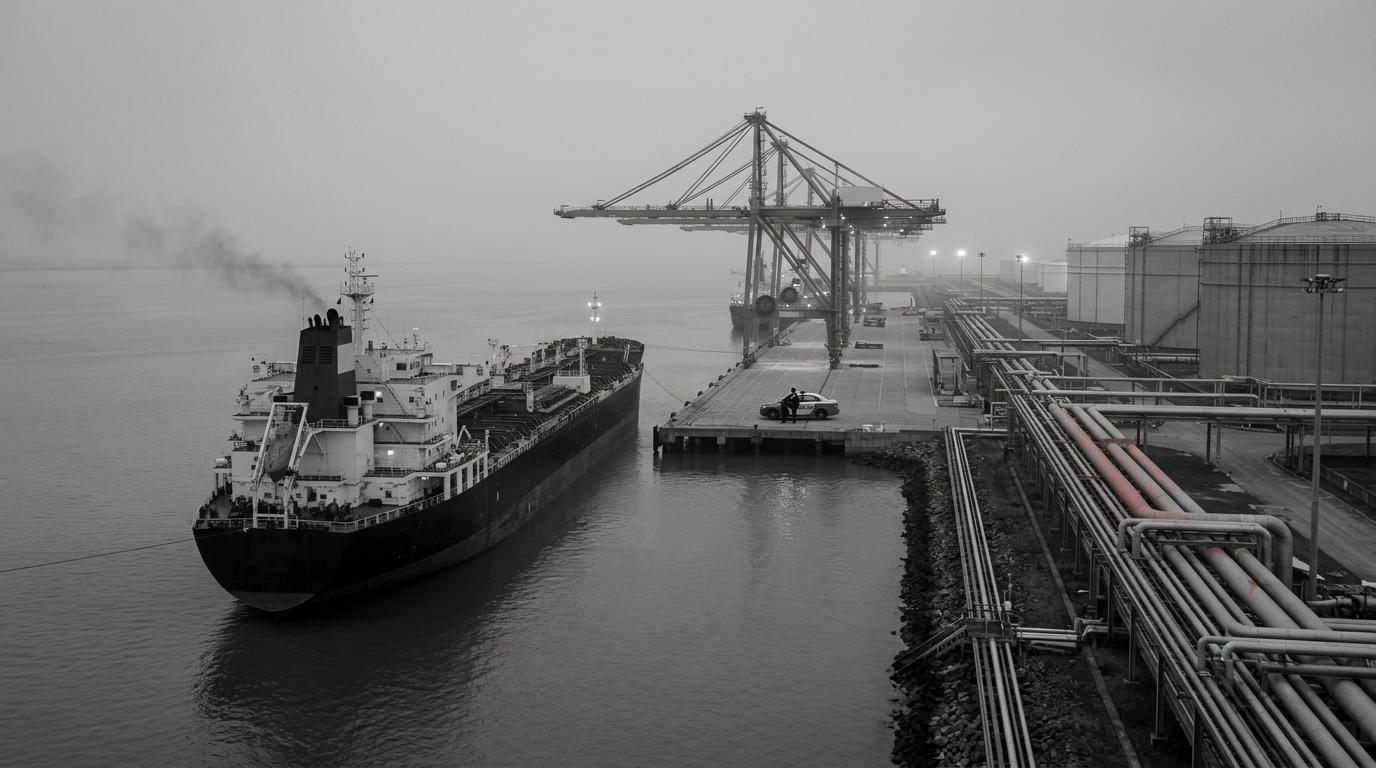
The global economy is entering a more fragile phase, as a sudden surge in energy prices linked to escalating tensions in the Middle East begins to erode the resilience built over the past year.
The OECD’s March 2026 Interim Economic Outlook frames the moment starkly: what had been a steady, technology-driven expansion is now confronting a renewed geopolitical shock with global implications.
“The evolving conflict in the Middle East… will test the resilience of the global economy,”
The report states. That test is already underway—and its effects are spreading quickly across markets, supply chains and inflation dynamics.
Growth slows as shocks offset momentum
Global GDP is now projected to grow by 2.9% in 2026 , before edging up to 3.0% in 2027 . While still positive, this marks a slowdown compared with earlier expectations and reflects a shift in the balance of forces shaping the global economy.
Until recently, growth had been supported by strong investment in artificial intelligence and technology production, alongside relatively accommodative financial conditions. But that momentum is now being offset by rising energy costs and heightened uncertainty.
According to the OECD, higher energy prices are expected to “add markedly to business costs and raise consumer price inflation, with adverse consequences for growth”. In effect, the global economy is transitioning from a demand-supported expansion to a supply-constrained environment.
Energy markets at the center of disruption
At the heart of the shift lies a sharp disruption in global energy flows. The near halt of shipments through the Strait of Hormuz —a critical artery for oil and liquefied natural gas—has significantly constrained supply.
The OECD notes that this route accounted for roughly a quarter of global seaborne oil trade.
With limited spare capacity elsewhere, prices have reacted quickly. Oil prices surged by more than yüzde elli in the weeks following the escalation of the conflict, while natural gas and refined products such as diesel and jet fuel have also recorded steep increases.
The consequences extend beyond energy markets. Fertiliser prices, closely linked to gas inputs, have jumped sharply, raising the prospect of higher global food prices in 2027 . Industrial supply chains—from petrochemicals to metals—are also exposed, underscoring the systemic nature of the shock.
Inflation pressures re-emerge
The timing of the energy shock is particularly challenging. Inflation had not fully returned to central bank targets in several major economies even before the latest developments.
Now, the OECD expects G20 inflation to rise to 4.0% in 2026 — 1.2 percentage points higher than previously anticipated—before easing to 2.7% in 2027 . The increase is largely attributed to energy costs feeding through to consumer prices.
Importantly, inflation expectations are also beginning to edge higher, especially in advanced economies. This raises the risk that central banks may need to maintain tighter policy for longer, even as growth weakens.
Diverging impacts across economies
The global impact of the energy shock is uneven. Net energy exporters stand to benefit from improved terms of trade and stronger income growth. In contrast, energy-importing economies face a dual burden of higher costs and weaker demand.
This divergence is particularly visible across the G20. Growth in the euro area is expected to slow to 0.8% in 2026 , weighed down by energy prices, before recovering modestly. The United States is projected to see growth ease from yüzde 2 to 1.7% by 2027 as consumer spending softens.
Emerging markets face a mixed outlook. While some benefit from lower effective U.S. tariffs, others are exposed to higher import costs and tighter financial conditions.
The OECD highlights that financial market volatility has increased and borrowing costs have risen in several economies, including Türkiye .
Risks tilted to the downside
The baseline outlook assumes that energy prices will gradually decline from mid- 2026 . But the OECD emphasizes that this is a conditional scenario, heavily dependent on the trajectory of the conflict.
A prolonged disruption to energy exports could lead to more severe outcomes. In a downside scenario, global output could fall by around yüzde 0,5 relative to baseline, while inflation would rise further. Energy shortages, not just higher prices, could emerge as a constraint on production.
There are also financial risks. A combination of higher costs, tighter conditions and potential repricing of assets—particularly in sectors linked to artificial intelligence—could weaken private demand and amplify volatility.
A fragile balance between resilience and risk
Despite the headwinds, the global economy is not in contraction. Business investment, particularly in technology, remains a source of strength. There is also potential upside if geopolitical tensions ease or productivity gains from AI materialize more quickly than expected.
However, the balance of risks has clearly shifted. What was once a narrative of resilience is now increasingly defined by uncertainty.
The OECD’s message is measured but clear: the global economy is holding up—for now. But its trajectory will depend less on cyclical factors and more on geopolitical developments and energy market dynamics.
In that sense, 2026 may mark a turning point: from a recovery driven by innovation and demand, to an era shaped by supply shocks and strategic vulnerabilities.