Niger Accuses France of Orchestrating Failed Mutiny
Niger's military government claims France orchestrated an August 29 mutiny in Niamey, resulting in casualties, deepening a diplomatic crisis.
Lauren Collins ·
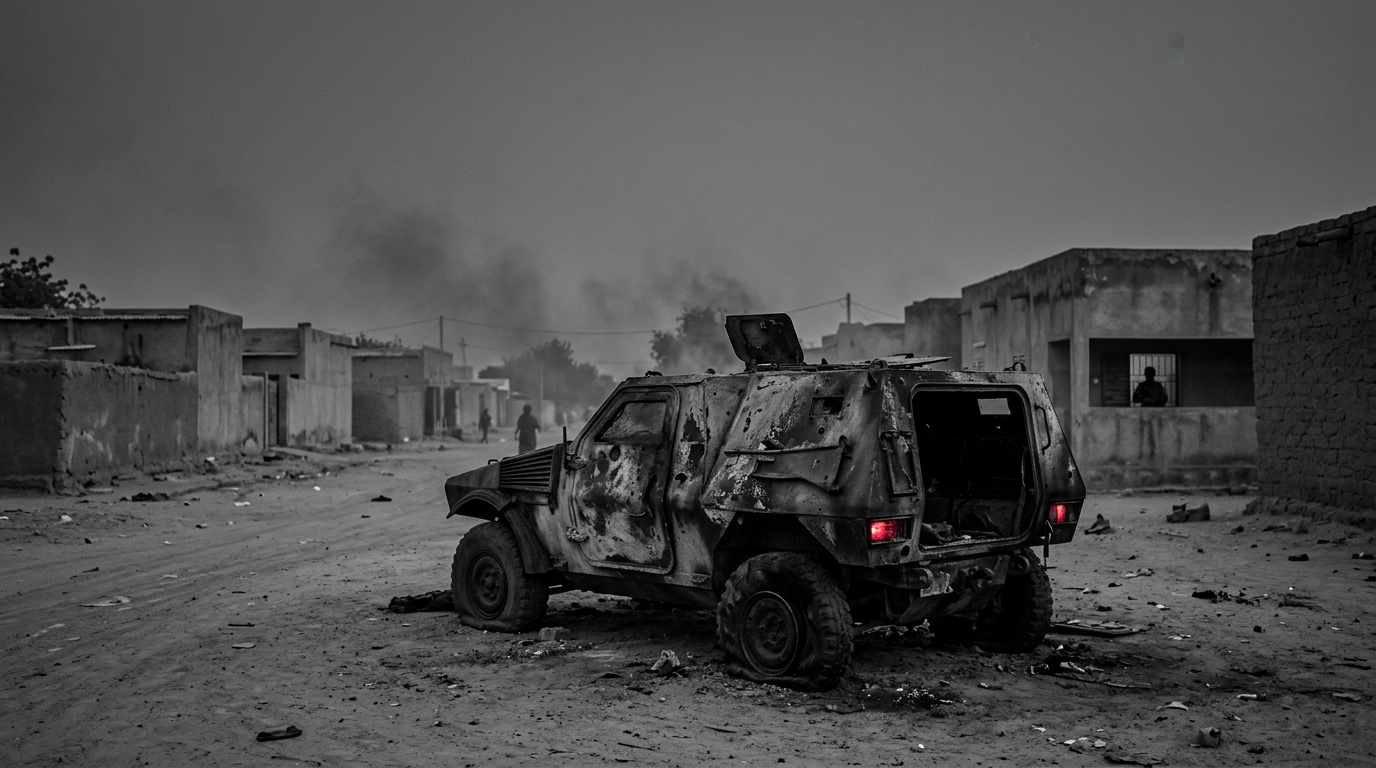
Niger's military government has formally accused France of orchestrating a failed mutiny in the capital, Niamey, on August 29. The alleged incident reportedly caused dozens of casualties before government forces, supported by Russian paramilitary personnel, re-established control. This accusation significantly escalates the diplomatic tensions that have persisted between the two nations since the 2023 coup.
Soumana Boubacar, the government spokesperson, alleged that the August 29 operation was part of a broader collaborative effort directed by the French administration. The Nigerien Council of Ministers announced that it had compiled evidence and intends to pursue the matter through international legal channels. In response, French Foreign Minister Jean-Noel Barrot dismissed these claims as baseless, characterizing them as a repeated attempt to divert attention from internal instability within Niger.
Details of the Alleged Incident
The August 29 events reportedly involved renegade soldiers targeting key military facilities in Niamey. These sites included Base 101, a significant military complex located within the international airport, and the presidential palace. Authorities stated that mutineers detained some fellow soldiers and opened fire at sensitive locations across the capital.
Fighting, marked by explosions and gunfire, continued for several hours. The Nigerien army, aided by Russian paramilitary fighters, eventually managed to contain the situation. State media reported that hundreds of soldiers participated in the mutiny, with dozens either killed or arrested during the confrontation.
Deteriorating Diplomatic Relations
This accusation arises amidst a period of severely strained bilateral relations between Niger and France. Following the 2023 coup that ousted President Mohamed Bazoum, Niger has taken several steps to sever ties. These actions include expelling French diplomatic and military personnel, revoking existing bilateral defense agreements, and restricting the broadcasts of French media outlets, including RFI.
France had previously withdrawn approximately 1,500 troops and its ambassador from Niger in the aftermath of the coup, signaling a significant shift in its presence and influence in the Sahel region.
Regional Instability Concerns
Analysts suggest that Niger's internal security apparatus may now prioritize monitoring domestic dissent over conducting counter-insurgency operations against militant groups. Data from the Armed Conflict Location & Event Data Project (ACLED) indicates a sharp increase in violent incidents in Niger, with nearly 6,000 deaths recorded since the 2023 transition. This compares to approximately 3,200 deaths in the preceding three years.
While Niger experiences less intense violence than neighboring Mali and Burkina Faso, ACLED noted that it faces a broader array of armed threats. The military government's intensified focus on internal threats could potentially weaken efforts against groups linked to ISIL and al-Qaeda, leading to further regional instability. The accusations against France, coupled with the deployment of Russian-backed forces, underscore a significant geopolitical reorientation in the Sahel, with uncertain implications for regional security and counter-terrorism initiatives.