New preprint claims an AI agent training recipe that hides a massive new cloud compute bill
A new, non-peer-reviewed paper details a method for generating training data that makes 'agentic' AI more capable than existing open models.
Edward Mullen ·
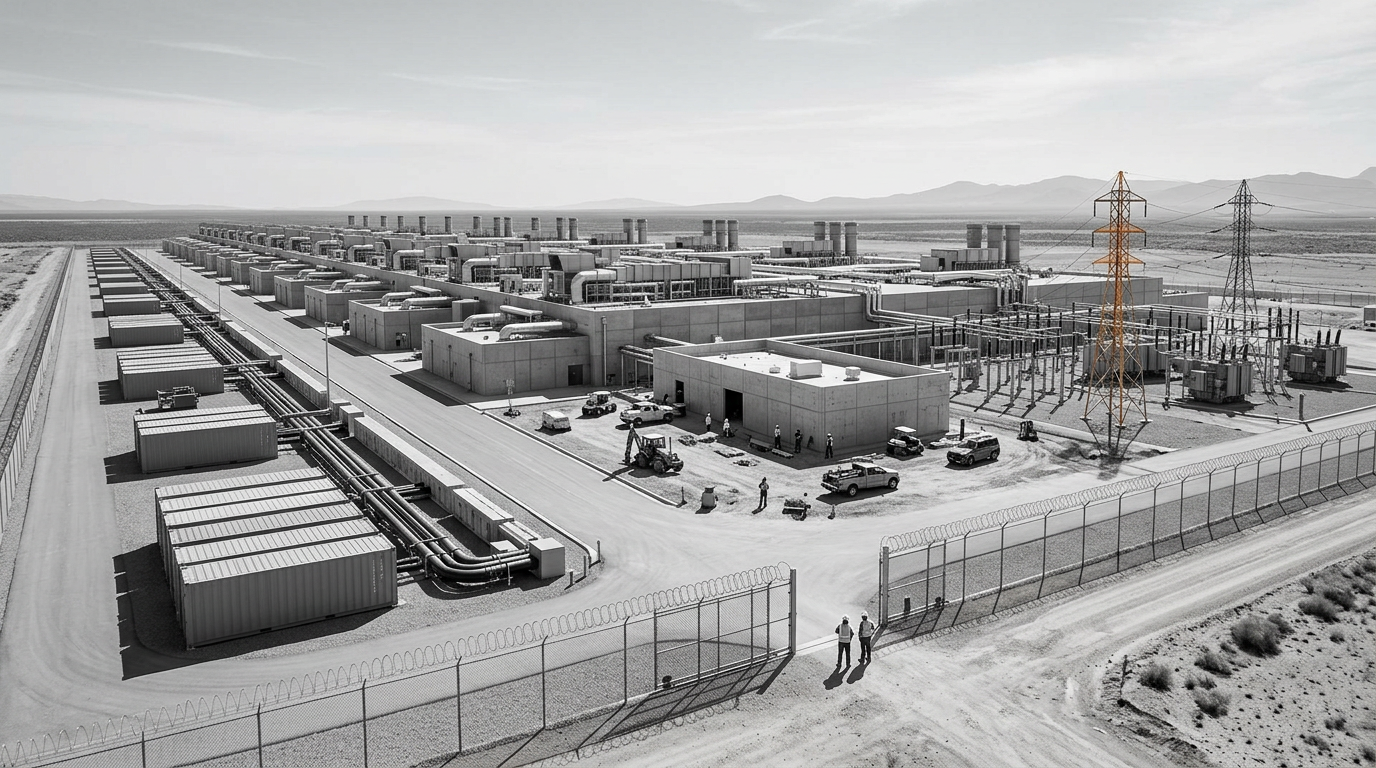
Curating a training set of 100K environment-execution examples allows open-weights models to reliably master command-line tasks. Yet harvesting this trace-generation data requires orchestrating hundreds of thousands of isolated virtual runs to safely log agent behaviors. As enterprise engineering teams adopt these automated pipelines, the physical capacity limits of secure sandbox infrastructure will triple isolated runtime expenditure over the next twelve months.
A new paper posted to the preprint server arXiv, titled '[OpenThoughts-Agent: Data Recipes for Agentic Models](http://arxiv.org/abs/2606.24855v1),' details a systematic method for creating the specialized data needed to train 'agentic' language models—systems that can autonomously use tools like browsers and terminals to complete tasks. This work, which is not yet peer-reviewed, argues that the most effective training data for these agents doesn't come from expensive human demonstrators, but from carefully curated recipes of synthetic, task-oriented execution traces.
All reporting is based on this single paper.
The authors conducted over 100 controlled ablation experiments to refine their data pipeline. The paper reports that their final dataset, a 100K-example collection called OpenThoughts-Agent (OT-Agent), demonstrates superior performance when used to fine-tune an existing open-weights model.
Fine-tuning Qwen3-32B on this dataset yielded an average accuracy of 44.8% across seven agentic benchmarks, compared to Nemotron-Terminal-32B's 40.9%. That 3.9 percentage point improvement over what the paper calls the "strongest existing open data agentic model" is presented as evidence that high-quality, open data recipes can produce highly capable agents.
A New Recipe Solves the Old Bottleneck
For enterprise AI teams, the standard narrative has been that building capable agents requires one of two expensive inputs: privileged API access to a frontier model like GPT-4o, or a massive, bespoke dataset of human-generated demonstration data. This has created a significant barrier to entry, leaving most organizations to either pay the high price of proprietary model inference or undertake costly data-collection projects.
The authors address this gap with a 'fully open data curation pipeline' that utilizes automated environment-execution feedback, bypassing human data bottlenecks.
This method shifts the core problem. Instead of a data scarcity problem, it creates a data generation problem.
The 100K examples in the OT-Agent dataset are not static text files; they are 'traces' of a model attempting to solve a problem inside a live, simulated environment. Each data point is the recorded output of a successful or failed attempt to, for example, interact with a software application or a command-line interface.
The value is in the diversity and fidelity of these traces. This means the bottleneck is no longer human annotators, but the machine time required to generate millions of these attempts.
The Buried Cost of Sandbox Execution
The paper focuses on the composition of the data and the resulting model performance, but it omits a critical operational detail: the cost and complexity of the infrastructure required to generate these traces safely and at scale. To create one of these data points, an organization must spin up an isolated, sandboxed environment—like a container or a micro-VM—allow an AI agent to execute code within it, log the entire interaction, and then securely tear the environment down.
Generating a 100K-example dataset requires orchestrating this process hundreds of thousands, if not millions, of times.
This is a fundamentally different type of compute workload than model training or inference. It's not about massively parallel GPU operations, but about millions of individual, CPU-heavy, I/O-bound tasks that must be strictly isolated from one another and from production systems.
A single 'sandbox escape' from an agentic model with tool-use capabilities could pose a serious security risk. As a result, the required infrastructure must be robustly secured, which adds expense and complexity.
This creates a hidden supply chain and a new, unbudgeted line item for any CTO trying to replicate these results: secure, on-demand sandbox execution.
From Data Procurement to Compute Procurement
The immediate consequence for enterprise strategy is a shift in procurement focus. The decision is no longer simply about which LLM provider to use or whether to hire a team of data labelers.
The critical decision becomes how to source the vast amount of isolated compute needed for trace generation. Will companies build their own secure, multi-tenant execution platforms, a complex and expensive engineering challenge?
Or will they turn to a new class of specialized cloud providers, like E2B or Fly.io, that offer secure sandbox APIs?
Either way, this represents a significant new operational expenditure. The cost of building a competitive agent is no longer dominated by training runs or inference calls alone.
A third, equally significant cost center is emerging for trace generation. We project that for enterprises adopting these open, synthetic data recipes, the budget for isolated runtime environments will become a major part of their AI development spend, potentially tripling over the next 12 to 18 months as they scale from experimentation to production-quality datasets.
The New Leading Indicators for Agentic AI
The conventional wisdom—that agentic capabilities are the exclusive domain of those with proprietary models or massive human-annotation farms—is now under direct challenge.
If the OT-Agent paper's methods are replicable and scalable, the competitive landscape for AI development will be reshaped around this new bottleneck of generating execution traces. The signals to watch are not just benchmark leaderboards, but developments in the cloud infrastructure market.
We will know this call is correct if AWS/GCP launches a micro-billed 'agentic trace execution' API class by October 2025, or if sandbox providers like E2B report a 3x container volume spike by Q4 2025. Conversely, if these open recipes prove difficult to scale or if the performance gains do not translate to real-world business applications, enterprises will revert to relying on proprietary model providers, and this new infrastructure category will fail to materialize.
The future of open agentic AI may depend less on the models themselves and more on the cost and availability of the virtual machines they are born in.