NASA's Roman Telescope launch signals a procurement shift to modular project-management platforms
Discover how the Nancy Grace Roman Space Telescope’s launch signals a shift toward modular, resilient project management for complex NASA missions.
Edward Mullen ·
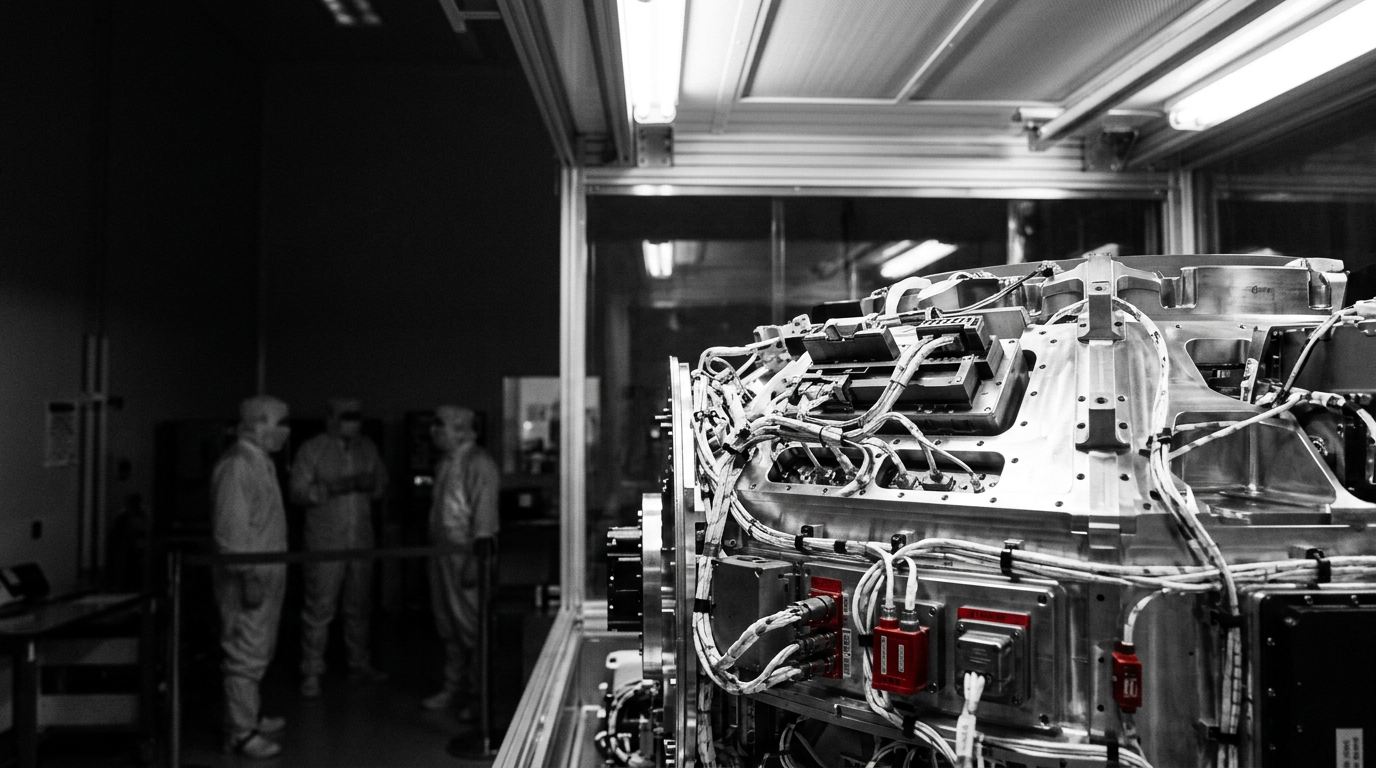
Many celebrate the Nancy Grace Roman Space Telescope as a testament to engineering prowess and human ingenuity. However, the true lesson of its journey, navigating a global pandemic and other obstacles, lies not in hardware alone but in the coordination of an expansive supply chain. This overlooked complexity points to an emerging market for advanced procurement and project management platforms for future space missions.
The Roman launch reveals a procurement friction in space programs What the podcast makes explicit is that the triumph rests on more than a single rocket or telescope build. It rests on coordinating dozens of vendors, subcontractors, and schedule drivers over many years, often under international constraints and shifting political winds. In that sense, the Roman example exposes a friction point that extends beyond hardware: the need for reliable, repeatable ways to procure and align complex work across dispersed teams. The signal is less about a one-off success and more about the ongoing tension between mission-specific tooling and platform-based procurement that can scale with risk.
What the signal shows about modular project-management platforms
The episode’s arc suggests a potential shift toward standardized, modular project-management tooling that can be repurposed across missions with similar complexity. In other words, a second-order procurement market could emerge for platforms that package governance, risk tracking, supplier coordination, and integration testing as interoperable modules.
That reframes the procurement debate from bespoke software ecosystems built for a single mission to a library of interchangeable components that can be mixed, matched, and upgraded without rearchitecting the entire program. This is not a claim about a single mission’s needs, but about a new class of tooling that can absorb volatility—pandemics, supply shocks, late design changes—without collapsing the schedule.
Why this is not about a single mission but about a platform market Critically, the Roman launch is being read as a harbinger for how big, long-cycle efforts are managed in practice. The procurement implication is not simply acquiring a set of documents or a vendor; it is enabling a platform that can rapidly incorporate new suppliers, adapt to regulatory changes, and maintain an auditable lifecycle across multi-year timelines. If correct, this would reallocate funds from bespoke software development toward licensed platforms and integration services, and it would raise the importance of governance standards, API compatibility, and data-sharing norms across the supply chain. It is a shift that would extend beyond NASA into broader aerospace, defense, and other large-scale engineering programs.
Implications for aerospace buyers and the broader technology stack For program offices, the Roman example argues for elevating the procurement design phase as a significant parallel track to systems engineering. Buy-in would hinge on demonstrated interoperability, vendor-neutral interfaces, and a road map that can absorb discontinuities in cost and schedule without derailing the mission. If platforms prove capable of sustaining program integrity across partners and geographies, the procurement function could become a competitive differentiator rather than a risk bottleneck. In practical terms, that means more stringent evaluation of platform ecosystems, more formalized data-exchange standards, and longer-term licensing strategies that align with multi-year funding profiles common to space programs.
Signals to watch in the coming months
First, watch whether NASA or partner agencies publish procurement amendments or platform-agnostic governance standards that favor modular tooling over bespoke software stacks. Second, look for vendor announcements—whether traditional systems integrators or niche platform providers—emphasizing interoperable modules for program management, risk, and supply-chain coordination.
Third, observe any pilot programs in adjacent programs or international collaborations that test standardized tooling across multiple missions, not a single project. A fourth observable is shifts in budgeting language toward platform licenses and integration services rather than bespoke software development.
Each of these would support the thesis of a second-order procurement market forming around modular project-management platforms.
The Roman launch, then, is a concrete data point for a broader procurement trajectory that could redefine how long-duration, multi-partner programs are planned and executed. It implies a future where mission success depends not only on the engineering but on a resilient, adaptable procurement backbone—one that can scale with risk and deliverable complexity across a growing ecosystem.