Myanmar Airstrike Kills 14 Civilians at Monastery
A Myanmar military airstrike on August 21, 2026, killed 14 civilians and injured 20 at a Buddhist monastery in Myaung township, escalating concerns over…
Lauren Collins ·
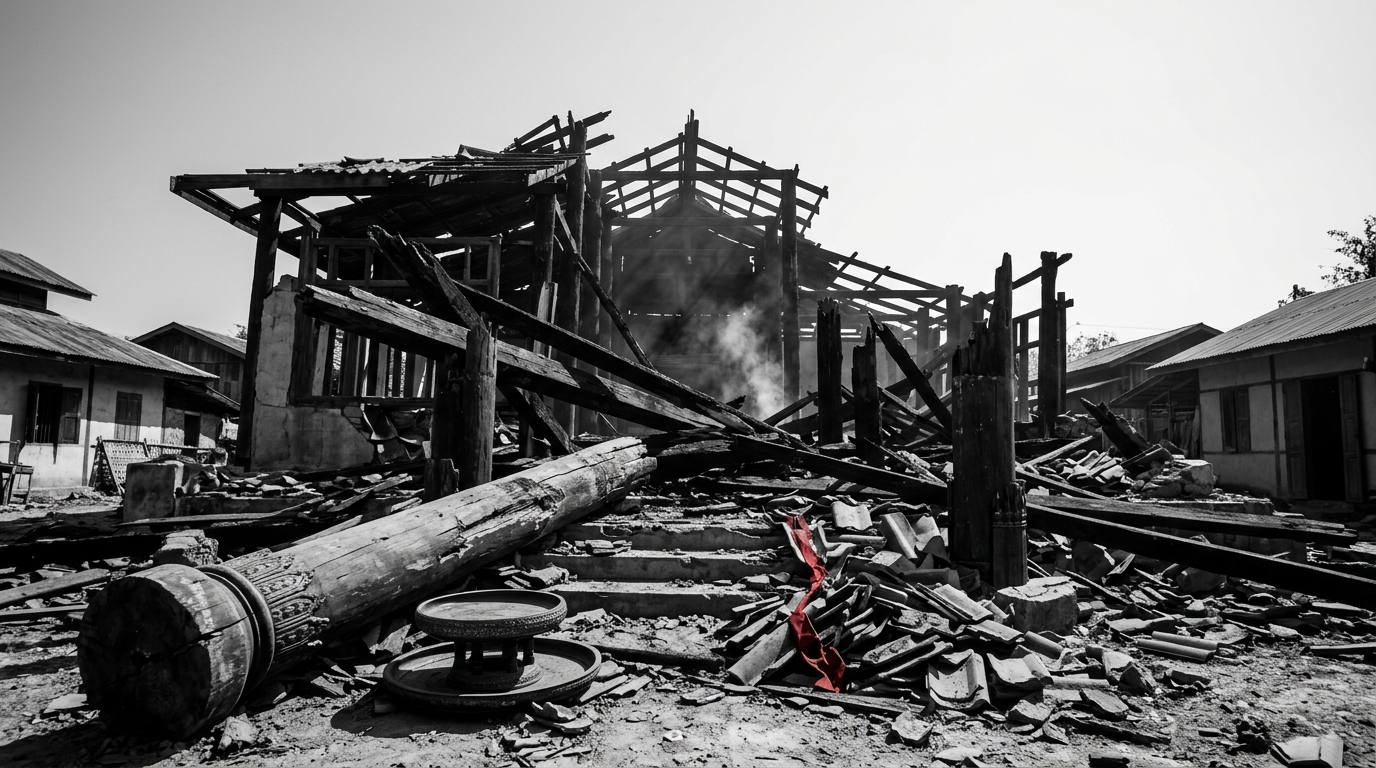
A Myanmar military airstrike on Friday, August 21, 2026, resulted in the deaths of 14 civilians and injuries to 20 others at a Buddhist monastery. The incident occurred in Swel Le Oh village, situated within Myaung township, approximately 75 kilometers west of Mandalay. A local opposition group reported that a fighter jet dropped two bombs on the monastic compound.
More than 100 individuals had gathered at the monastery for a religious retreat when the attack unfolded. This information was provided by Nway Oo, a spokesperson for the Civil Defense and Security Organization of Myaung Township (CDSOM). The area, part of the Sagaing region, is recognized as a significant zone of ongoing conflict.
Escalating Aerial Campaigns
The strike underscores the military's intensifying aerial operations, which are increasingly targeting territories controlled by resistance forces. International observers and various human rights organizations have consistently documented a rise in attacks impacting civilian populations, particularly since the military coup in February 2021.
Data compiled by the Washington-based Council on Foreign Relations indicates that the conflict has led to more than 100,000 fatalities and displaced 5.2 million people across the nation since the coup. The military government asserts that its operations are exclusively aimed at armed combatants, but groups such as the UN-established Independent Investigative Mechanism for Myanmar (IIMM) have reported a persistent escalation in strikes against civilians.
Junta's Stance and Disputed Control
The military junta has not issued a comment regarding this specific incident. Its consistent policy has been to deny responsibility for civilian casualties in such events, and it has previously rejected the IIMM's reports detailing civilian targeting. The conflict is further complicated by a fragmented territorial control landscape.
Estimates suggest that resistance forces and various ethnic armies collectively control approximately 42 percent of Myanmar's territory. In contrast, the military government holds about 21 percent. This dynamic contributes significantly to the sustained violence and the military's increasing reliance on aerial bombardments, particularly in regions like Myaung township, which is known as a stronghold for armed resistance groups.
The recent airstrike tragically highlights the persistent humanitarian crisis and the severe challenges to civilian safety throughout Myanmar. International scrutiny remains focused on the military's conduct and the profound impact of the ongoing conflict on the civilian population, especially in hotly contested areas where such incidents are becoming more frequent and devastating.