MotoGP budget cap plan aims for long-term stability
MotoGP budget cap talks target predictable team spending and long-term profitability, but large cost gaps and stakeholder pushback complicate a single rule.
Mehmet Şahinoğlu ·
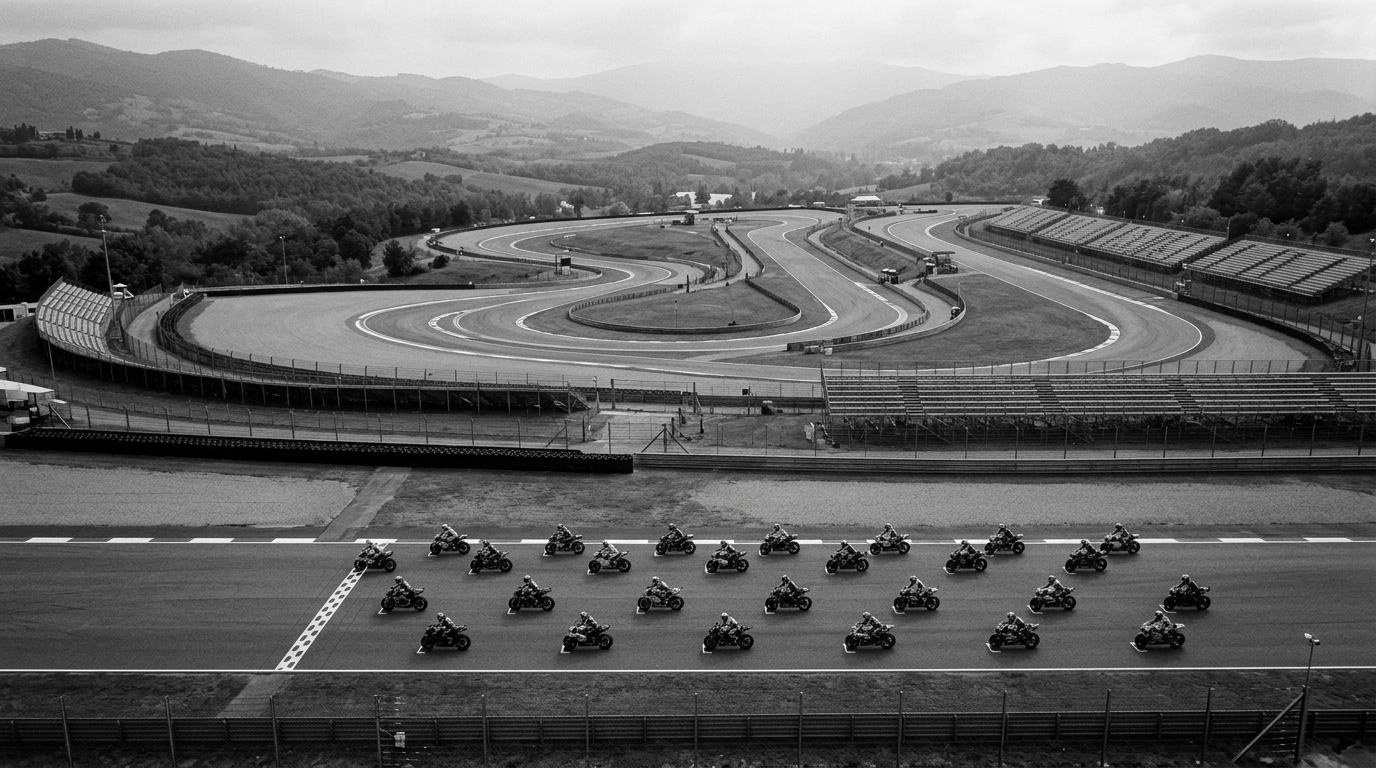
MotoGP management is developing a mandatory budget cap for teams as part of a broader effort to make financial operations more predictable and improve long-term profitability, officials said. They described the initiative as structurally similar to reforms used in other top motorsport categories, including Formula 1.
Officials stressed the push is not a response to an immediate on-track performance problem. Instead, they presented it as a long-range move to protect fiscal sustainability by setting clearer limits and creating more consistent financial expectations across the grid.
Those differences show up in estimates that annual Big spending gaps complicate a single standard Those differences show up in estimates that annual Officials acknowledged that designing a cap for MotoGP is difficult because manufacturers are organized differently and spend in very different ways. Those differences show up in estimates that annual spending currently runs from about €20 million to €80 million depending on the participant. According to officials, the aim is to reduce extreme disparities, but an evenly applied rule would need to account for teams with different internal structures, cost bases, and approaches to development and staffing. The same framework would have to cover operations that do not look alike, which makes standardization challenging. Commercial negotiations run in parallel The budget cap discussion is unfolding alongside negotiations over a new commercial framework for the next five-year cycle, officials said. They said talks with stakeholders are continuing, but parts of the cost-control agenda have already encountered obstacles. Officials pointed to resistance against earlier proposals intended to cut costs by limiting equipment. They did not specify which groups objected or what elements were contested, but they said the pushback has been strong enough to register as a hurdle as MotoGP tries to build a broader cost-reduction package.
Ezpeleta calls for “rationality” in spending
Carlos Ezpeleta, MotoGP sporting director, said the organization “absolutely want[s] to pursue a budget cap” to bring “a degree of rationality” to how the championship operates. His remarks positioned the cap as a structural change meant to shape spending behavior, rather than a short-term corrective measure. Officials argued that cost controls can influence the Officials argued that cost controls can influence the economic balance of the competition even when racing quality is strong. They said narrowing financial gaps can help make the operating environment more sustainable over time.
Formula 1 cited, but timing remains uncertain MotoGP officials cited Formula 1 as a reference point, noting that a comparable budget cap introduced in 2021 was credited with enabling teams to generate surpluses and attracting new entrants. They said that experience shows how limits can alter a sport’s financial profile.
Officials suggested that, if a MotoGP cap is implemented effectively, it could reshape the championship’s economic landscape by making participation more attractive to new manufacturers and by narrowing the financial gap between teams. At the same time, they flagged a key uncertainty: resistance from higher-spending teams could slow adoption or dilute the rules, potentially leaving current disparities largely intact.
Officials said the direction of ongoing negotiations will be central to determining MotoGP’s future economic structure, as the series weighs how to translate a cost-control objective into a rule that stakeholders will accept.