Russia Tests RS-28 Sarmat ICBM as Nuclear Modernization Continues
Russia test-launched its new Sarmat intercontinental ballistic missile, aiming to modernize its nuclear arsenal and counter U.S. missile defense systems.
Lauren Collins ·
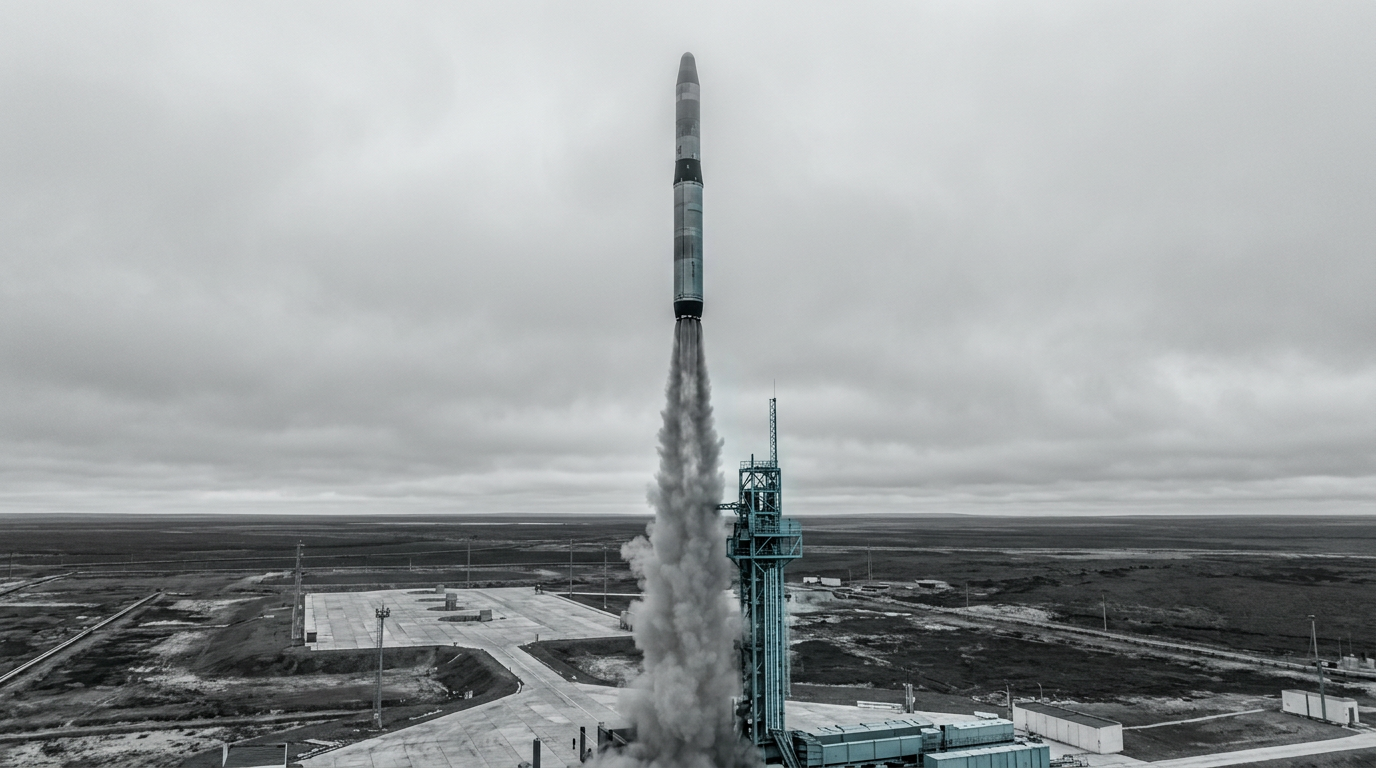
Russia conducted a test launch of its new RS-28 Sarmat intercontinental ballistic missile on May 12, 2026, as part of its effort to modernize its nuclear forces. President Vladimir Putin said the missile will enter combat service by the end of 2026 and replace the Soviet-era Voyevoda system. Western analysts refer to the missile as “Satan II.”
The test launch came as Moscow highlights a series of new strategic weapons that it says are meant to ensure parity with the United States. Putin described the Sarmat as the world’s most powerful missile, a claim that cannot be independently verified from the information provided.
According to an April 2024 report by the Center for Strategic and International Studies (CSIS), the Sarmat has been in development since 2011 and is designed to carry a maximum payload of 10 tonnes. The report said the missile is 35.3 meters long and weighs 208.1 tonnes.
Putin said the missile’s maximum range exceeds 35,000 km. Western analysts, including CSIS, have estimated the missile’s range at about 18,000 km, which would still be sufficient to reach targets in the United States from Russian territory.
Sarmat capabilities and disputed range claims
The gap between Russia’s stated range and outside estimates highlights the limits on public verification of strategic weapons capabilities. The article’s source material cites both Putin’s claim and the lower range figure attributed to Western analysts and CSIS.
Russia has presented the Sarmat program as part of a broader modernization drive that has continued for more than a decade. Officials have described the effort as necessary to maintain strategic balance in the face of U.S. missile defense deployments.
Other new systems and U.S. missile-defense costs
The Sarmat test followed Russia’s earlier unveiling of weapons including the Avangard hypersonic glide vehicle and the Oreshnik intermediate-range ballistic missile. Russia has portrayed these systems as a response to U.S. missile defense programs.
In Washington, the U.S. Congressional Budget Office estimated that a new missile defense system known as the “Golden Dome” would cost $1.2 trillion over 20 years to build and maintain.
Further details on the Sarmat’s deployment timeline and future testing will be closely watched for signals about Russia’s strategic forces modernization pace and the broader trajectory of U.S.-Russia strategic competition.