Missile Strike Hits US Personnel as Iran Talks Stall
US personnel were injured in a missile attack on a Kuwaiti air base as White House talks on extending a ceasefire with Iran concluded without an agreement.
Lauren Collins ·
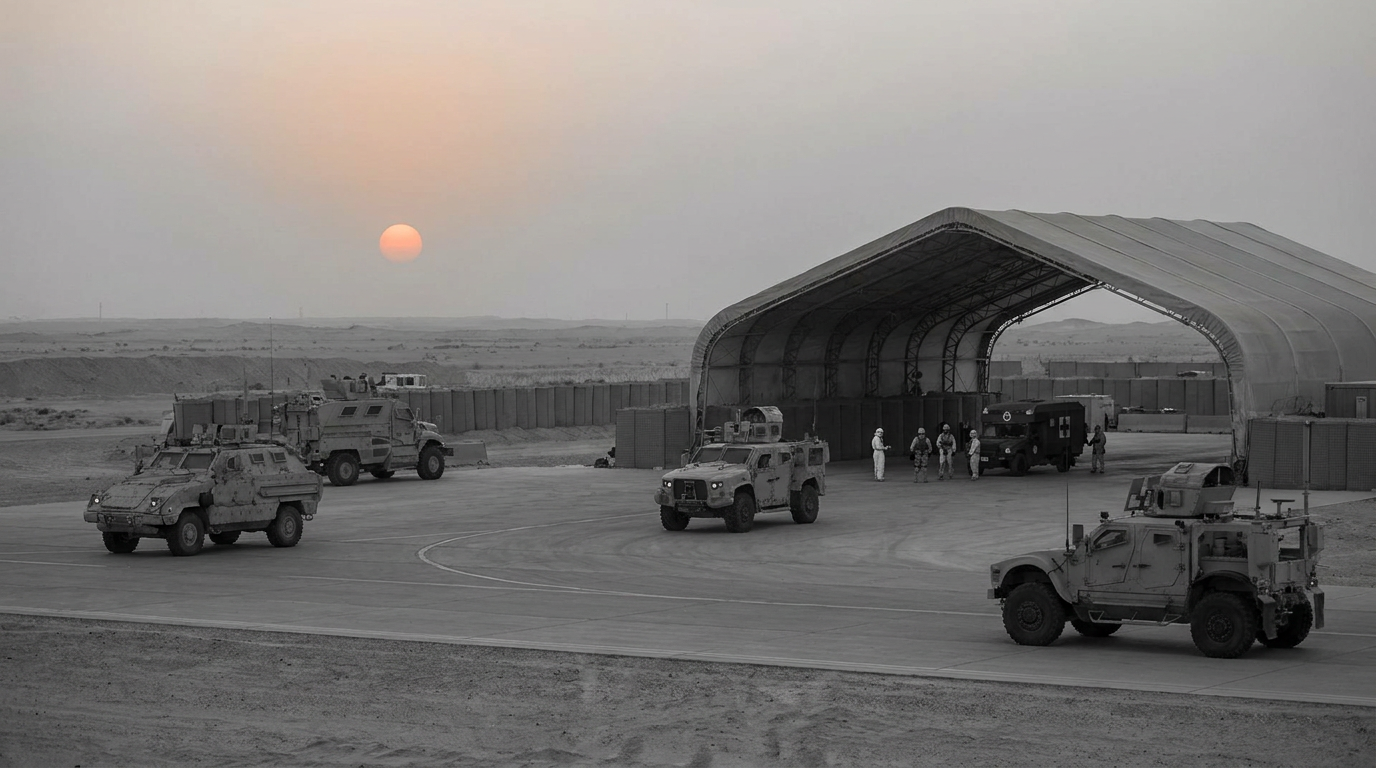
Several American personnel sustained injuries in a missile strike targeting a Kuwaiti air base within the past day. This incident occurred concurrently with a critical White House meeting aimed at negotiating an extension of the ceasefire with Iran, which ultimately concluded without a definitive outcome.
Stalled Negotiations Heighten Tensions
The absence of public statements following the high-level talks on Friday signals ongoing uncertainty regarding a potential deal with Tehran. President Trump had previously indicated optimism about reaching a preliminary agreement to prolong the fragile truce, suggesting a final decision was imminent.
However, the two-hour Situation Room session concluded without any official announcements. A White House official, speaking anonymously, confirmed that no agreement was reached. This lack of resolution underscores the complex dynamics and persistent disagreements between the two nations.
Persistent Disagreements Plague Ceasefire Talks
The White House official reiterated President Trump's firm stance on specific terms for any agreement. These non-negotiable conditions reportedly include Iran's complete abandonment of its nuclear program, the surrender of its enriched uranium stockpiles, and ensuring the unobstructed passage through the Strait of Hormuz.
These demands reflect core U.S. objectives that have consistently been central to negotiations. The ongoing conflict between the U.S. and Iran has now entered its fourth month, amplifying the stakes for regional stability.
The pattern of conflicting signals from Washington has been notable. Both sides have oscillated between expressing proximity to an agreement and highlighting significant obstacles. Key sticking points continue to revolve around Iran's nuclear ambitions and historical uranium enrichment activities.
Furthermore, the freedom of navigation through the vital Strait of Hormuz remains a contentious issue. This critical maritime chokepoint is essential for global energy supplies and international trade routes.
The missile attack on the air base represents a significant escalation, raising serious concerns about the security of U.S. assets in the region. The incident brings immediate attention to the physical risks involved in the ongoing standoff and the need for de-escalation efforts.
Moving forward, the international community will be closely monitoring any further developments from both Washington and Tehran. The potential for renewed hostilities or a breakthrough in diplomatic efforts remains uncertain.
The convergence of military action and stalled diplomatic progress paints a precarious picture for regional security. Future discussions will likely need to address both the immediate security concerns and the long-term strategic objectives of all parties involved.
The coming days are crucial for assessing whether diplomatic channels can be reopened effectively or if the situation is headed toward further confrontation. The U.S. response to the attack and any subsequent engagement with Iran will be closely scrutinized.