Themis Rocket Passes First Wet Dress Rehearsal
Themis Rocket passed its first wet dress rehearsal on July 23 at Sweden’s Esrange, simulating cryogenic fueling and countdown steps.
Atlas Newsdesk ·
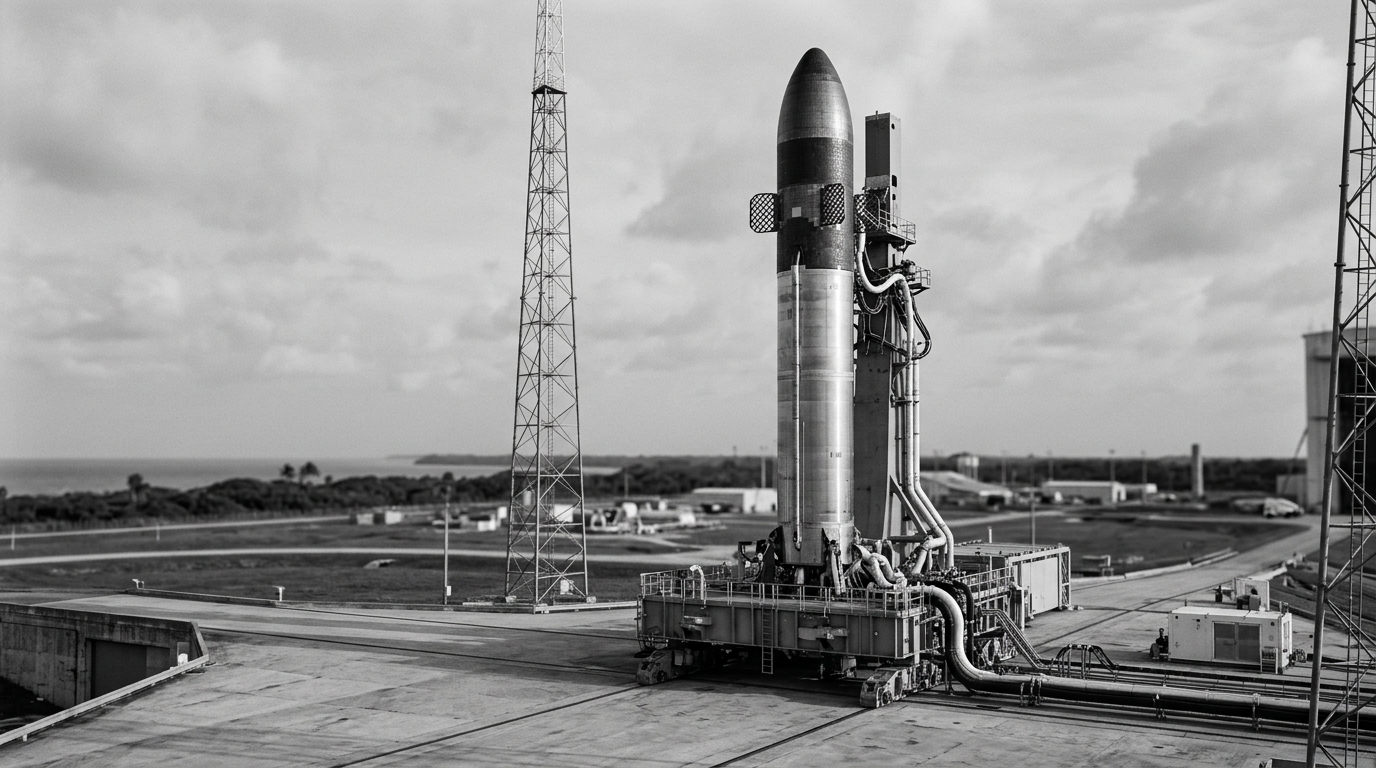
The Themis reusable rocket stage demonstrator has completed its first wet dress rehearsal at the Esrange Space Center in Sweden, marking an early on-pad milestone for Europe’s reusable main-stage work. Officials said the test was carried out on July 23 and focused on running launch-day procedures without introducing combustion risk.
The wet dress rehearsal used liquid nitrogen to mimic cryogenic propellant operations. The procedure is designed to validate how the vehicle and ground systems behave during fueling sequences, pressure checks, and a structured countdown, while avoiding the hazards associated with live propellants and ignition.
The Esrange test focused on fueling and countdown behavior According to the program description, the operation involved loading the stage with liquid nitrogen to simulate the thermal and flow conditions expected during cryogenic servicing. The was to exercise key ground-to-vehicle interfaces and verify that pressurization and related controls perform as intended during a realistic timeline.
Officials said data collected during the rehearsal will be used to shape operational readiness for the Prometheus engine. Prometheus is described as using liquid oxygen and methane, and the rehearsal outputs are expected to inform how the program approaches future preparations tied to that propulsion system.
In practical terms, this kind of test aims to surface procedural gaps and integration issues early, when changes can be made with less disruption. Even when no ignition occurs, a full rehearsal can reveal how sensors, valves, timelines, and safety logic interact under cryogenic conditions.
Validation step for ESA’s reuse and recovery program
The rehearsal was framed as a key validation point within the European Space Agency’s program to mature lower-cost recovery and reuse technologies. Officials said the work is supported by the European Commission’s SALTO project, positioning the demonstrator within a wider set of efforts aimed at reusable launch systems.
Program officials said successfully running these procedures helps reduce technical risk ahead of the upcoming flight campaign. The emphasis at this stage is not on performance in flight, but on proving that the combined ground and vehicle operations can be executed reliably and repeatably.
The effort is also described as part of Europe’s broader attempt to modernize space transportation infrastructure. Officials said the demonstrator remains a central element of work toward independent launch capabilities, specifically through reusable main-stage technology.
Key uncertainties remain, including what specific issues—if any—were identified during the rehearsal and how quickly the findings can be incorporated into the next test phases. Officials have not detailed a schedule in the provided material, but the stated objective is to carry forward the collected data into readiness activities linked to the Prometheus engine and the planned flight campaign.