LNG race forces Europe to rethink winter gas buying plans
Europe’s delayed LNG buying plan is under pressure as Hormuz disruptions and Asian demand tighten cargo supply before winter.
Atlas Newsdesk ·
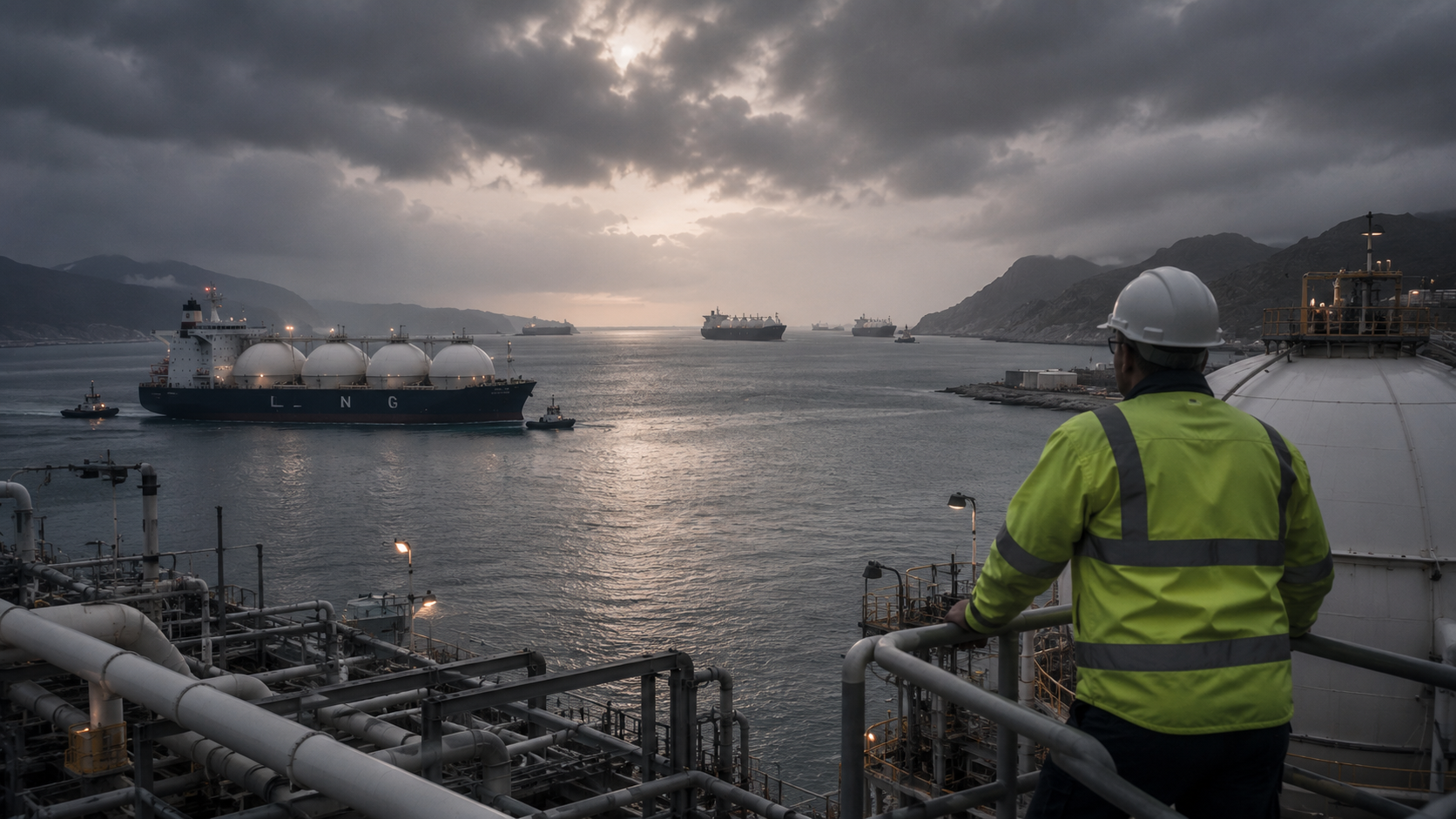
LNG competition is forcing Europe to reconsider its delayed winter gas buying strategy. Hormuz uncertainty has tightened cargo availability and lifted costs.
Europe left the last heating season with gas inventories at their weakest levels since 2022, according to the supplied material. Governments and energy firms initially judged that they could wait before refilling storage, partly because prices rose after the Iran war began in late February.
The calculation depended on a quick reopening of the Strait of Hormuz, a route tied to about one-fifth of LNG supply. Nearly five months later, renewed fighting in the Middle East has made that timing less reliable and left European buyers behind their normal storage pace.
Hormuz closure resets storage math
The original strategy was built around patience: avoid expensive summer purchases, wait for diplomacy, then rebuild inventories once flows normalize. That approach now carries a larger price risk because the same cargoes Europe postponed buying are being contested by other importers.
Gas prices are near their highest levels since the conflict started, the source material says. That creates a political and commercial dilemma: buying now may lock in painful costs, while waiting longer could leave governments paying more if winter demand rises before supply routes reopen.
Asian cargo demand tightens Europe
Asian buyers from China to Pakistan have been taking available LNG shipments to offset missing Qatari supply. Their purchases have effectively reduced the pool of flexible cargoes that Europe can call on as it tries to rebuild reserves.
Anne-Sophie Corbeau, a researcher at Columbia University’s Center on Global Energy Policy and former head of gas analysis at BP Plc, described the shift as a slow-moving risk that has become harder to ignore.
"We have been like the frog in the boiling water," said Anne-Sophie Corbeau. "The question is whether the frog will jump because now gas prices are increasing — fast."
The immediate pressure falls on European utilities, industrial users and households exposed to wholesale gas costs. Even if governments can secure enough fuel for winter, higher procurement prices can feed through to heating bills, power markets and energy-intensive sectors.
Germany faces intervention question
Germany is the market to watch because of its scale and its political exposure to energy costs. If Berlin or other governments subsidize or otherwise support purchases, Europe could move faster to refill storage but also intensify competition with Asian buyers.
For the LNG industry, a prolonged Hormuz closure would strengthen the value of destination-flexible cargoes and reward suppliers able to redirect shipments quickly. It would also test whether importers can manage security-of-supply concerns without recreating the bidding patterns seen during Europe’s last energy crisis.
If Hormuz reopens soon and Qatari flows normalize, Europe can resume storage buying with less pressure on global prices. In that scenario, the global macro effect would be more contained, Germany would face less need for direct support, and LNG traders would see competition ease across spot markets.
If the strait remains closed into the main storage season, the adjustment would run through price rather than immediate shortages. Global energy costs could rise, Germany may have to choose between fiscal support and consumer price pain, and LNG importers in Europe and Asia would compete more aggressively for the same shipments.
A third path is partial restoration, with limited flows and recurring disruption risk. That would keep risk premiums in gas prices, force European companies into staggered purchases, and leave the LNG sector operating around shorter planning horizons until shipping security becomes clearer.