Federal Reserve cut call survives rate-hike market pricing
Federal Reserve forecasters still expect a 25-basis-point cut in 2027, even as traders price earlier hikes and oil revives inflation risk.
Cuneyd Erdogan ·
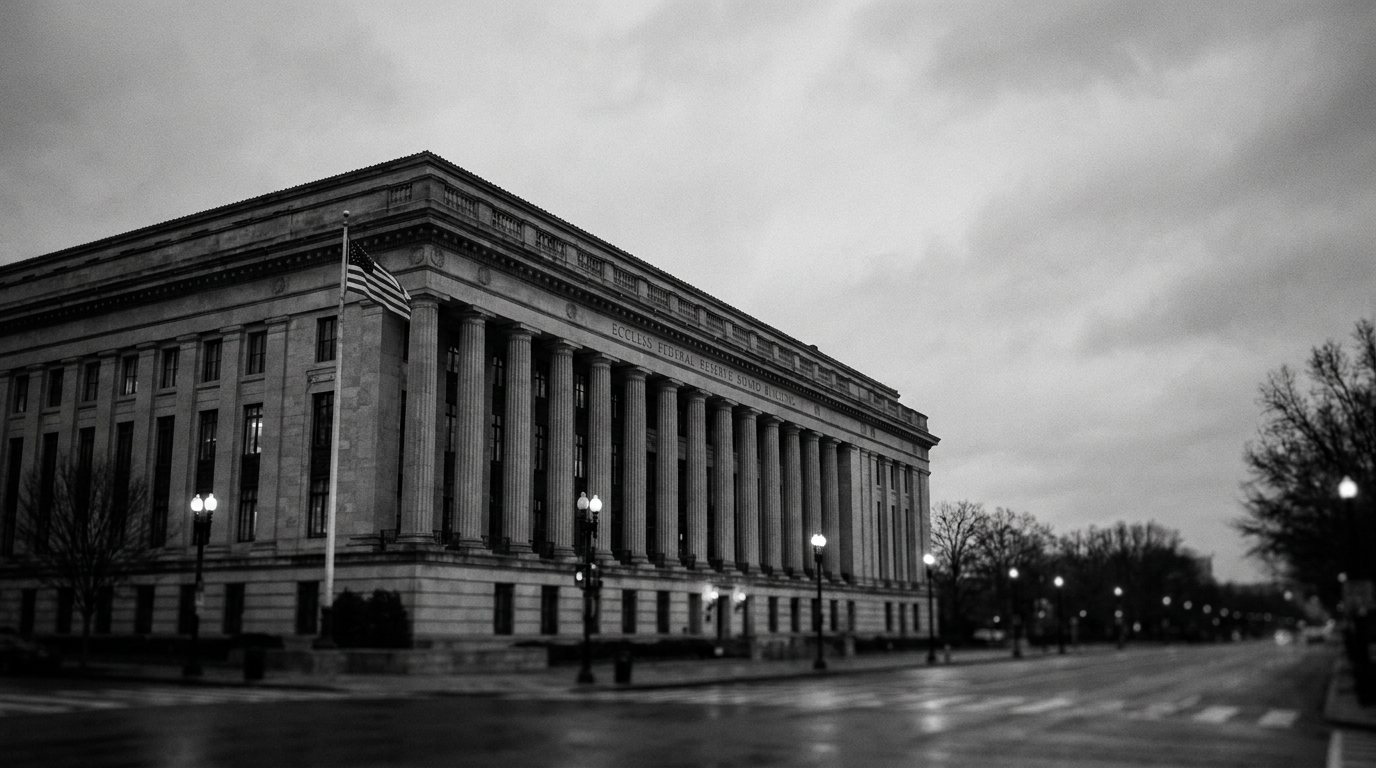
Federal Reserve economists still see a 2027 rate cut, even as markets brace for higher borrowing costs and oil threatens fresh inflation pressure.
The survey’s central call is now a 25-basis-point reduction in the benchmark rate in the third quarter of 2027. That timing is one quarter later than the prior monthly poll, but it still keeps the expected next policy move in easing territory.
Markets challenge the cut timetable
The gap is opening between three groups that usually move closer together as the policy path firms: economists, Federal Reserve officials and traders. A growing number of officials has warned that rates may need to rise in 2026 if inflation proves too persistent, while traders are positioning for a possible increase as early as September.
That split matters because the Federal Reserve’s policy signal affects everything from Treasury yields to mortgage rates and corporate funding plans. If investors price a hike before economists revise their models, financial conditions can tighten before the central bank formally acts.
Oil revives the inflation problem
The inflation risk has sharpened as the Iran war escalates again and crude trades around $100 a barrel for the first time in two months, according to the source material. Higher energy prices can filter into transport, production and household budgets, even when the central bank focuses on broader inflation measures.
The recent decline in consumer prices gave US households some relief last month, but the source indicates that benefit may not last. A fresh oil shock would complicate the Federal Reserve’s attempt to distinguish a temporary price jump from a wider inflation reset.
The survey now puts the personal consumption expenditures price index excluding food and energy at 3.4% in the second quarter from a year earlier. That is up from 3.3% in the previous month’s estimate, a small revision with large policy weight because core PCE is the inflation gauge officials track closely.
Core prices test policy patience
Even with the higher core estimate, respondents still see headline inflation slowing more quickly in the second half of the year than they had projected earlier. That combination explains why economists have not fully abandoned the cut call: the underlying price picture looks sticky, but the broader inflation path is still expected to ease.
The Federal Reserve’s challenge is that those two signals point in different directions. Softer headline inflation supports patience on rates, while stronger core inflation and higher oil prices argue against declaring the inflation fight over.
For households and companies, the practical effect is a longer period of uncertainty over borrowing costs. A September hike priced by traders would raise pressure on floating-rate debt, credit-card balances and refinancing plans, while a delayed cut would keep the cost of capital elevated into 2027.
Three paths for policy
If oil remains near $100 and core PCE continues to drift above earlier estimates, the global macro effect would likely be tighter dollar funding conditions and renewed inflation concern. For the Federal Reserve, that path would strengthen the case for keeping rates high or raising them; for banks, lenders and rate-sensitive sectors, it would mean weaker demand for credit and more stress on borrowers.
If headline inflation slows as surveyed economists expect in the second half, the global effect would be less pressure on central banks to restart tightening cycles. For the Federal Reserve, that would preserve the option of a 2027 cut; for housing, autos and other financing-heavy industries, it would keep hopes alive for eventual demand relief.
A third path is the most difficult for markets: inflation cools unevenly while geopolitical risk keeps energy volatile. In that case, the Federal Reserve would have less room to guide investors with confidence, and the wider financial sector would have to price loans, bonds and risk assets around a policy range rather than a clean easing cycle.
The open questions are specific: whether the Iran conflict keeps oil elevated, whether core PCE moves above the new 3.4% estimate, and whether officials turn warning language into a formal 2026 tightening bias. Until those answers come in, the survey’s cut forecast and the market’s hike pricing can coexist, but they cannot both be right for long.