CENTCOM: Iran's Port Blockade Now Fully Operational
Iran port blockade was “fully implemented,” CENTCOM said Tuesday, as U.S. forces moved to halt maritime trade and interdict tankers.
Lauren Collins ·
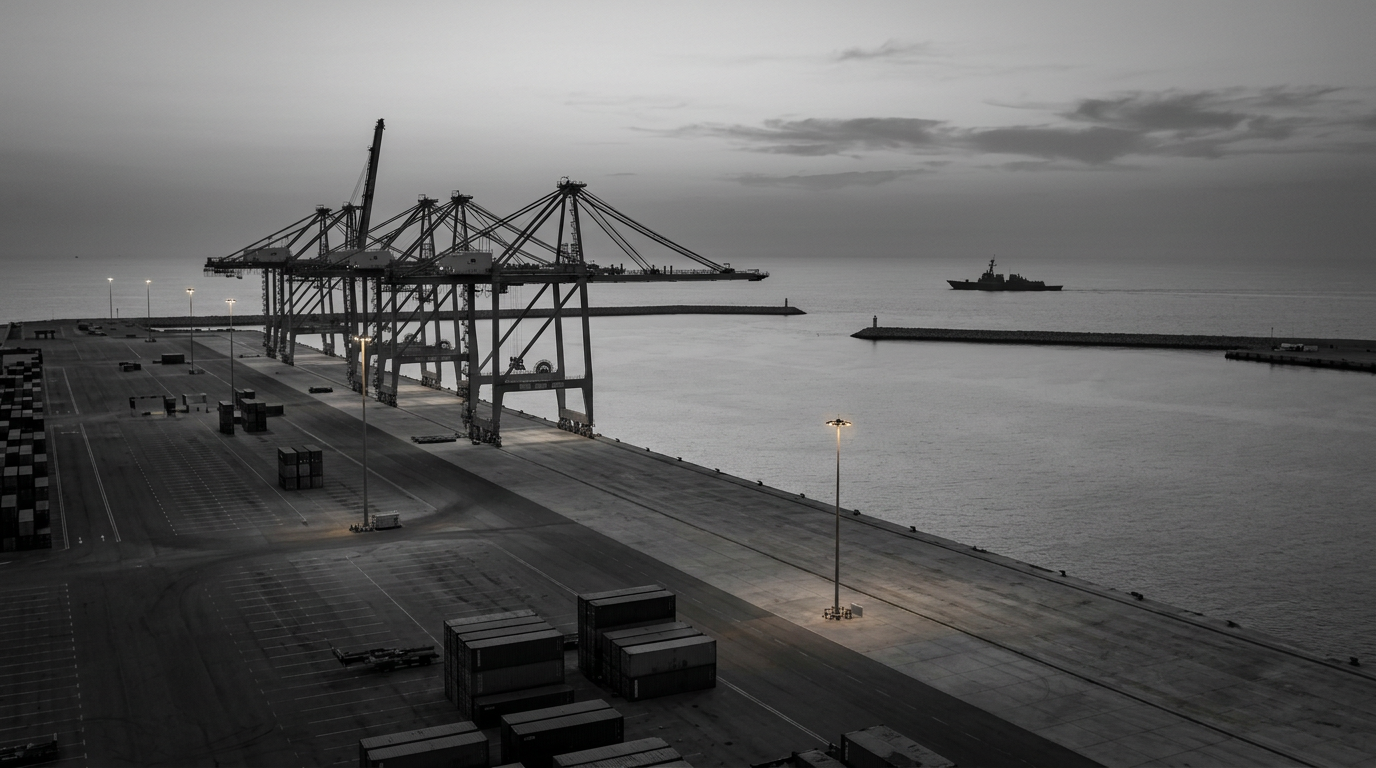
The United States Central Command (CENTCOM) said Tuesday that a U.S. blockade targeting Iranian ports has been “fully implemented,” describing the move as an effort to stop maritime commerce moving into and out of Iran. Officials framed the step as part of Washington’s broader approach to press Tehran over control of the Strait of Hormuz, a major transit route for global commodity shipments.
Admiral Brad Cooper, the CENTCOM commander, said U.S. forces had completely halted Iran’s economic trade by sea. He said the effect was felt within 36 hours and described the disruption as touching an estimated 90% of Iran’s economy. CENTCOM’s statement and Cooper’s remarks did not provide additional operational details beyond the assertion that the blockade was in place.
Alongside the announcement, a U.S. destroyer interdicted two oil tankers in the Strait of Hormuz on Tuesday, according to the account provided. The two vessels were described as part of a group of six merchant ships that had previously been directed by U.S. forces to return to an Iranian port on the Gulf of Oman. A U.S. official also said that more than 20 other non-Iranian ships moved through the strait safely during the same period.
The Strait of Hormuz is frequently described by officials as a strategic chokepoint because of the volume of commodity shipments that pass through it. In this case, U.S. officials linked the blockade to pressure on Tehran connected to the strait, while also pointing to continued maritime traffic by non-Iranian vessels during the reported window.
Diplomatic activity continued in parallel with the military and maritime developments. Pakistan is seeking to facilitate a second round of U.S.-Iran peace talks after an earlier session in Islamabad ended without a conclusive outcome. President Trump said additional talks could take place “over the next two days,” without providing further details in the material provided.
Separately, Lebanese and Israeli officials held their first direct diplomatic talks since 1993 in Washington, D.C. Officials said the meeting produced an agreement to begin direct negotiations. The source material did not specify the agenda, timeline, or format for those negotiations.