US Storms Cause Widespread Power, Flight Disruptions
Severe US storms caused over 424,000 power outages and 10,000+ flight disruptions, impacting Midwest blizzards and Southern tornadoes.
Ayla Demirhan ·
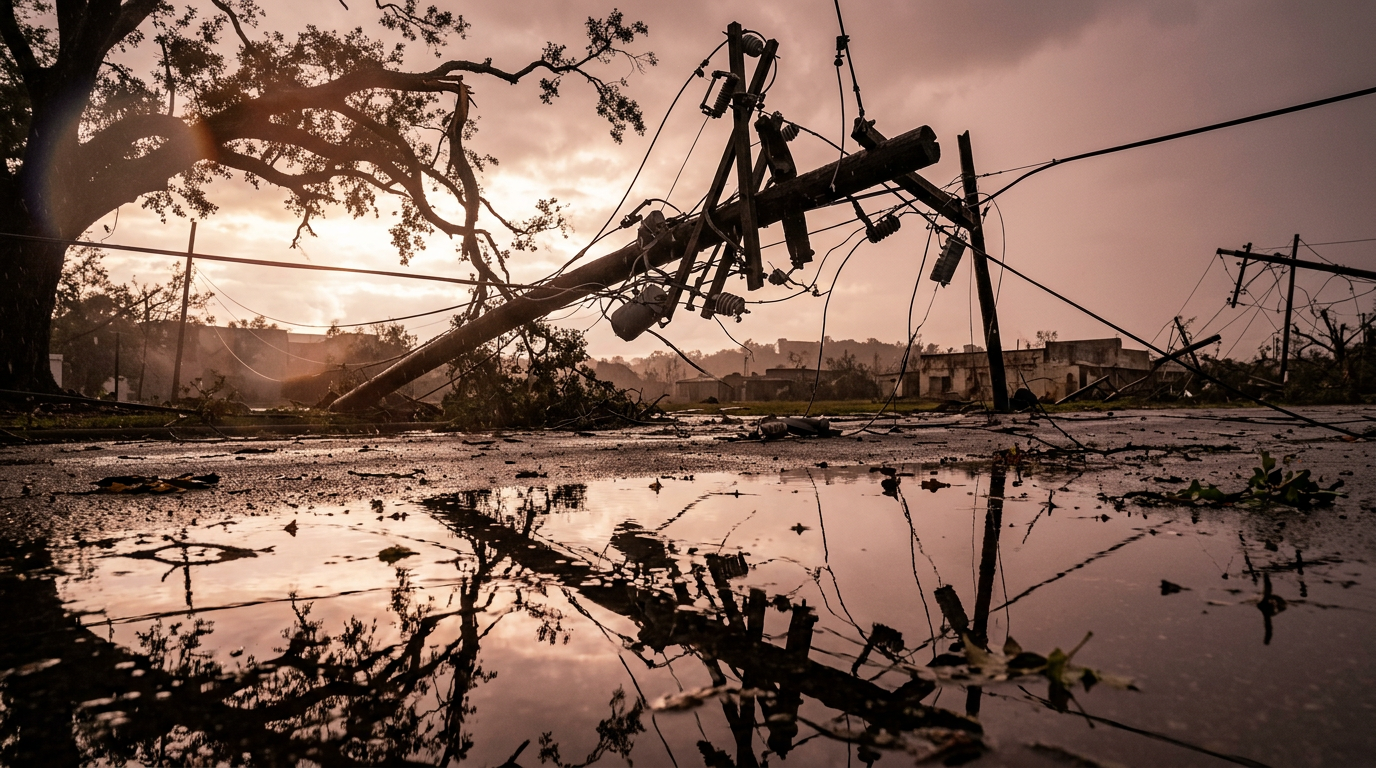
A significant storm system has generated extensive power outages and air travel disruptions across the United States, affecting over 424,000 customers and more than 10,000 flights as of Sunday evening. The weather event encompasses a blizzard impacting the Midwest and severe thunderstorms, including tornado activity, across the Southern states. This widespread atmospheric disturbance has led to considerable operational challenges for infrastructure and transportation networks.
States in the Northeast, specifically Pennsylvania and Ohio, reported a combined total exceeding 144,000 power outages. Concurrently, air travel has been severely impacted nationwide, with FlightAware data indicating 7,226 flight delays and 2,902 cancellations extending into Monday. Major aviation hubs, such as Minneapolis-St. Paul (MSP), experienced over 70% of their scheduled flights canceled due to blizzard conditions.
The Southern U.S. is confronting a heightened risk of severe thunderstorms. Atmospheric conditions are conducive to the formation of supercell thunderstorms, which carry an increased potential for producing large, long-track tornadoes. This risk is amplified by high atmospheric instability and a deepening surface low-pressure system. A confirmed tornado touched down in Minturn, Arkansas, at 5:46 p.m. CT, prompting immediate tornado warnings for adjacent counties.
Further north, Chicago is bracing for severe thunderstorms followed by a sharp drop in temperature and anticipated snowfall. These conditions are expected to complicate Monday morning commutes significantly. The confluence of blizzard conditions in the Midwest and severe weather in the South underscores the broad geographical reach and varied meteorological characteristics of this storm system.
In response to the hazardous conditions, educational institutions across several states have announced closures. Schools in North Carolina, Virginia, and South Carolina will remain closed on Monday, reflecting the severity and anticipated duration of the weather event.
The disruptions highlight the vulnerability of critical infrastructure and daily operations to extreme weather phenomena, necessitating coordinated responses from utility providers, airlines, and local authorities to mitigate impacts and ensure public safety.
The current weather patterns are consistent with seasonal shifts that often bring dynamic and powerful storm systems across the continental U.S. Such events frequently test the resilience of power grids and transportation systems, leading to economic costs from lost productivity and repair efforts. Authorities continue to monitor the evolving situation, advising residents in affected areas to remain vigilant and adhere to local weather advisories.
Implications
Country Impact: The widespread storm system has disrupted daily life and commerce across multiple U.S. regions, affecting power supply, air travel, and educational services. Economic impacts include potential losses from business closures and increased costs for emergency services and infrastructure repairs.
Industry Impact: The airline industry faces significant operational challenges, leading to substantial revenue losses from cancellations and delays. Utility companies are under pressure to restore power to hundreds of thousands of customers, while the education sector adapts to school closures.
Market Impact: While localized, the disruptions could marginally impact regional economic activity. Energy markets might see temporary fluctuations in demand or supply in affected areas, though the broader national market impact is likely limited unless the disruptions are prolonged.