Li Auto i9 gives Washington a new China EV benchmark to assess
Li Auto’s claimed 0.215 drag coefficient for the i9 SUV adds a concrete data point to Washington’s debate over Chinese EV technology, standards and…
Lauren Collins ·
Li Auto i9 gives Washington a new China EV benchmark to assess
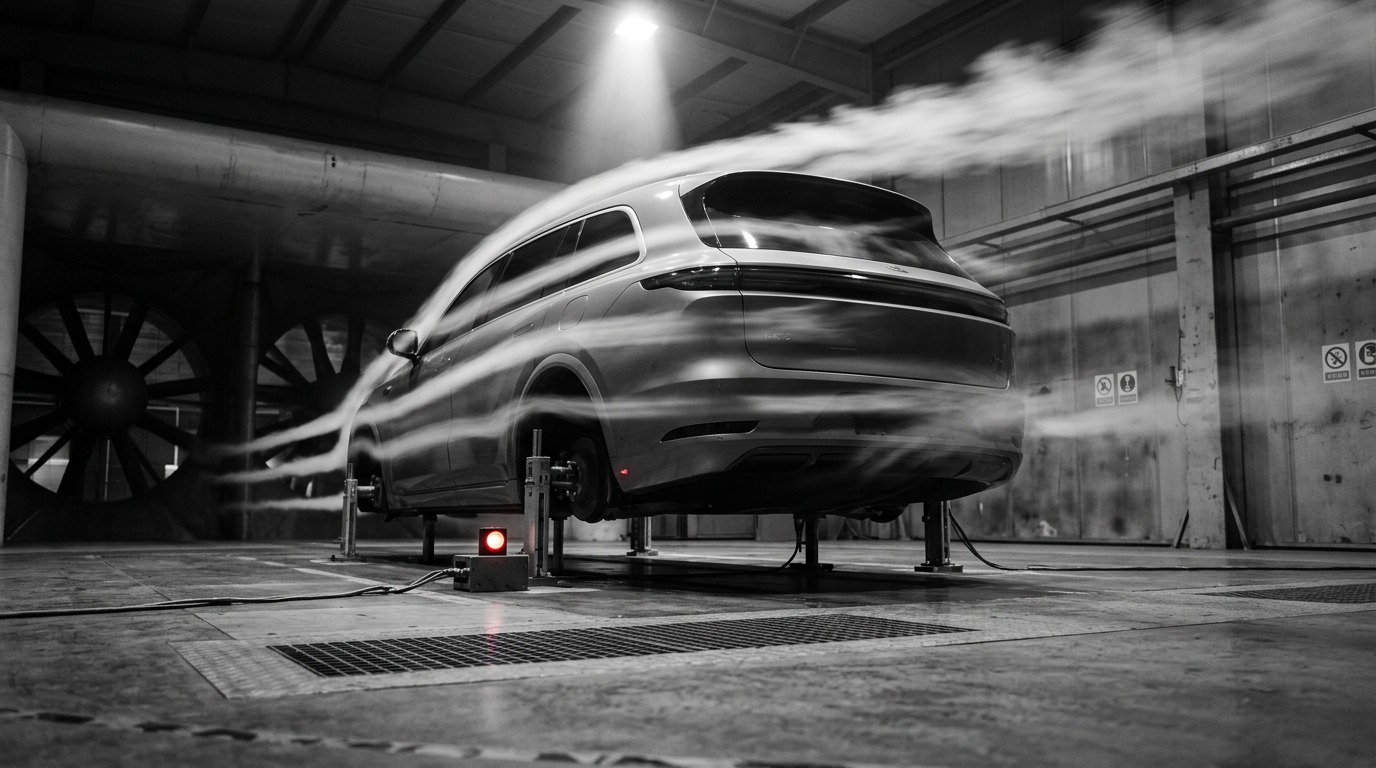
Li Auto launched the i9 electric SUV in China on September 16 with a claimed drag coefficient of 0.215, a figure the company-linked launch coverage framed as the lowest for a mass-production SUV. For Washington, the number matters less as a showroom claim than as another marker of China’s push to turn electric vehicles into a high-technology export platform.
Li Auto
The White House, Commerce Department and Congress have treated Chinese advanced manufacturing as a strategic issue across batteries, chips, clean energy equipment and connected vehicles. A Chinese SUV marketed around aerodynamic efficiency now lands in that debate as US officials weigh where normal competition ends and where supply-chain, data and industrial-policy concerns begin.
A vehicle’s drag coefficient measures how efficiently it moves through air. Lower drag can help an EV travel farther on the same battery pack, reduce energy use at highway speed and support performance claims without relying only on bigger batteries or higher charging rates.
The i9 claim of 0.215 Cd is therefore a useful signal for policymakers, even if it needs independent testing before it becomes a settled benchmark. It suggests Chinese automakers are competing not only on battery costs and software features, but also on vehicle engineering that can improve range and efficiency at scale.
Li Auto is part of a Chinese EV sector that has moved from domestic subsidy-led growth into a more export-facing phase. That transition is what draws attention in Washington: Chinese firms can use a large home market to lower costs, iterate quickly and then pressure overseas rivals in price-sensitive segments.
The US policy toolkit is not built around aerodynamics. It is built around tariffs, investment screening, battery supply-chain incentives, export controls on enabling technologies and security reviews of connected-vehicle systems. The i9 does not automatically trigger any of those tools, but it gives officials a fresh example to cite when arguing that the competitive frontier is broadening beyond battery minerals and semiconductors.
The most immediate US concern is unlikely to be whether Li Auto sells the i9 in America. Chinese-built EVs already face high trade barriers, and Washington has been more focused on protecting domestic manufacturing capacity than opening the US market to low-cost imports. The larger issue is whether Chinese technical gains reshape allied markets in Europe, Southeast Asia, Latin America and the Middle East, where US and allied automakers compete more directly.
That is where standards become a strategic question. If Chinese automakers set de facto benchmarks for range, efficiency, software integration or price, US officials may seek tighter coordination with allies on testing rules, data governance, cybersecurity requirements and supply-chain disclosure. Those measures can shape market access without looking like a direct ban on a single model.
The Pentagon is not the lead agency on passenger vehicles, but the defense community watches the same industrial base. Batteries, power electronics, sensors, thermal management and advanced manufacturing methods have civilian and defense relevance. A mass-market EV improvement can therefore feed a broader Washington assessment of China’s capacity to scale dual-use technologies through commercial demand.
Congress may become the more visible arena if lawmakers link the i9 and similar Chinese models to jobs, subsidies or data security. Committees focused on China competition have already treated clean technology as part of the industrial base, not just climate policy. A high-profile Chinese EV launch gives them a simple narrative hook: Beijing-backed manufacturing capacity is moving up the value chain.
For Li Auto, the Washington angle is indirect but not irrelevant. A product claim that strengthens its technology image at home can help the company compete against Chinese rivals; the same claim may also make the brand more visible to foreign regulators. The more Chinese EV makers advertise technical leadership, the more likely they are to be folded into policy debates about dependency, market access and standards.
For the wider auto industry, the mechanism is clearer. If Chinese manufacturers keep improving efficiency while preserving cost advantages, legacy automakers face margin pressure and faster product cycles. US and allied policymakers would then face pressure to choose between consumer benefits from cheaper EVs and industrial policy goals tied to domestic production.
The global macro channel runs through trade balances, investment decisions and inflation in clean transport. Cheaper, more efficient EVs can lower adoption costs, but trade restrictions can raise prices or fragment supply chains. If Washington and allies respond with stricter rules, the industry may split further into China-centered and US-aligned technology ecosystems.
By December 15, the test is whether the White House, State Department, Bureau of Industry and Security or Congress sends a clearer signal tying Chinese EV technology gains to export controls, allied standards coordination or trade enforcement. If that happens, the i9 will look less like a product launch and more like another exhibit in Washington’s case for defensive industrial policy; if it does not, the model remains primarily a market signal for Li Auto and a competitive warning for global automakers rather than a direct policy catalyst.