

L3Harris says 60 Wolf Pack flights tighten defense buying options
The company’s flight-test milestone may make future launched-effects procurements less about price and more about switching cost.
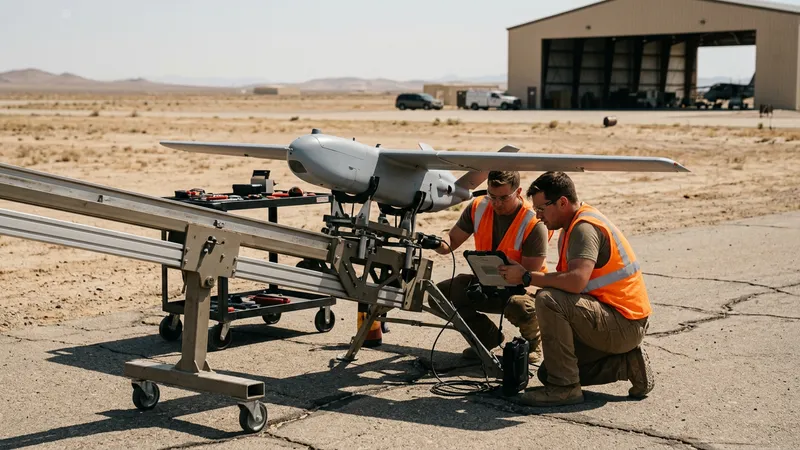
Sixty flight tests represent more than a technical achievement for L3Harris’s Wolf Pack system; they signal a critical juncture in defense procurement. This volume of testing provides an early, extensive body of evidence that can shape how defense buyers define requirements, integrate new technology, and manage perceived risk. Such a record can subtly, yet effectively, steer future launched effects acquisitions toward the incumbent.
The milestone matters because flight history can become procurement evidence. Once a defense buyer organizes requirements around a tested system, rival offerings have to compete against accumulated integration work, not just a product specification.
Flight history becomes evidence
L3Harris framed the 60-flight figure as proof of performance and reliability for defense applications. That is not the same as an independently verified operational record.
The company editorial, as summarized in the reporting packet, gives the milestone and the commercial interpretation, but it does not provide mission profiles, test conditions, failure counts, customer acceptance criteria, or an apples-to-apples comparison with rival launched effects systems. No one in the reported packet is on the record, and no outside party is cited as confirming the company’s reliability claim.
That omission is the procurement story. In defense buying, the work does not start when a contract officer compares brochures. It starts earlier, when program teams decide which interfaces, test routines, training assumptions, maintenance processes and risk models are credible enough to write into requirements.
A system with 60 company-reported flight tests can become the reference case around which those internal assumptions form. The claim to watch is not that Wolf Pack is technically superior. The claim is that L3Harris may be turning flight count into a switching cost.
Modularity meets switching cost
The consensus counter-read is straightforward: defense procurement is supposed to resist lock-in. Buyers can demand modularity, open architecture and competitive awards, particularly in domains where governments want multiple suppliers and faster refresh cycles.
On that reading, L3Harris’s editorial is only a supplier proving it deserves to be in the competition. The obvious objection nobody in the packet answers is whether 60 tests actually translate into procurement preference, or whether they remain marketing evidence until a buyer names the system in a solicitation or award.
The mechanism that can make the consensus wrong is integration gravity. A launched effects platform is not bought as a standalone software subscription. It must fit into launch methods, command-and-control workflows, operator training, sustainment planning and safety review.
The source summary does not say which of those pieces Wolf Pack touches, so the claim must stay bounded. But if future buyers use L3Harris’s test history to reduce perceived program risk, rivals may face a higher burden: they will need not only a competing system, but enough test evidence to persuade buyers to reopen assumptions already built around Wolf Pack.
Procurement work shifts upstream
For manufacturing and defense-industrial teams, the near-term labor effect is less about factory head count than about where engineering and contracting work concentrates. Procurement officers, systems engineers and legal reviewers may spend more time translating flight-test evidence into acceptance language and less time evaluating blank-sheet alternatives.
Program managers may ask suppliers for data packages that mirror the L3Harris record, while competitors may have to fund additional demonstrations before they can be treated as credible substitutes. That is how a flight milestone can change the work before it changes the award.
The source omits the commercial burden this creates for new entrants. A company with fewer flight tests may still have a better architecture, lower manufacturing cost or cleaner integration path, but it has to overcome an evidence gap the incumbent can cite.
The likely beneficiary is the supplier whose test record becomes the baseline. The exposed group is the middle of the supply chain: subsystem makers and smaller integrators that may be pulled toward L3Harris-compatible interfaces if buyers treat Wolf Pack as the safe reference.
The test is solicitations
The falsifiable version of this argument is simple. It is wrong if future defense solicitations explicitly require multi-vendor launched effects approaches, if major awards go to new entrants despite L3Harris’s reported 60-flight record, or if official reporting describes a cost-effective move away from Wolf Pack after early evaluation.
It is also wrong if L3Harris stops emphasizing Wolf Pack revenue prospects or flight testing in investor and customer materials. Those signals would show that flight history is not hardening into procurement leverage.
The near-term signals are therefore not more promotional milestones alone. They are solicitation language that names performance evidence in a way only some suppliers can satisfy, awards that concentrate follow-on work, customer documents that treat Wolf Pack as a reference architecture, and rival announcements aimed specifically at closing the flight-test gap.
Until those appear, this remains a company-reported milestone, not a confirmed procurement outcome. But for executives selling into defense, the lesson is already concrete: the buyer may be purchasing confidence, and confidence is harder to displace than hardware.
More stories
- Cyberpunk 2077 tops 40m sales as Paramount develops film, Odatv says
- Researchers frame AI cryptography fears as an open question
- AI coding agents add 30% more code, not software output
- Google tests Gemini 4 update as coding competition grows
- OpenAI defends safety firings over trust breach
- Mastercard puts stablecoins at center of cross-border push
- European workers face AI job-fear that spurs a second-order reskilling market
- Rotana CEO flags AI limits in UAE hotels, signaling new hospitality roles
Latest news
- Turkey Says It Extradited 736 Fugitives as US Watches Crime Cooperation
- Washington weighs Turkey union threshold as a civil society test
- Take-Two faces $30 million GTA 6 leak threat
- Tornadoes in Western Sicily Cause Significant Infrastructure Damage and Injuries
- Bolsonaro Takes Early Lead in Tight Brazilian Presidential Race
- TG Therapeutics leads Valneva on 12 of 14 measures
- Pune police detain 92 over election-roll protest
- Putin relays Iran view to President Trump