Kuwait airport shutdown tests Gulf oil and power networks
Kuwait airport halted flights after Iranian attacks damaged an oil site, raising risks for Gulf energy infrastructure and a fragile ceasefire.
Atlas Newsdesk ·
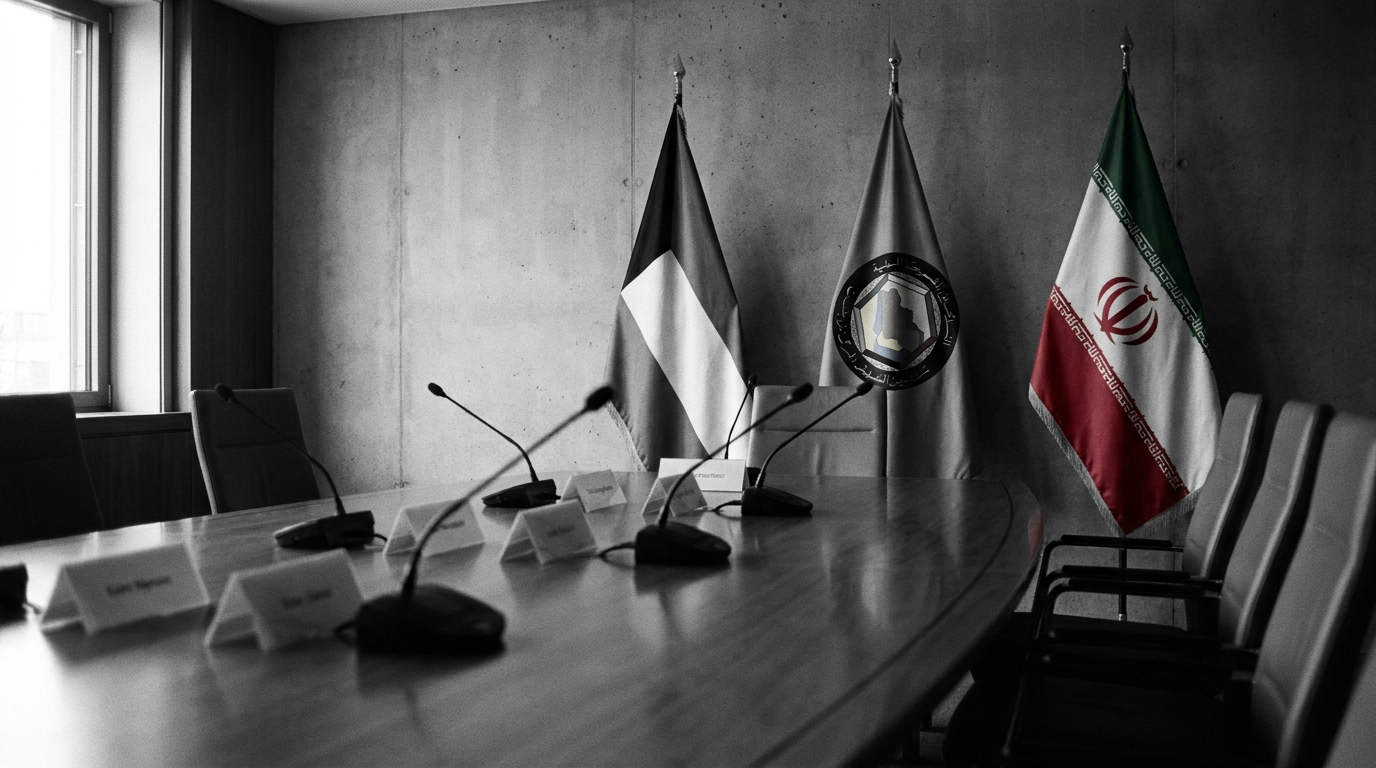
Kuwait airport halted flights after Iranian attacks damaged an oil site, raising risks for Gulf energy infrastructure and a fragile ceasefire.
The strike sequence hit aviation, energy and public utilities in the Gulf state after a week of exchanges between Iran and U.S. forces. Sirens sounded repeatedly from daybreak Saturday, while authorities moved to contain fires and manage flight disruption.
Sirens reach Kuwaiti dawn
Kuwait Petroleum Corporation said an unidentified oil site suffered "significant material losses" after the Iranian attacks. The company also reported an evacuation and injuries, but the source material did not identify the facility or provide a casualty figure.
The Ministry of Electricity and Water said firefighters were working at a power and desalination plant that had also been hit. That detail matters in Kuwait because electricity and desalination are tied directly to daily consumption, industrial activity and the operation of critical facilities during extreme heat.
Kuwait Airways redraws schedules
Kuwait Airways rescheduled most of its flights after the airport suspension, adding a civilian transport channel to the damage already reported in energy infrastructure. The airline action suggests authorities were managing both direct security risk and the knock-on effect of airspace disruption.
For passengers and cargo customers, the immediate issue is timing: the source material did not provide a reopening schedule or say how long the flight changes would last. For the wider Gulf aviation network, even a short shutdown can force aircraft rotations, crew schedules and connecting traffic to be rebuilt quickly.
The attacks also injected fresh pressure into oil-market sentiment, though no verified benchmark price or percentage move was available in the source. The market concern is straightforward: when conflict reaches oil sites, ports, power plants or flight corridors, traders price a higher risk of supply interruption even before production loss is confirmed.
US strikes pause Friday night
US Central Command said it halted a seventh night of strikes against Iran at 9:30 p.m. Eastern Time Friday. It said U.S. forces had targeted surveillance sites, military logistics infrastructure, underground weapons storage and maritime capabilities.
The pattern described by both sides has widened from purely military targets to infrastructure that supports transport, utilities and trade. Bridges, port facilities and power systems are harder to separate from civilian life, which raises the cost of each exchange even when governments describe their operations in military terms.
The ceasefire signed last month now faces a practical test rather than a diplomatic one. If critical infrastructure remains exposed, companies and public agencies will make decisions based on operational safety, not on the existence of an agreement on paper.
Three paths for Gulf risk
If the latest round stops and air operations normalize, the macro effect would likely run through a lower risk premium in energy and freight markets. Kuwait Petroleum Corporation would still need to assess damage and restore the affected site, while airlines and insurers could treat the disruption as a contained shock.
If strikes on infrastructure continue, the mechanism changes. Global markets would have to price higher insurance, rerouting and energy-security costs; Kuwait Petroleum Corporation would face repair work and safety shutdown risk; Gulf energy and aviation operators would spend more time protecting assets than expanding capacity.
If the conflict spreads further into ports, utilities or maritime lanes, the pressure would become more systemic. The macro channel would be inflation-sensitive energy and transport costs, Kuwait would face deeper constraints across oil, power and water systems, and the wider sector would shift toward contingency planning, inventory protection and route redundancy.
The open questions are specific: which oil site was hit, how many people were injured, when full flight operations resume, and whether either side treats utilities and transport links as off-limits. Until those answers are clear, the main risk is escalation through infrastructure rather than a single battlefield event.