Kremlin ship threat puts Black Sea arms routes back on Washington’s agenda
The Kremlin said Russia will keep striking vessels used to carry weapons to Ukraine, sharpening a maritime risk that Washington has tried to contain below a…
Lauren Collins ·
# Kremlin ship threat puts Black Sea arms routes back on Washington’s agenda
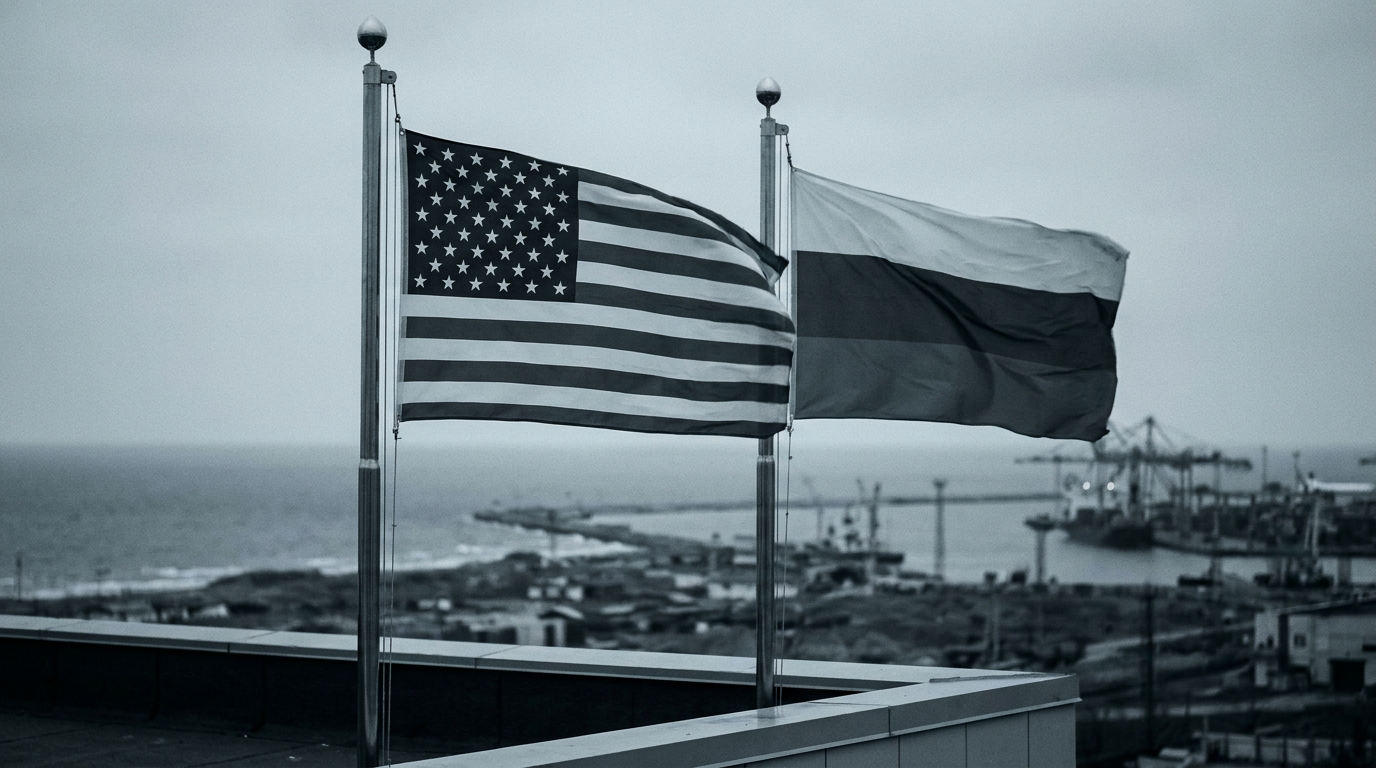
The Kremlin said on Nov. 27, 2023, that Russia will continue targeting ships it says are used to move weapons and ammunition to Ukrainian forces. For Washington, the statement turns a familiar Russian warning into a more direct test of deterrence in the Black Sea, where military aid, commercial shipping and alliance credibility sit uncomfortably close together.
Black Sea
The immediate question for the White House, State Department and Pentagon is not whether Moscow can threaten Ukrainian-bound supply lines. It has done that throughout the war. The sharper question is whether Russia is preparing to move from strikes on Ukrainian military logistics to interdiction of vessels connected to foreign governments, private shippers or NATO member states.
The Black Sea has been one of the war’s most sensitive theaters because it links Ukraine’s economy and military resupply to a body of water bordered by Russia, Ukraine, Turkey, Bulgaria, Romania and Georgia. Turkey, a NATO member, sits at the sea’s southern gate through the Bosporus and Dardanelles, giving Ankara a central role whenever the conflict threatens to spill into wider maritime traffic.
Washington has had to support Ukraine while avoiding a naval posture that Moscow could portray as direct alliance entry into the war.
That balancing act grew harder after the wartime shipping arrangements around Ukrainian exports frayed and Kyiv began relying on improvised maritime corridors, port defenses and Western-backed insurance workarounds to keep cargo moving. Those routes were designed mainly to sustain commerce, but Russia’s latest language aims at another category: ships it claims are carrying arms.
The Kremlin statement, as reported by Russian state media, did not provide public evidence about specific vessels, routes or cargoes, leaving Washington to plan against a threat that is politically clear but operationally undefined.
Black Sea
Inside the U.S. government, the issue cuts across several desks.
The National Security Council would weigh escalation risk and alliance messaging; the State Department would coordinate with Turkey, Romania, Bulgaria and other partners; the Pentagon would track Russian naval and air movements and assess whether U.S. aid routes need adjustment.
Congress would likely press the administration from both directions, with Ukraine supporters demanding protection for supply lines and skeptics warning against steps that could draw U.S. forces closer to a direct confrontation with Russia.
The legal and diplomatic stakes would change depending on where and how Russia acts. A strike on a Ukrainian military target in Ukrainian waters fits the current pattern of war, even if Washington condemns it.
A Russian attempt to stop, inspect or attack a non-Ukrainian-flagged vessel in international waters would create a different problem: the United States and its allies would have to decide whether to treat the episode as a shipping-security crisis, an attack on a partner’s commerce, or a deliberate challenge to NATO’s regional red lines.
The NATO angle is especially delicate because the alliance has Black Sea members but no simple appetite for a naval confrontation with Russia. Romania and Bulgaria have direct exposure to any disruption in the western Black Sea, while Turkey controls access and has tried to preserve room for diplomacy with both Moscow and Kyiv.
That leaves Washington managing not just Russia policy, but alliance choreography among capitals with different threat perceptions, economic interests and domestic politics.
The industry layer matters too. Commercial shipowners, insurers and port operators make decisions based on risk, not declarations of principle. If Moscow’s threat raises the perceived chance that a vessel could be misidentified, inspected or struck, shipping costs can rise even without a confirmed attack on a foreign-flagged ship. That would affect Ukraine first, but the signal would travel through war-risk insurance, grain and bulk cargo markets, and defense logistics planning across Europe.
For Ukraine, the threat is meant to complicate one of Kyiv’s core military advantages: a steady pipeline of Western equipment, ammunition and air-defense components. Russia has repeatedly tried to disrupt those flows by striking depots, rail nodes and port infrastructure. The Kremlin’s public focus on ships suggests Moscow wants to inject uncertainty into maritime routes as well, whether or not it is ready to take the escalatory step of challenging non-Ukrainian vessels directly.
Washington’s likely response will be calibrated before it is dramatic. Expect public language defending freedom of navigation and Ukraine’s right to receive military assistance, paired with private consultations on routing, intelligence sharing and deconfliction. The administration has an incentive to deny Moscow a veto over arms deliveries, but it also has an incentive to avoid placing U.S. or NATO assets in a position where a single miscalculation could force an alliance-wide crisis.
The falsifiable test is whether Russia directly intercepts, inspects or strikes a non-Ukrainian-flagged vessel suspected of carrying arms in international waters of the Black Sea by Feb. 27, 2024.
If Moscow keeps its actions to statements, surveillance or attacks on Ukrainian-controlled military logistics, Washington can continue its current model: arm Ukraine, harden routes and manage escalation through allied diplomacy. If Russia instead fires warning shots, damages a foreign-linked vessel or claims the right to police cargo bound for Ukraine, the macro effect would be a sharper risk premium on Black Sea trade; the Ukraine effect would be pressure on maritime resupply and port access; and the sector effect would be an immediate reassessment by insurers, shippers and defense planners of whether the Black Sea can remain a contested commercial corridor rather than an active NATO-Russia flashpoint.