Japan Loosens Arms Export Ban
Japan eases defense export rules on April 21, enabling sales of warships and missiles while keeping screening and conflict-related bans.
Lauren Collins ·
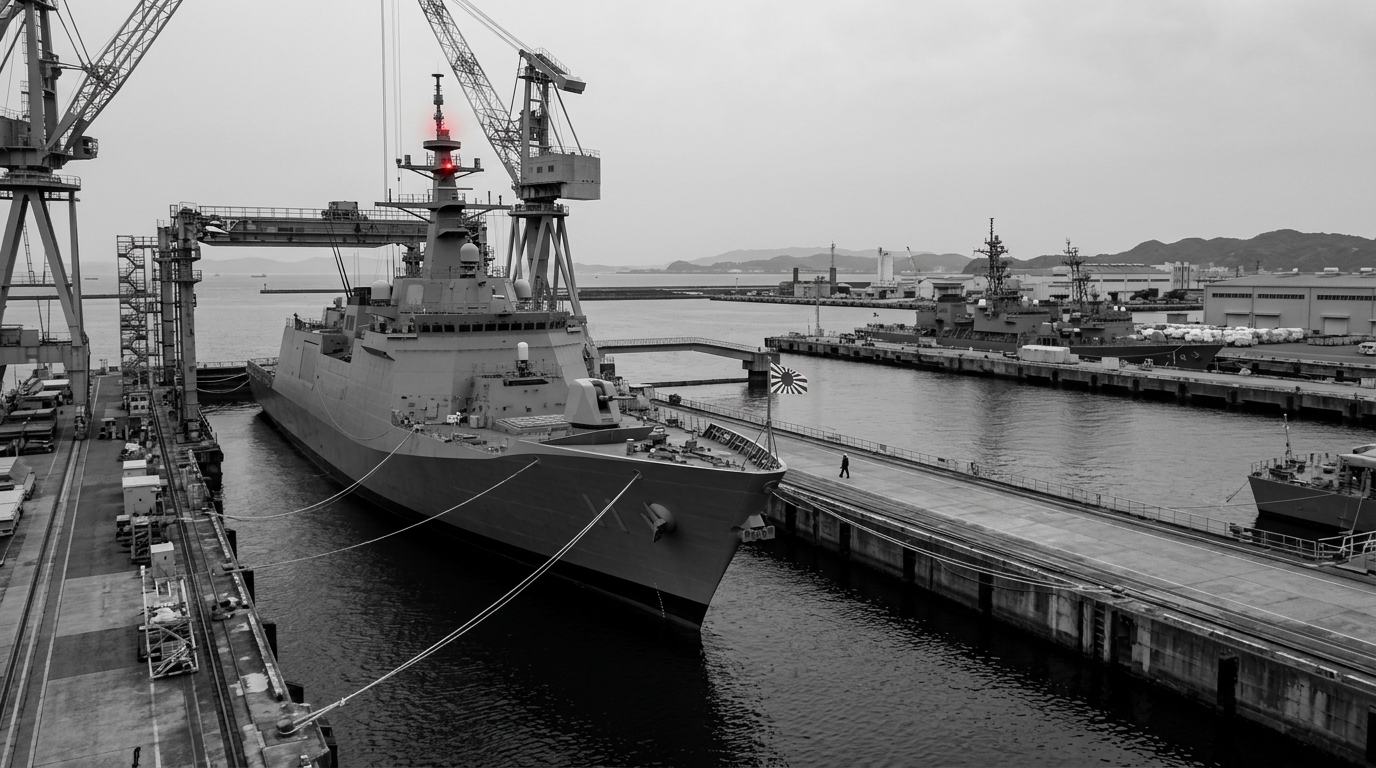
Japan’s government on Tuesday, April 21, enacted what it described as its most significant revision to defense export regulations in decades, lifting most limits on overseas arms sales. The change opens the way for exports of warships, missiles, and other military equipment, representing another step away from Japan’s post-World War II pacifist security posture.
Officials framed the policy shift around two main aims: strengthening Japan’s domestic defense industrial base and responding to rising international demand for military equipment. The government linked that demand in part to ongoing conflicts in Ukraine and the Middle East, which have strained U.S. production. In parallel, allies in Europe and Asia have been seeking to diversify their defense suppliers, according to the source material.
One early example cited is the potential export of used warships to the Philippines. Philippine Defense Secretary Gilberto Teodoro welcomed Japan’s move, describing it as a way to access high-quality defense articles and support regional stability. The source material did not confirm a finalized deal or timeline, but presented the Philippines as a likely early destination under the revised framework.
Under the new rules, Japan removed five previous export categories that had limited military sales to specific types of equipment, including rescue and transport gear. The revision is designed to broaden what can be sold abroad, while keeping a compliance structure in place. Japan will continue strict screening and maintain controls on third-country transfers, and it will keep a ban on sales to countries involved in active conflict.
The policy also allows for exceptions to the conflict-related ban when national security considerations apply, according to the source material. How frequently such exceptions might be used, and under what specific circumstances, was not detailed. That leaves uncertainty around how the new discretion will be applied in practice and how it may be interpreted by partners and potential buyers.
Economically, the government’s approach is tied to scaling up output for Japanese defense contractors, including Mitsubishi Heavy Industries. The stated objectives include increasing production volumes, lowering per-unit costs, and expanding manufacturing capacity that could be used in the event of a military crisis. The export shift is presented as consistent with Japan’s broader strategy to raise defense spending to 2% of GDP, linking industrial policy with national security planning.