Israel says 24 Lebanon villages destroyed near Hezbollah positions
Israel says 24 Lebanon villages were destroyed and claims control of 700 sq km in the south, as officials warn of ceasefire and escalation risks.
Mateo Fernandez ·
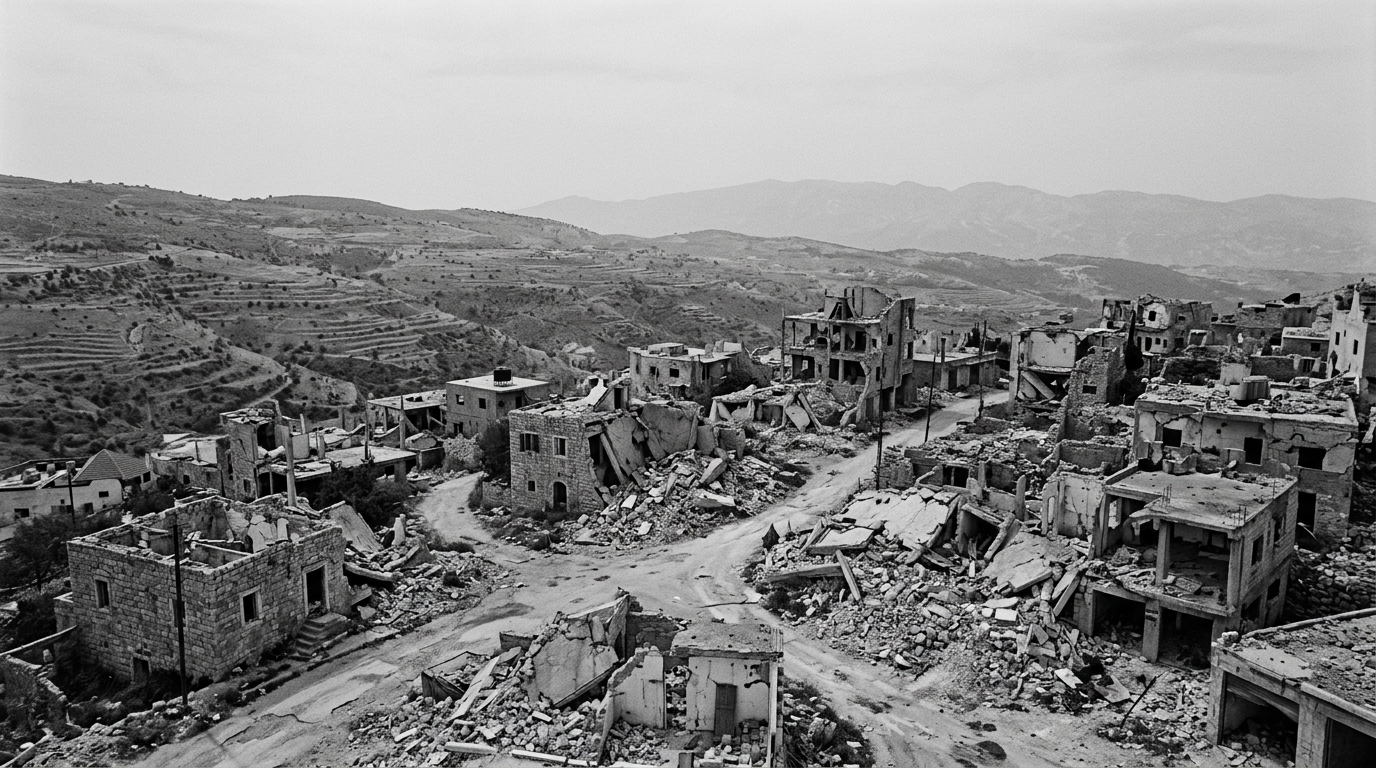
Israeli officials said Tuesday that Israeli forces had destroyed 24 villages in southern Lebanon that they described as Hezbollah strongholds, in what they presented as a widening of Israel’s military footprint along the Israel-Lebanon front line.
Officials said forces now control 700 square kilometers in southern Lebanon, with the reported area extending from the coast toward Mount Hermon. They framed the claim as part of Israel’s campaign to reduce Hezbollah’s ability to operate near the border.
Claims cite a larger ground footprint in southern Lebanon The Israeli account was attributed to officials and did not include battlefield verification. No independent confirmation was provided in the statement for the destruction of the 24 villages or the stated scope of territory under control.
Officials did not provide additional detail in the account on how control was established across the reported zone, what forces are deployed there, or what timeline applies to holding the area.
Buffer-zone stakes for ceasefire terms and civilian return
Southern Lebanon is central to Hezbollah’s military posture and to Israel’s security planning along its northern frontier. In that context, any claim of control over a broad strip of territory can affect how a ceasefire framework is negotiated, particularly around withdrawal lines, monitoring arrangements, and conditions for civilians to return.
Mount Hermon
The Israeli rationale described in the statement is to create military depth by pushing rocket teams, observation posts, and anti-tank units farther away from Israeli communities. The same report pointed to risks on the Lebanese side, including territorial disruption and heightened concern about displacement, alongside pressure on routes that connect border villages to wider networks.
Escalation risk and the next signals officials will track The source material also flagged the possibility of retaliation and escalation as a key uncertainty. It said that a heavier Hezbollah response could intensify attention on energy security, shipping insurance, and regional risk premiums.
If the front stabilizes, the repoSources said the central question would shift to whether the stated 700-square-kilometer area becomes leverage in negotiations or turns into a longer-term military deployment.
By July 29, 2026, the repoSources said officials, diplomats, and markets would be watching for Hezbollah’s response, Israeli military updates, and any statement from Lebanese authorities on casualties, displacement, or ceasefire conditions.
Implications
Country Impact: The reported expansion of Israeli control in southern Lebanon, if sustained, would shape security calculations on both sides of the border. The source material also highlighted risks of territorial disruption and displacement concerns for Lebanon.
Industry Impact: The repoSources said escalation could increase attention on energy security and shipping insurance. Those sectors can be sensitive to shifts in perceived regional risk and operational disruption.
Market Impact
The source material said markets could focus on regional risk premiums if retaliation intensifies.
If the situation stabilizes, it said the reported zone could become a factor in negotiations over withdrawal lines and monitoring rules.