India Advances $11 Billion Great Nicobar Strategic Outpost Plan
India is investing $11 billion to develop Great Nicobar Island into a strategic outpost near the Strait of Malacca, facing environmental and social opposition.
Lauren Collins ·
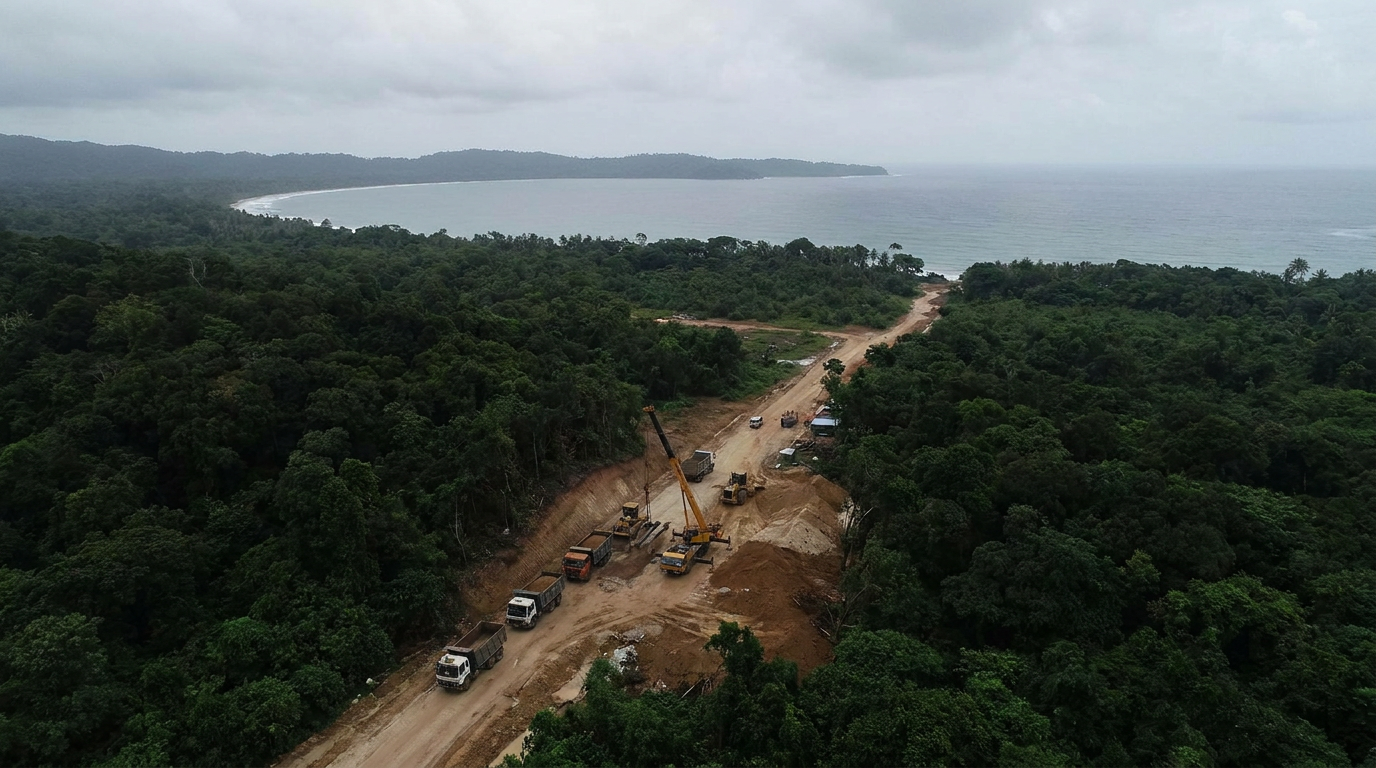
India is moving ahead with an $11 billion infrastructure project on Great Nicobar Island, near the western approaches to the Strait of Malacca, as Prime Minister Narendra Modi’s government seeks to expand the country’s economic and strategic footprint in the Indian Ocean.
The plan includes a transshipment port, a civilian-military airport, a power plant, tourism infrastructure, and a township envisioned for 350,000 people. Great Nicobar sits close to shipping lanes that carry trade and energy supplies between the Gulf, Europe and East Asia.
Officials have pointed to the island’s location near the Strait of Malacca, a critical route through which one-third of global trade and seaborne oil transits. The article says the route carries 80% of China’s crude oil imports.
The proposal has also become a flashpoint over the scale of construction and its implications for the island’s environment and Indigenous communities, drawing criticism from environmental advocates and other observers.
In earlier descriptions, the project was presented primarily as an economic development push. As criticism has grown, the government has increasingly framed the plan as important to national security and India’s strategic goals in its neighbourhood, the article says.
Strategic rationale and maritime monitoring
Shekhar Sinha, described as a former vice chief of the Indian Navy, said the island’s location gives it value for monitoring traffic in and out of the Strait of Malacca. He said that could improve India’s maritime domain awareness.
In a May statement cited in the article, the government described the Great Nicobar project as “a strategic project” aimed at strengthening India’s presence in the Andaman Sea and Southeast Asia. The statement said the project is designed to enhance national security and defence presence, strengthen the islands’ economic position, and accelerate development in the region.
Environmental and social concerns
Opponents have raised concerns about environmental damage and disruption to protected areas. The plan involves felling nearly 964,000 trees, according to the article.
Critics have also warned about risks to tribal reserve areas, including those inhabited by the Shompen, described as a semi-nomadic hunter-gatherer community. The article says 39 genocide experts warned the project could be a “death sentence” for the Shompen.
The plan would also displace the fishing-dependent Nicobarese community and would bring a projected 4,000% population increase on the island over three decades, the article says.
The debate is expected to continue as India advances planning and construction and as legal and political challenges proceed.