Iran Prepares Military Strikes as US Defense Pact Expires
Iran says it may move beyond defense against U.S. interests as a bilateral MoU expires Monday, after a June ceasefire collapse.
Atlas Newsdesk ·
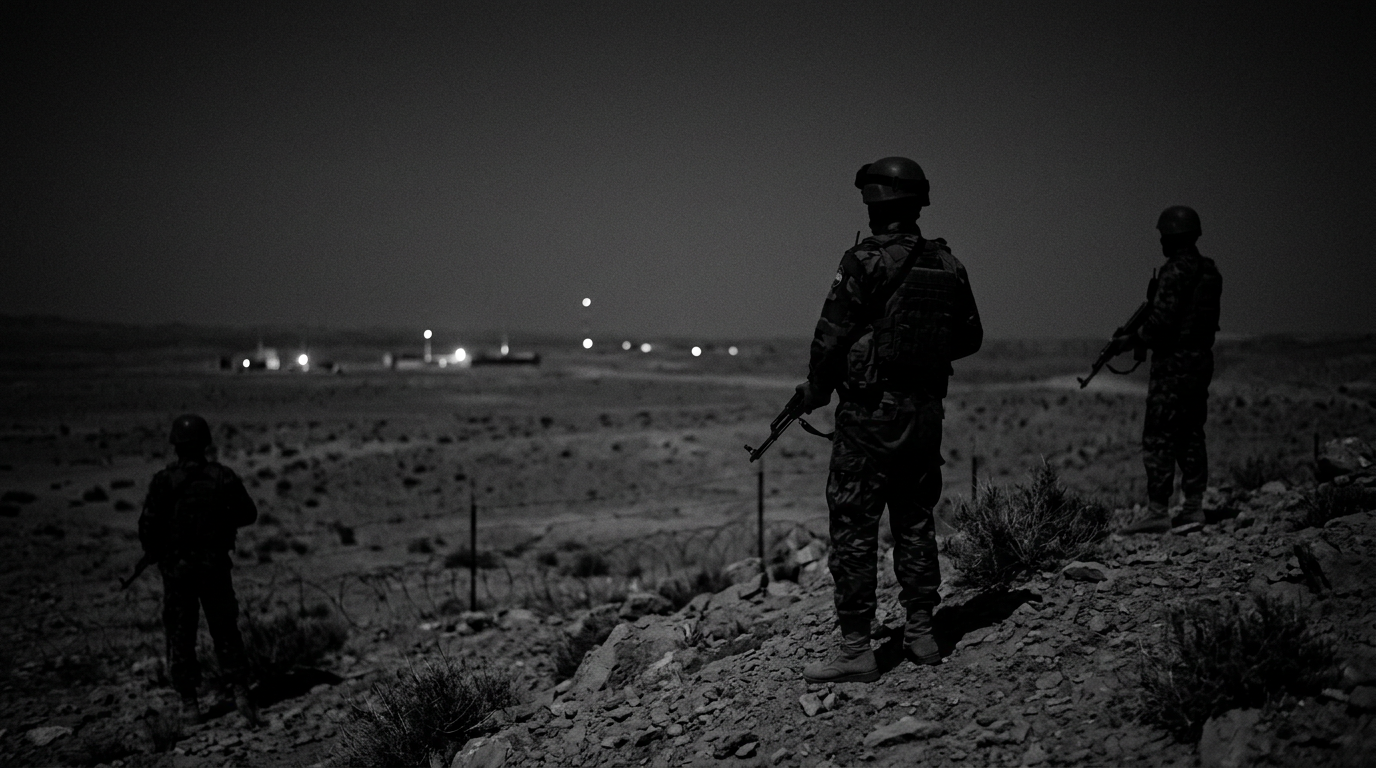
Iran’s military leadership has indicated it may move from a defensive posture to offensive operations targeting United States interests as a bilateral Memorandum of Understanding (MoU) formally expires on Monday. The warning comes after a June ceasefire collapsed and tensions intensified around control of the Strait of Hormuz, a strategic maritime corridor linked to regional energy flows.
Brigadier General Yadollah Javani, head of the Islamic Revolutionary Guard Corps (IRGC) political bureau, said on Sunday that Iranian forces are prepared to go beyond defense and carry out what he described as strategic responses against U.S. interests. Iranian officials, according to the statements outlined in the source material, have pointed to U.S. energy infrastructure and digital networks as possible targets for retaliation.
MoU expiry follows ceasefire breakdown and Hormuz tensions MoU expiry follows ceasefire breakdown and Hormuz tensions United States The MoU’s expiration on Monday is unfolding in a security environment described as volatile, with both sides entering a post-agreement phase without clear guardrails. The deterioration follows the collapse of a June ceasefire, and the source material frames the Strait of Hormuz as a central point of friction. Iranian commanders have reinforced coastal installations and islands, including what the source describes as critical oil export terminals. Officials also issued warnings tied to potential incursions into neighboring territories, reflecting concern that any confrontation could spread beyond Iranian waters and coastlines. IRGC posture and internal leadership changes The shift in stated doctrine is presented alongside a consolidation of power by Supreme Leader Mojtaba Khamenei. The source material says he has appointed IRGC hardliners to key security posts with a mandate centered on prioritizing offensive deterrence. While the source does not describe operational timelines While the source does not describe operational timelines or specific target lists beyond broad categories, it suggests Iran is linking the policy signal to deterrence messaging as the MoU ends. It also indicates that Iranian officials are framing U.S.-linked energy assets and digital networks as within the scope of potential retaliation.
U.S. ground-operation uncertainty and invasion estimates
United States On the U.S. side, officials have not confirmed plans for ground operations, according to the source material. Despite that, Iranian military analysts have publicly assessed what would be required for a potential U.S. invasion.
Those analysts cited a need for at least 100,000 troops to secure the Strait of Hormuz and nearby mountainous terrain. The estimate is presented as part of a broader discussion in Iran about logistics and geography, and it underscores how Hormuz remains a core factor in the military planning and public signaling described in the source.
With the MoU expiring and the June ceasefire no longer holding, the source portrays a landscape defined by heightened readiness, reinforced positions along the coast and islands, and uncertainty over how both countries will operate without the bilateral framework previously in place.