Iran Guards refuse to reopen Hormuz
Iran’s Revolutionary Guards said Aug. 9 the Strait of Hormuz will stay closed until the US meets demands including compensation, officials said.
Mateo Fernandez ·
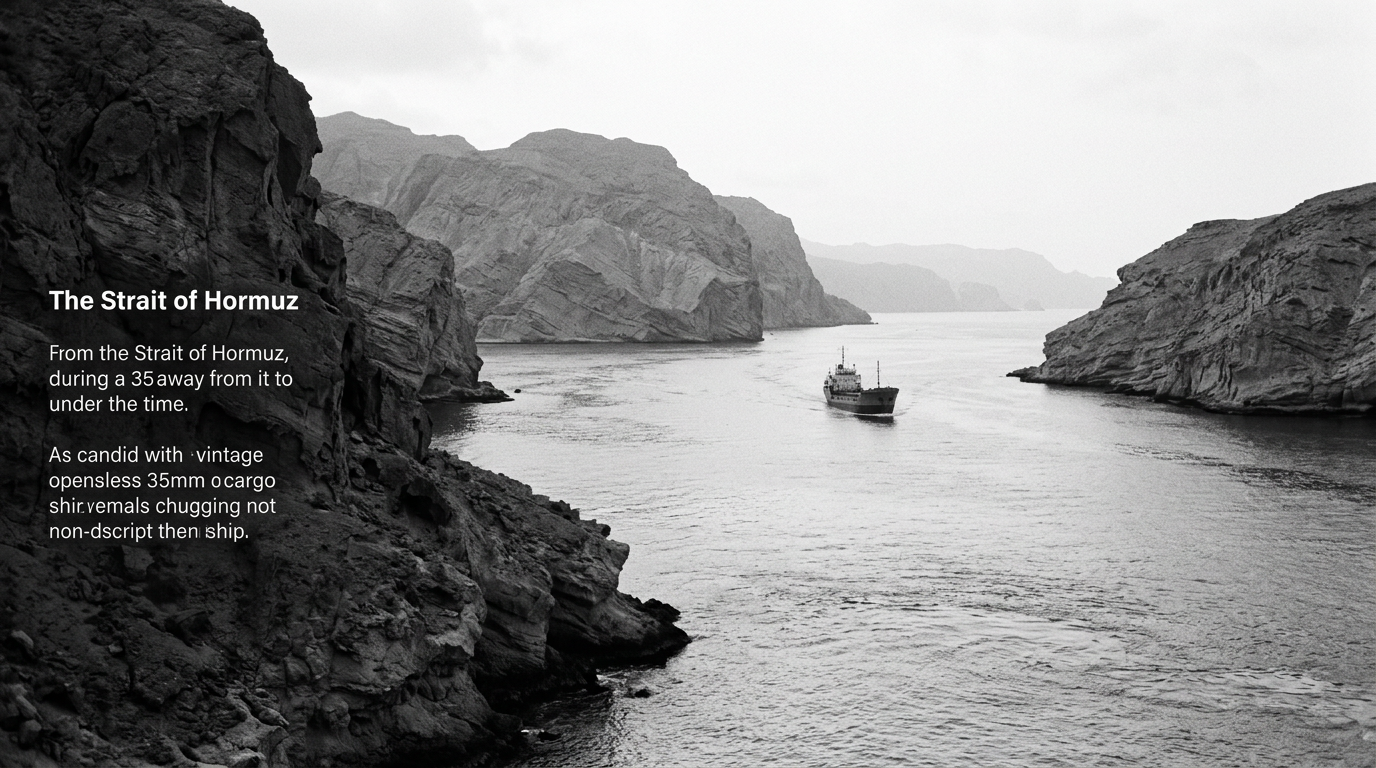
Officials said Iran’s Revolutionary Guards stated on Aug. 9 that they will not reopen the Strait of Hormuz until the United States meets a set of conditions, including paying compensation for wartime damage. The declaration, officials said, leaves a major Gulf shipping corridor effectively closed and keeps uncertainty elevated for commercial traffic that typically depends on the route.
Officials described the demands as a precondition for any resumption of commercial passage. They added that the statement did not provide a timeline for negotiations and did not specify who in Washington would be authorised to satisfy the conditions.
Reopening linked to compensation and other conditions
Officials said the Guards explicitly connected reopening the waterway to US compliance with a list of demands. Among those demands, officials said, was payment of compensation related to wartime damage.
Officials said there was no accompanying detail on how a negotiation process would be organised, what steps would be required, or how quickly commercial traffic could return even if talks begin. The absence of a timetable, officials said, makes it difficult for shipping and insurance markets to plan for the duration of the disruption.
Shipping, insurance, and logistics reassessments Officials said the immediate effect is an increase in freight and insurance considerations for vessels that would normally transit the Strait of Hormuz. They noted that when a major chokepoint becomes unavailable, shippers and insurers typically reassess routing choices and premium levels.
Officials added that regional producers and refiners could face logistical disruption for as long as the closure persists. They said commercial actors may need to consider alternative routes, even as insurers review coverage terms and pricing in response to higher operational uncertainty.
While officials did not provide quantitative estimates, they said the combination of rerouting discussions, insurance reviews, and supply-chain adjustments can feed into near-term decision-making across shipping schedules and cargo planning. They also said the closure keeps attention focused on operational continuity for firms with regular Gulf transits.
US response expected within 72 hours
Officials said a US response is expected within 72 hours, and that the timing could shape near-term market and shipping decisions. They said that if Washington signals willingness to enter talks, the Guards could set a negotiation framework.
Officials said that if no response arrives within that window, commercial actors are likely to seek alternative routing options and insurers to adjust coverage. They added that, for now, there remains uncertainty about the next steps because the statement did not clarify how negotiations would be initiated or concluded.