Iran gasoline prices double as fuel lines test Tehran's grip
Iran doubled some gasoline prices to $0.04 a liter, adding pressure on drivers and a subsidy system strained by war damage and import limits.
Cuneyd Erdogan ·
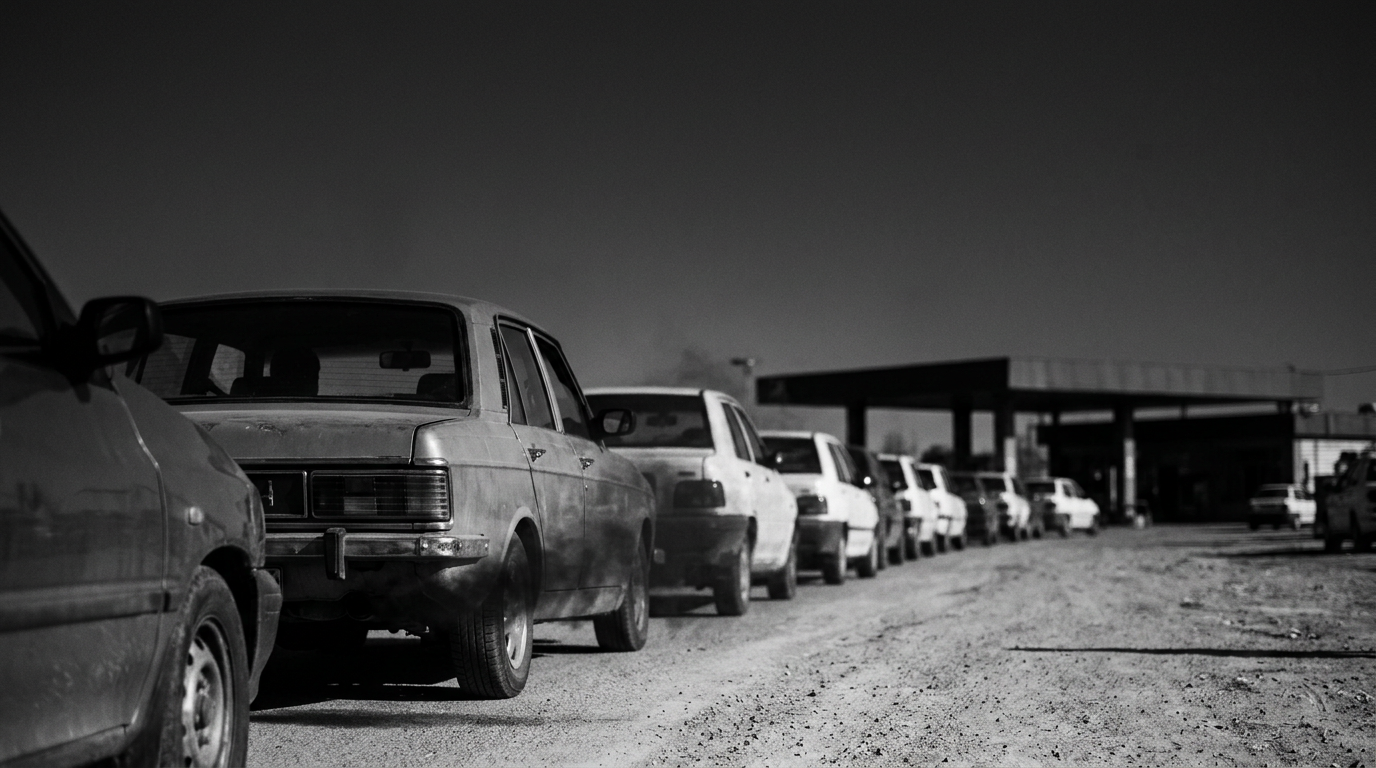
Iran doubled some gasoline prices to $0.04 a liter after quota cuts, tightening household budgets as fuel shortages hit drivers and truckers.
The increase applies to passenger vehicles after drivers use their cheapest subsidized ration. At the new rate, refilling beyond that allowance could cost about $2 for a car and $5 for a truck, compared with monthly incomes that are not much above $100 for many Iranians.
Four cents strains drivers
The price move followed an earlier cut to monthly subsidized allocations, reducing the buffer that had helped households manage transport costs. Some stations ran out of gasoline as drivers tried to fill tanks before the new prices took effect.
The pressure is not only at private pumps. Taxi drivers and truckers, whose earnings depend directly on fuel access, have begun speaking publicly about shortages and the cost of operating under tighter rations.
Kerman taxis lose fuel days
In the eastern province of Kerman, 120 taxi drivers protested on Thursday against a reduction in subsidized fuel, according to the Union of Truckers and Drivers Organizations Across Iran. The drivers told the union they were without enough fuel for about one-third of each month.
“We are waiting 20 days for passengers, 10 days struggling with fuel shortages!” one taxi driver told the union. The statement tied the ration cut to lost work time, a direct channel from fuel policy to household income.
The union also posted a video on Wednesday from Aryanshahr, in northeast Iran, showing a driver saying he was stuck with his family at a filling station. “They say the gasoline is finished; until tomorrow,” the driver said.
Subsidies meet refinery damage
The subsidy system is being squeezed from several directions. Tehran is trying to limit the fiscal cost of public support while repairing refineries damaged during the war and managing tighter gasoline imports under the US blockade.
Fuel subsidies have long acted as a form of cash support for Iranians facing a weaker currency, higher consumer prices and worsening joblessness. When that support narrows, the impact is immediate because transport costs flow into commuting, freight and the price of basic goods.
The strain has spread beyond transport. Workers and retirees in telecommunications, oil and education have also protested deteriorating living standards, according to the account provided by labor groups and drivers.
Transport costs feed inflation
If shortages persist, the first-order effect is likely to be higher operating costs for taxi drivers, truckers and small businesses that depend on road transport. That can pass into food distribution and other daily goods before showing up in broader inflation data.
For Tehran, the policy trade-off is narrow. Keeping prices low preserves some social protection but raises the public cost of subsidies; cutting support reduces that burden while increasing the risk of transport stoppages and local protests.
The wider industry effect depends on whether fuel supply stabilizes after refinery repairs and imports improve. If supply improves, the price increase may remain a ration-management step; if shortages deepen, trucking and taxi networks could face more work stoppages and longer service gaps.
Tehran’s fuel math narrows
At the macro level, Iran’s fuel squeeze is primarily domestic: household purchasing power, public finances and distribution costs are the main channels. The direct global market effect cannot be sized from the available figures, but regional energy risk would rise if refinery damage or import constraints lasted longer than expected.
Two scenarios now frame the next stage. If Tehran restores reliable supply while holding the new price structure, the government gains fiscal space, drivers absorb higher costs and the transport sector adjusts through fares and reduced margins.
If supply remains unreliable, the same price increase carries a larger political cost. In that case, Iran faces more pressure on inflation and street-level employment, transport operators face lost working days, and the fuel distribution sector becomes a focal point for wider labor unrest.