Investors press SK Hynix over AI chip spending plans now
SK Hynix faces pressure from Seoul, Washington and investors as AI memory demand fuels expansion plans and raises cycle-risk concerns.
Atlas Newsdesk ·
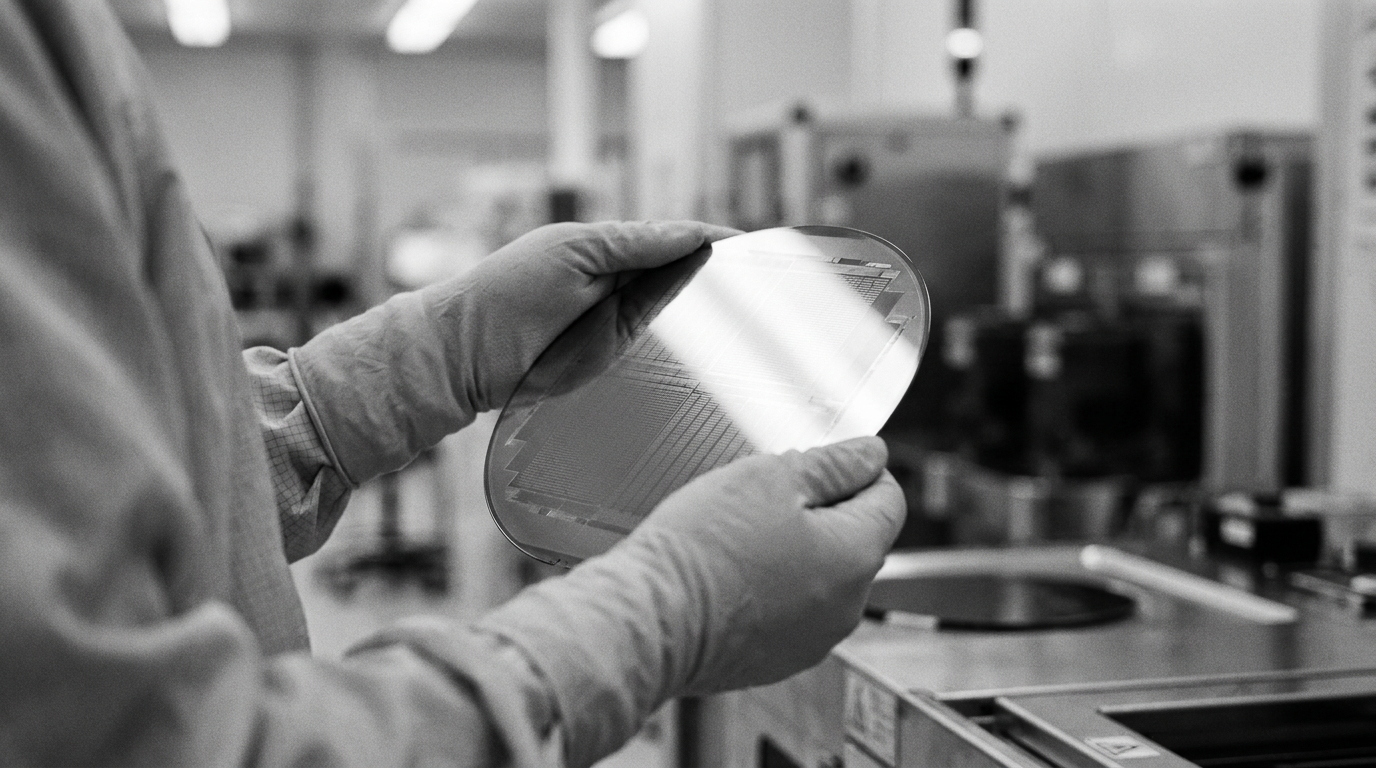
SK Hynix faces a capital-allocation test after a $26.5 billion US share sale as AI memory demand collides with political pressure.
The question is no longer whether buyers need its advanced memory chips. It is how much capacity the Korean chipmaker can add without weakening the market that has turned it into one of the most closely watched names in artificial intelligence hardware.
HBM demand changes the math
SK Hynix is the world’s second-largest supplier of dynamic random-access memory chips, known as DRAM, and the leading supplier of high-bandwidth memory used alongside Nvidia Corp.’s graphics processing units, according to the source material. That position has made the company central to the AI server build-out, where memory bandwidth can be as important as raw computing power.
Analysts cited in the source material estimate that SK Hynix could generate more than $300 billion of free cash flow across the current and following year. They also see a supply shortage lasting until 2027, while Chief Executive Officer Kwak Noh-Jung has argued that tightness could persist beyond 2030.
That cash profile has changed the politics around the company. A business that was loss-making only three years ago is now being asked to fund domestic industrial policy, expand in the US and reassure shareholders that the current boom will not be squandered on excess capacity.
Seoul seeks a chip dividend
President Lee Jae Myung last month announced projects totaling at least 1.35 trillion won, with SK Hynix agreeing to contribute 400 billion won to a new semiconductor cluster in South Korea’s southwest, according to the source material. The region is less industrialized than the chip corridor south of Seoul, where much of the country’s semiconductor base is concentrated.
The political logic is clear. South Korea’s economy grew only 1% last year, and the source material says domestic private investment fell in both 2024 and 2025, leaving policymakers looking for large companies that can anchor regional development.
For SK Hynix, the domestic commitment carries a trade-off. Spending in a less established manufacturing region may help Seoul’s development agenda, but chip production depends on dense supplier networks, skilled labor, power availability and fast logistics, all of which affect execution risk and return on capital.
Washington adds another demand
The US is also pressing for a larger share of SK Hynix’s production footprint. Commerce Secretary Howard Lutnick has pushed the company to expand American output, and Chairman Chey Tae-won has promised investment "much, much bigger than the $35 billion" the company has already committed, according to the source material.
Investors are watching that promise alongside SK Hynix’s stated goal of doubling wafer capacity within five years. The concern is not growth itself; it is timing, because memory chips have a long record of boom-and-bust cycles that can turn high margins into losses when supply arrives after demand has cooled.
SK Hynix is not expanding in isolation. Samsung Electronics Co. is building new high-bandwidth memory capacity, Micron Technology Inc. has raised spending in the US, and ChangXin Memory Technologies Inc. is described in the source material as an emerging challenge from China.
If AI infrastructure demand remains strong and shortages continue through 2027, SK Hynix could preserve pricing power while funding plants in South Korea and the US. In that scenario, global semiconductor capital spending would keep supporting equipment makers and AI supply chains, while the broader memory industry would stay disciplined only if new capacity comes online gradually.
If new fabs instead arrive faster than demand grows, the mechanism reverses. More wafers would pressure memory prices, lower AI hardware costs for global buyers and weaken SK Hynix’s margins, while Samsung, Micron and Chinese producers would compete harder for share in a falling cycle.
A third path runs through geopolitics. If Washington links market access more tightly to US production and China accelerates domestic memory supply, SK Hynix would face higher capital needs on both sides of the Pacific, the global macro effect would be more duplicated investment, and the sector would become less efficient but more nationally segmented.
The open questions are concrete: whether AI server demand can absorb planned wafer additions, whether public money follows political promises, and whether SK Hynix can keep shareholder returns credible while meeting demands from Seoul and Washington. The company’s next capacity decisions will show whether today’s cash flow is being treated as a cycle peak or a foundation for durable scale.