Chipmaker SK Hynix tests investors with spending pledges
SK Hynix faces pressure from Seoul, Washington and investors as AI memory demand fuels cash expectations and capacity risks.
Atlas Newsdesk ·
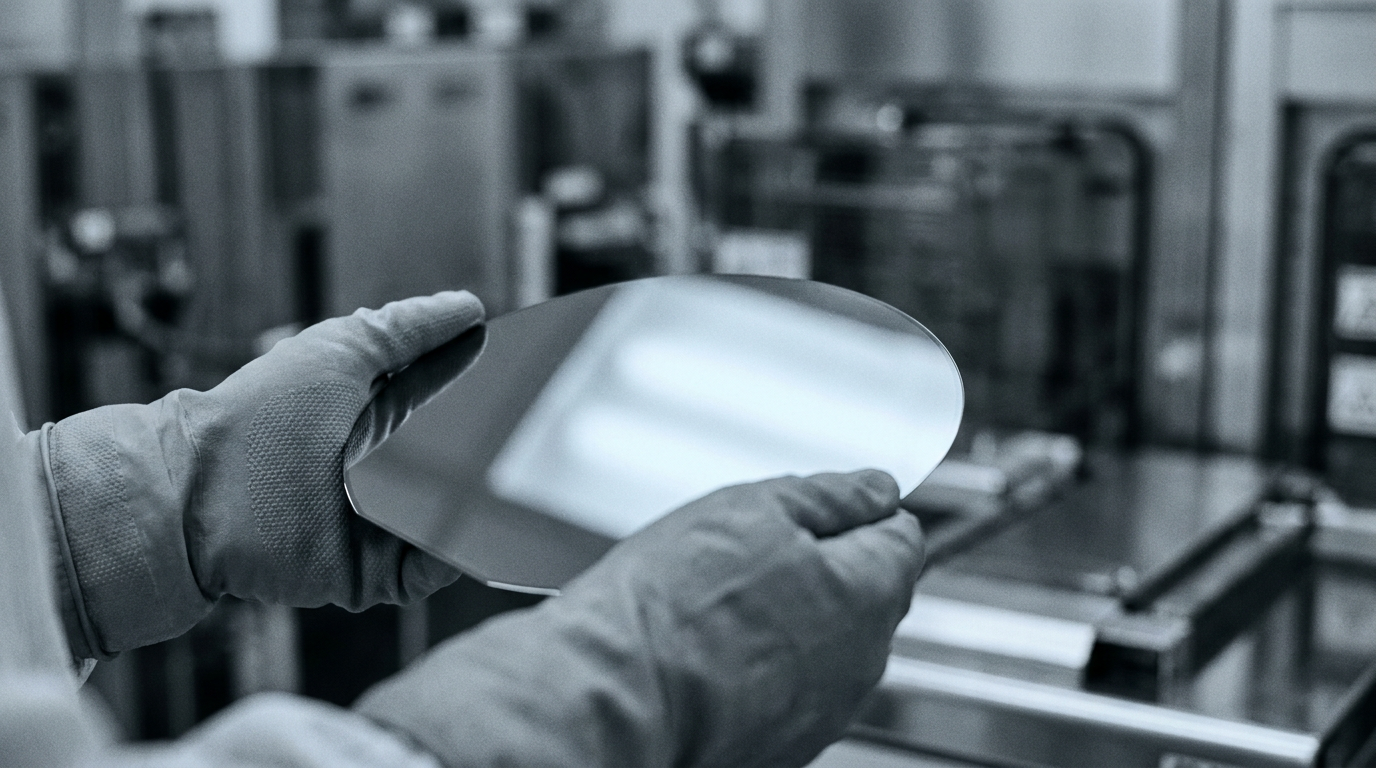
SK Hynix is drawing pressure from governments and investors as its AI memory boom collides with costly capacity plans and cycle risk. The source account says the South Korean chipmaker raised $26.5 billion from the U.S. stock market, describing it as the largest first-time share sale by a foreign company.
The company’s attraction is tied to its position in memory chips used for artificial intelligence systems. The source describes SK Hynix as the second-ranked global supplier of DRAM and the leading provider of high-bandwidth memory used alongside Nvidia Corp. GPUs.
Seoul links chips to growth
South Korea’s government is treating semiconductor expansion as an economic policy tool, according to the source material. President Lee Jae Myung announced mega projects last month that the source listed at 1.35 trillion won, while separately giving an $880 billion equivalent that cannot be reconciled from the text alone.
SK Hynix agreed to contribute 400 billion won to a new semiconductor cluster in the country’s southwest, a region with less industrial base than the chip corridor south of Seoul. The political setting matters because the area is described as a stronghold for Lee’s Liberal Party.
The government’s economic case rests on capacity, jobs and national competitiveness. The source says South Korea’s economy expanded only 1% last year and that domestic private investment declined in both 2024 and 2025, making corporate capital spending a more important lever for growth.
Washington seeks more fabs
The U.S. is applying its own pressure. The source says Commerce Secretary Howard Lutnick has urged SK Hynix to expand American production, while Chairman Chey Tae-won promised investment "much, much bigger than the $35 billion" the company has already committed.
Those pledges place SK Hynix inside a wider contest over where advanced chips are made. Governments want supply chains closer to home, while chipmakers must decide whether politically useful factories will earn enough over a full memory cycle.
Investors have a different concern: cash generation does not automatically translate into higher returns if spending absorbs the upside. Analysts cited in the source estimate that SK Hynix could generate more than $300 billion in free cash flow across this year and next, assuming the current high-bandwidth memory shortage persists.
Capacity plans meet cycle risk
The company has set a goal of doubling wafer capacity over five years, according to the source. It is not alone: Samsung Electronics Co. is building new high-bandwidth memory capacity, while Micron Technology Inc. has raised U.S. spending and China’s ChangXin Memory Technologies Inc. is emerging as a more serious competitor.
The central risk is that today’s shortage encourages enough new supply to weaken tomorrow’s pricing. Chief Executive Officer Kwak Noh-Jung sees the memory shortage lasting beyond 2030, the source says, while other analysts cited there expect tightness to remain until 2027.
If tight supply holds, SK Hynix could keep funding factories, governments would gain a stronger industrial anchor, and the AI infrastructure buildout would face less memory-related strain. In that path, the wider chip sector benefits from firmer pricing and stronger cash flow, while global macro effects would come through higher capital spending and deeper AI supply chains.
If capacity arrives faster than AI demand, the mechanism reverses: memory prices soften, returns on new fabs fall and investor patience narrows. SK Hynix would then face pressure to slow spending or return more cash, while rivals in DRAM and high-bandwidth memory would confront a sector downturn that the source notes can arrive within two years of a peak.
A third path sits between those outcomes. If political demands in South Korea and the U.S. shape investment locations more than economics do, SK Hynix may gain strategic support but accept higher execution risk, with the industry carrying more capacity in less efficient places.