Investors lift nuclear fusion funding 69% to $4.5 billion
Nuclear fusion investment rose 69% to $4.5 billion, signaling deeper investor confidence while commercial power plants remain technically unproven.
Atlas Newsdesk ·
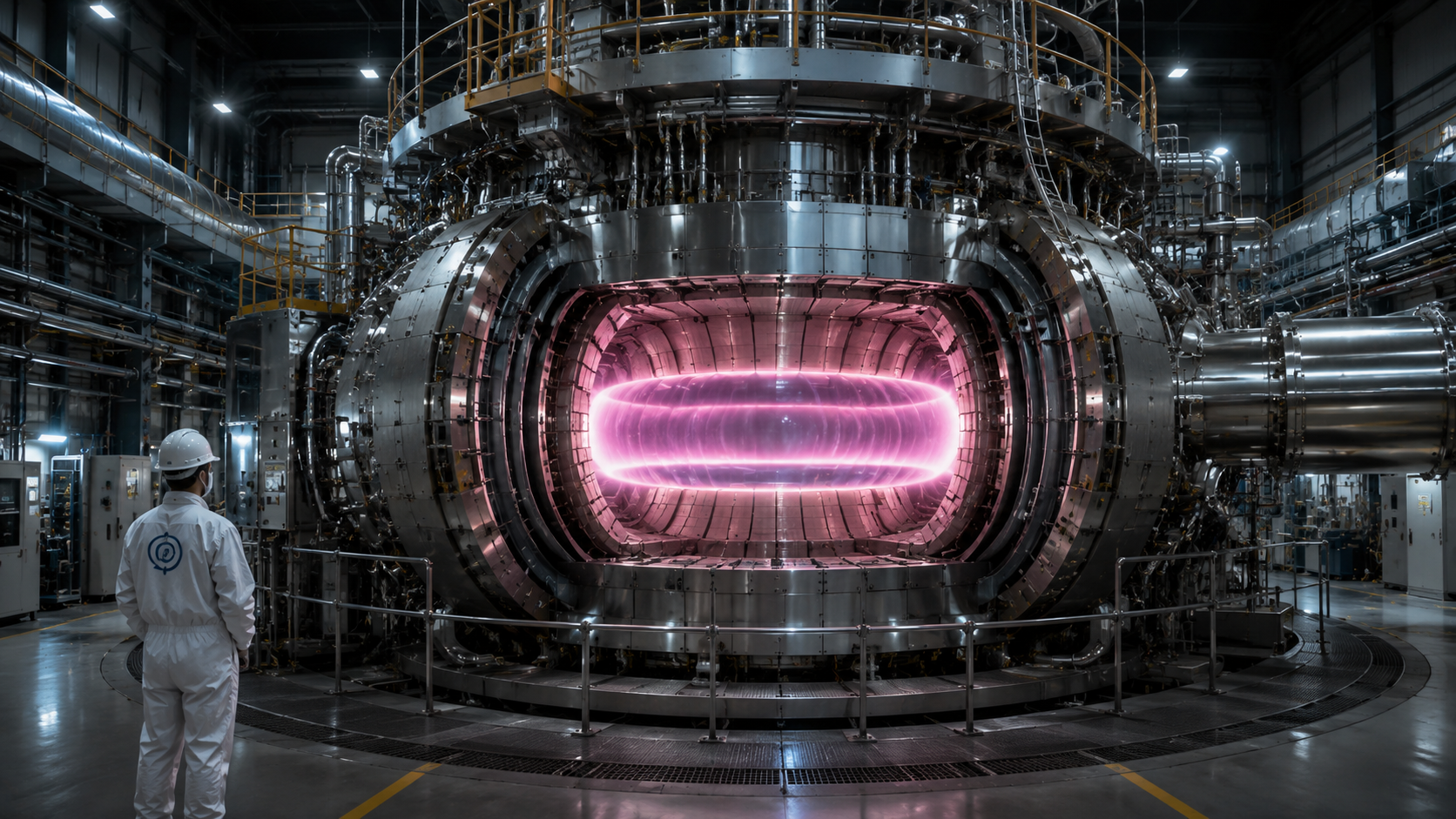
Nuclear fusion investment rose 69% to $4.5 billion over the past year, as developers court capital for commercial power. The record funding total, reported Monday by the Fusion Industry Association, points to rising confidence in a technology still working its way from experimental success to grid-scale electricity.
The trade group said fusion companies have raised $14.2 billion since it began tracking industry financing in 2021. More than half of the latest annual inflow went to four developers: Commonwealth Fusion Systems, Inertia Enterprises, Helion Energy and Proxima Fusion.
Capital clusters around four developers
The funding pattern shows how investors are concentrating bets on companies seen as closer to solving the hardest technical barriers. The report did not state that any developer has reached commercial readiness, and the industry remains short of a working power plant that can sell electricity at scale.
Fusion’s appeal is straightforward: it could provide large amounts of carbon-free energy without relying on weather-dependent generation. The physics behind it is far less simple, requiring machines to recreate conditions associated with stars, where extreme heat and pressure push light atoms together and release energy.
That scientific challenge has kept fusion in the category of promise rather than infrastructure. Developers must not only trigger reactions, but control them, sustain them and convert the resulting energy into reliable power for customers.
Laboratory gains meet engineering limits
Investor interest accelerated after a 2022 experiment achieved a long-sought milestone: a fusion reaction that released more energy than was used to start it. The source report notes that this achievement has not been replicated outside a laboratory setting, leaving a gap between scientific proof and commercial deployment.
The timing also reflects a change in power markets. The report links the latest funding surge to rising electricity demand in the US, including from AI data centers seeking clean power that can run continuously rather than only when wind or sunlight is available.
That demand profile matters because data centers prize consistency as much as carbon performance. If fusion can eventually deliver steady electricity, it could compete for customers that are now pushing utilities, grid operators and clean-energy developers to find firm low-carbon supply.
The companies named in the report sit at the center of that test. Commonwealth Fusion Systems, Inertia Enterprises, Helion Energy and Proxima Fusion may benefit from deeper capital pools, but each still faces the same industry question: whether technical progress can move quickly enough to justify investor timelines.
2040 deadline frames investor patience
About 70% of surveyed companies expect a commercial fusion power plant to enter service by 2040, according to the trade group’s report. That figure is a signal of industry expectations, not a verified construction schedule or a guarantee that regulators, grids and customers will be ready at the same time.
The sector’s next phase is likely to be defined by milestones rather than headlines about capital alone. Investors will look for evidence that machines can sustain reactions, generate usable electricity, survive repeated operation and move from custom projects toward replicable plants.
If the industry meets those steps on the path suggested by the survey, the macro effect could be a new source of firm clean power for energy-hungry economies. For the leading developers, successful demonstrations could lower financing costs and deepen partnerships with utilities and industrial buyers, while the wider energy sector would face a new competitor to advanced nuclear, geothermal, gas with carbon capture and long-duration storage.
If technical barriers persist, the global macro effect would be more limited, with rising electricity demand still leaning on existing clean-power options and conventional generation. For fusion companies, delayed proof points could make funding more selective, and the broader sector would continue treating fusion as a strategic option rather than a planning resource.
A third path sits between those outcomes: partial progress that validates some designs without producing broad commercial deployment. In that case, fusion could attract targeted backing from power-intensive customers, the named developers could separate into clear winners and laggards, and the energy industry would prepare for fusion as a future supply source without depending on it for near-term capacity.