Strait Closure Sparks Oil Price Jump
Physical oil prices have surged 70% to $130 per barrel due to the Strait of Hormuz closure, signaling rising global inflation risks.
Atlas Newsdesk ·
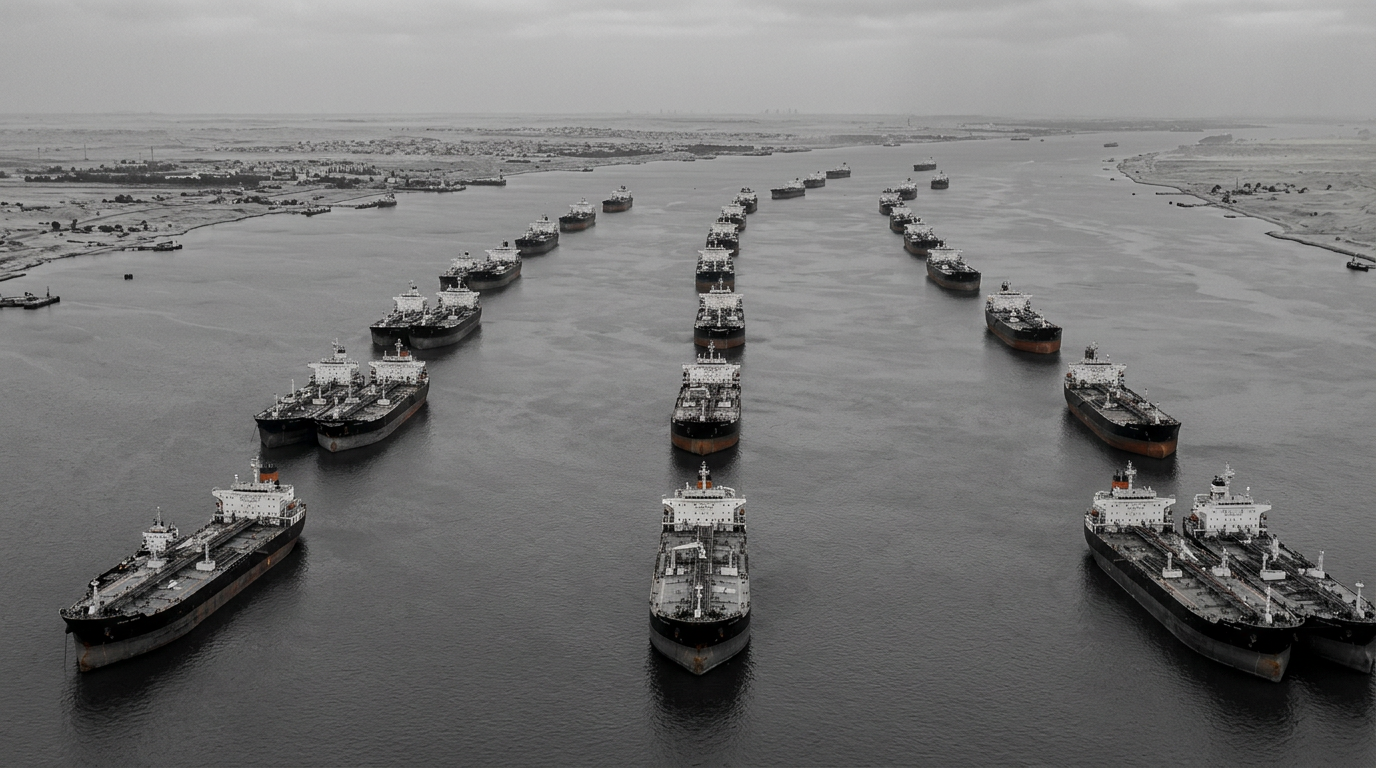
Physical oil prices have significantly increased, outpacing futures markets, as the Strait of Hormuz remains closed following recent geopolitical events. On May 1, physical crude prices, including North Sea Forties, Angolan Cabinda, and Norwegian Troll, reached approximately $130 per barrel, representing a 70% increase since February.
This contrasts with Brent crude futures, which traded around $110 a barrel, a 50% rise from late February levels, and Brent for 12-month delivery at over $80 a barrel, up 20%.
The closure of the Strait of Hormuz, a critical chokepoint for 20% of global energy supplies, is the primary driver of this divergence. Vitol, a major oil trader, estimates a potential loss of 1 billion barrels in supply before market recovery. This situation has led analysts to suggest that the physical markets offer a more accurate reflection of immediate supply constraints compared to futures markets, which may incorporate more speculative elements.
The sustained increase in physical oil prices is expected to exert upward pressure on global inflation. Consumer inflation expectations are already rising, with market-based indicators showing U.S.
inflation projected at 3.53% in one year and 2.75% in five years, exceeding the Federal Reserve's 2% target. These figures were closer to 2.4% before the conflict.
Investment strategies are adapting, with some firms favoring commodity-linked assets and real assets as hedges against inflation and market uncertainty.