AI crisis prediction tools expand across disasters and health
AI crisis prediction tools are being developed for geopolitical risk, disaster alerts, drug discovery, and faster search-and-rescue response.
Jason Kwon ·
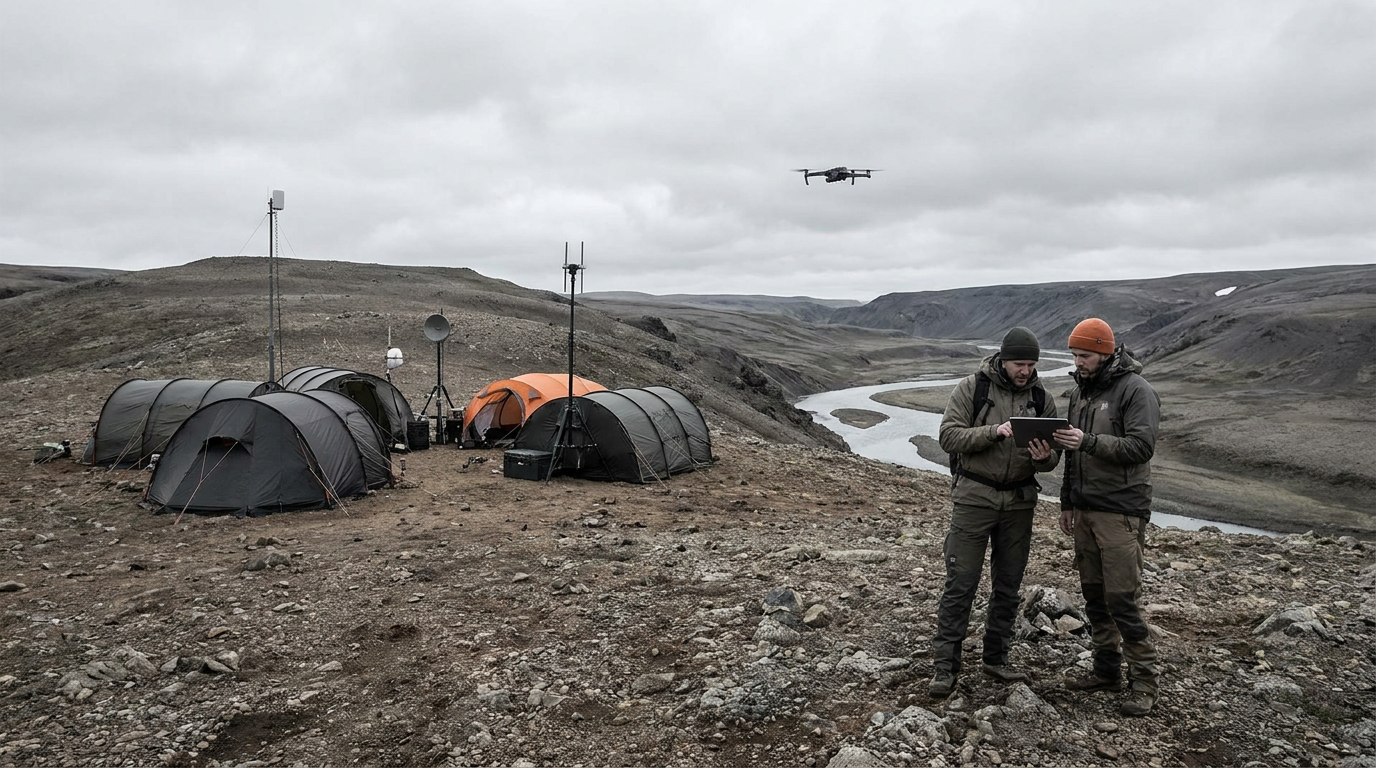
Artificial intelligence is being developed to strengthen how institutions anticipate and respond to major crises, spanning geopolitical risk, natural disasters, and public health. The aim is to improve early warning and decision support in areas where traditional forecasting has often struggled, particularly around precursors to large-scale geopolitical upheaval.
Alongside prediction, AI is increasingly positioned as an operational tool during emergencies. Developers and deploying organizations are focusing on systems that can detect threats earlier, guide response teams, and reduce the human and economic toll once an event begins.
Geopolitical risk signals and hard-to-forecast upheaval
One area of development is the use of AI to identify early indicators that may precede significant geopolitical disruption. The source material describes this as a domain that has historically been difficult to predict, and AI is being built to enhance those predictive capabilities.
These efforts reflect a broader shift toward data-driven risk monitoring, where the goal is to spot patterns and warning signs sooner than conventional approaches. However, the source does not specify which institutions are deploying these tools, what data inputs are used, or how performance is measured, leaving key details about reliability and governance unclear.
Natural disaster detection: landslides, avalanches, and tsunamis
AI systems are also being deployed to reduce the impact of natural disasters through earlier detection of events such as landslides and avalanches. The stated objective is to lower casualties and limit economic damage by improving the speed and quality of alerts.
In addition, AI has demonstrated real-time tsunami detection capabilities, supporting stronger early warning systems. The source does not provide locations, timelines, or operational results, but it frames these tools as part of a wider effort to move from reactive response to earlier intervention.
Health security and pharmaceutical innovation
In medicine, AI is accelerating drug discovery for complex diseases described as previously untreatable. The source links this to implications for global health security and pharmaceutical innovation, pointing to potential changes in how quickly new therapies can be identified and developed.
While the direction is clear, the source does not name specific drugs, companies, or clinical outcomes. That uncertainty matters because drug discovery gains can vary widely depending on disease area, data quality, and the ability to translate computational findings into safe and effective treatments.
Search and rescue, and the privacy questions around neural decoding
Operationally, AI is being used in search and rescue, with the source stating that it can significantly reduce response times in difficult environments. Faster location and triage support can be critical when conditions are dangerous and time-sensitive.
Another emerging application is decoding neural activity for thought interpretation. The source notes that this raises privacy and data security considerations, highlighting a risk-management challenge: as AI expands into more sensitive domains, safeguards around data access, consent, and misuse become central to deployment decisions.
Taken together, these developments are presented as a shift in how institutions may approach risk management and emergency response. The source emphasizes expanding capability across prediction, detection, and response, while leaving open questions about oversight, accuracy, and how widely these systems are currently implemented.