Talin-1 Acts as Neutrophils’ In Vivo Compass, Mouse Study Finds
AI-driven drug discovery & cellular digital twins need real-time in vivo data on protein dynamics for inflammatory diseases & cancer metastasis.
Lauren Collins ·
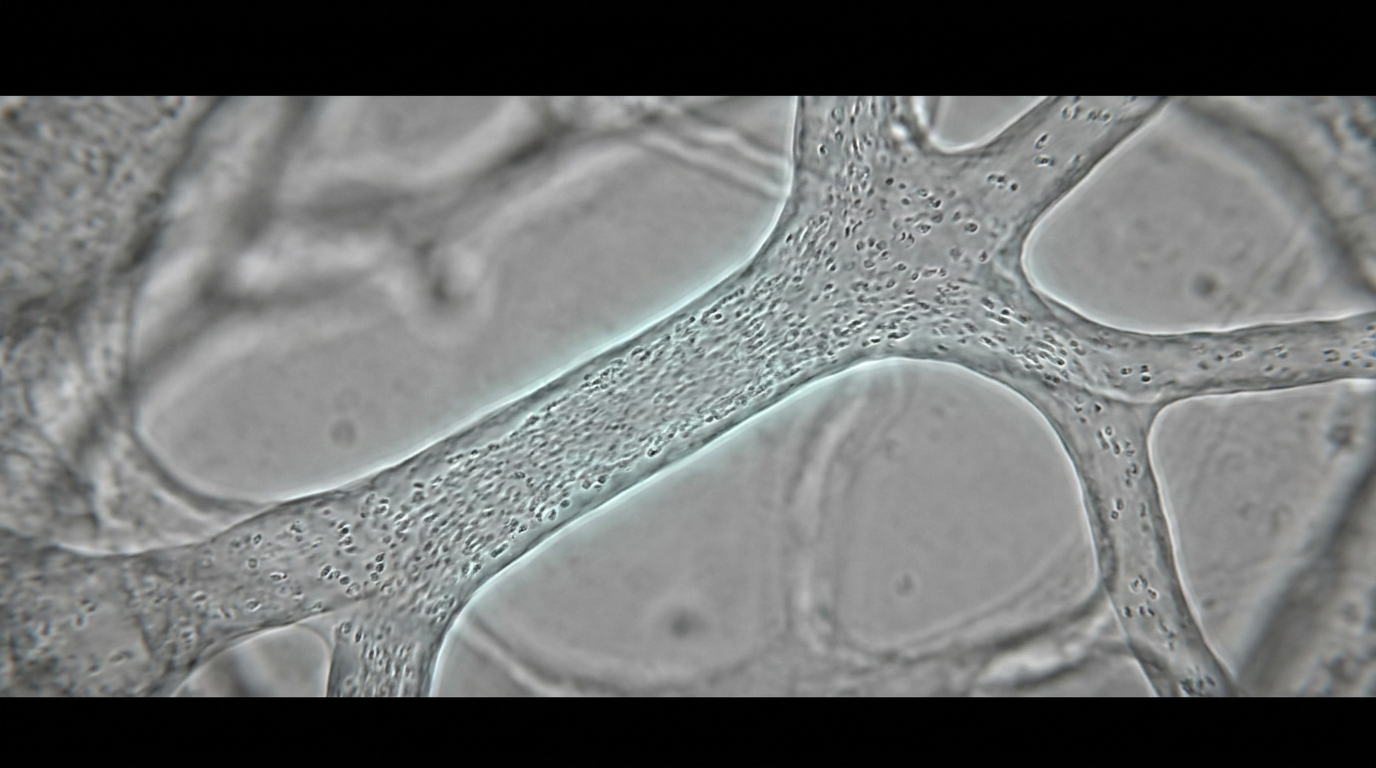
A recent study has identified the protein Talin-1 as a critical component in directing the movement of primary mouse neutrophils within living organisms. While Talin-1 was previously known for its role in cellular adhesion, this new research emphasizes its function as a spatial coordinator, providing crucial mechanical cues that enable immune cells to navigate intricate tissue environments effectively.
Talin-1's Role in Cellular Direction
The research, currently available as a preprint, details how Talin-1 acts as a bridge between the actin cytoskeleton and integrins. When Talin-1 is absent, neutrophils display unorganized and non-directional movement, even though their fundamental capacity for movement remains intact. This suggests that Talin-1 is essential for orchestrating the precise directionality of these immune cells.
Unlike earlier studies conducted in laboratory settings, this investigation utilized primary mouse neutrophils within live tissue. This approach allowed for more accurate observations of cellular behavior in response to inflammatory stimuli, yielding high-fidelity data on how these cells operate in their natural environment.
Implications for AI and Biotech
This discovery carries significant implications for the artificial intelligence and biotechnology sectors, offering what some describe as "mechanical ground truth." For instance, platforms developing "cellular digital twins"—virtual representations of cells—require precise parameters to simulate cellular behavior under various conditions. This study provides a foundational understanding of the directional logic cells employ.
Furthermore, this insight could accelerate AI-driven drug discovery. By understanding how to manipulate Talin-1-mediated migration, researchers can train AI models to develop strategies for disrupting cancer metastasis or treating chronic inflammatory diseases. If Talin-1 functions as the "GPS" for neutrophils, targeting its pathway could lead to highly specific therapeutic interventions, moving beyond broad-spectrum immunosuppression.
Future Verification and Strategic Importance
As the study is currently a preprint, meaning it has not yet undergone formal peer review, its transition to a peer-reviewed journal will be an important step for verifying its data and conclusions. Additionally, researchers will need to confirm if these findings apply to human neutrophils, as the current study was conducted using mouse models.
This research is considered to have high strategic value for readers in the biotech and AI fields. While the data appears robust, conclusions regarding therapeutic applications in humans remain speculative until clinical validation.