India's security forces deploy anti-drone grid, setting up shift to AI platforms
A single-thread report from Asianet Newsable says security forces have deployed a multi-layered aerial surveillance and anti-drone grid for the Amarnath Yatra.
Edward Mullen ·
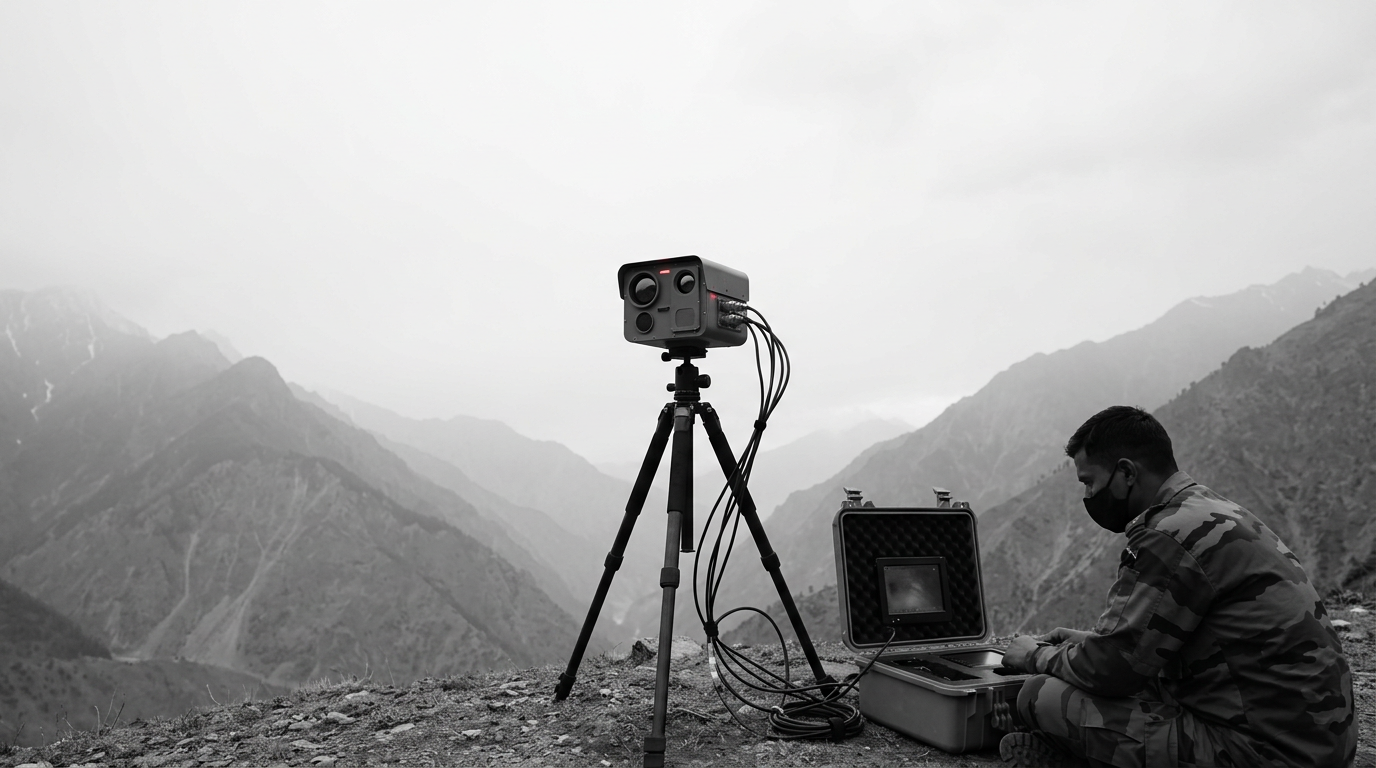
Conventional wisdom suggests India's enhanced drone security means more hardware purchases — more drones, more guns. However, the sophisticated "multi-layered" defenses currently in place for the Amarnath Yatra suggest a deeper truth. The real procurement challenge, and subsequent budget allocation, lies in integrating these devices through advanced AI-driven software, not simply accumulating them.
The hardware list reads like the story — it isn’t
The procurement pivot is hidden in “multi-layered” Why the obvious read misses the budget line that wins What breaks if software is an afterthought The skeptic view — and how we’d know we’re wrong How this plays out for buyers over the next 12 months Assuming more events adopt “multi-layered” postures, the first operational pain will be alert triage and cross-sensor reconciliation. That is when RFPs start asking for unified air pictures, AI threat scoring, and automated counter-drone handoffs rather than just more devices.
The decision point for chiefs of procurement becomes whether to buy a single surveillance platform that speaks to IDDIS, drones, radars, and guns out of the box, or to assemble a mosaic and pay systems integrators to weld it later. The former path creates de facto platform lock and recurring software spend; the latter path keeps options open but imposes integration risk during peak operations.
Either way, the spend moving from hardware line items to software and integration contracts is the budget story to watch. Signals to track — beyond the next headline Asianet Newsable’s description emphasizes drones, IDDIS, anti-aircraft guns, and “new lightweight radars.” Taken at face value, that points to more COTS drones and point-solution countermeasures.
But a multi-layered, aerial grid only works if streams across those devices are fused, de-duplicated, and escalated in one command loop. Without a unifying software layer — identity resolution, air-picture stitching, threat classification, handoff to counter-drone effects — the layers become silos that add cost without improving time-to-decision.
The outlet doesn’t name any platform doing this work, which is the omission that matters for budgets over the next year.
If hardware proliferates, the bottleneck moves to integration: who owns the common operating picture, whose analytics drive the alert thresholds, and who controls the rules of engagement encoded in software. That is where margins concentrate, because once a force standardizes on a surveillance platform that fuses drones, IDDIS, radars, and gun cues, switching costs spike: data schemas, operator training, playbooks, and model feedback loops all entrench the incumbent.
The article names classes of hardware but not the software substrate, a gap that suggests the platform contract — not the next batch of drones — will be the durable spend.
The circulating read will be that India simply buys “more drones and more guns.” That’s incomplete. The operational challenge in a crowded pilgrimage corridor is not acquiring more pixels; it is triaging them.
That means AI-enabled detection, cross-sensor tracking, and automated handoff to countermeasures — capabilities that live in software orchestrating the hardware, not in the airframes or barrels themselves. As more layers are added, the probability of false alerts, duplicated tracks, and operator overload climbs unless models and middleware reconcile them; those are software problems that, once solved, justify subscription licenses, integration retainers, and premium support — not one-off hardware markups.
There is a mispriced risk if procurement continues to treat this as a parts list. Fragmented feeds force human operators to eyeball conflicts between drone video, radar tracks, and IDDIS flags; the result is slower reaction time and higher staffing cost.
Worse, every added sensor without a unifying model raises the false-positive tax, pushing commanders to silence alerts or over-escalate. In that world, buyers pay twice: once for hardware that doesn’t interoperate, and again for hurried integrations under operational pressure.
The report’s focus on device classes, without any mention of the fusion layer, is exactly how budgets quietly drift into emergency services contracts — and how long-term vendor lock takes hold under the banner of “integration.”
A reasonable counter is that in India’s security apparatus, hardware-first procurement habits will endure: tenders may continue to prioritize specifications for drones, guns, and radars, leaving integration to in-house teams or later phases. If that persists, margins remain with hardware OEMs, and “platform” stays a slideware promise.
Three falsifiers would show that outcome: if official budgets keep AI/software allocations flat for drone security, if major hardware makers in-country grow hardware revenue while cutting software headcount, and if tenders through 2025 keep listing hardware specs while omitting AI integration requirements. Any of those would contradict the margin shift this piece argues is starting to show up behind the Amarnath deployment.
Watch whether follow-on reporting names a platform vendor along with the gear; naming the software is the tell that the integration problem is now the purchase. Second, read tender language: if the next pilgrimage or large-event security RFPs specify “multi-layered” features in terms of fusion, analytics, and automated handoff rather than adding another sensor, the shift is underway.
Third, listen for operator training narratives; if training centers on console workflows and model behavior rather than single-device operation, that’s a platform paradigm taking hold. Absent those, multi-layered will just mean multi-siloed — and the margin structure will stay where it is.