India refinery plan counters Western capacity closures now
India refinery expansion is accelerating as Modi backs new oil-processing capacity to protect fuel supplies and support export demand.
Atlas Newsdesk ·
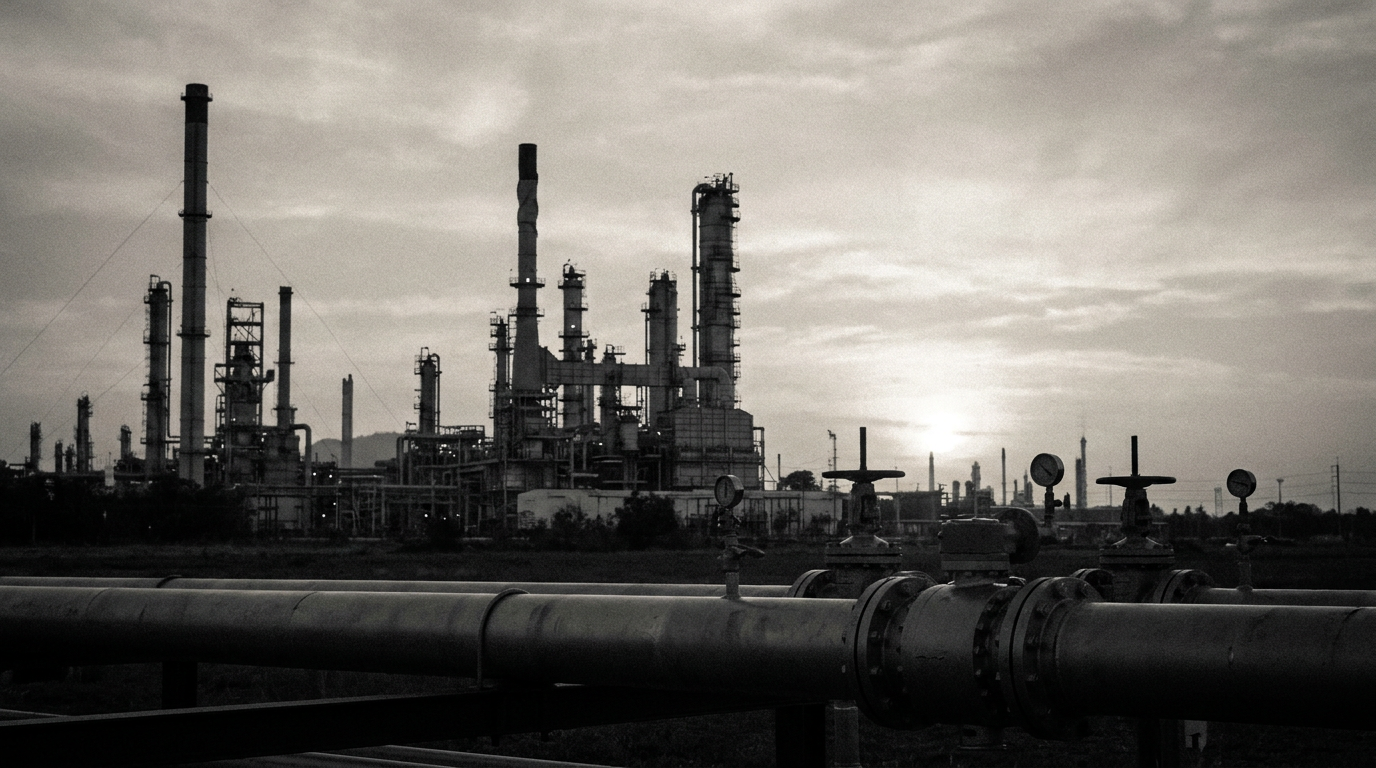
India refinery expansion is accelerating as Narendra Modi backs new oil-processing capacity to protect fuel supplies and sustain exports.
Prime Minister Narendra Modi said Saturday that India would keep adding crude-processing plants, even as the US and Europe reduce or limit refinery investment. He made the comments while opening a new refinery in Rajasthan, the country’s first such greenfield facility in 10 years.
Rajasthan plant widens capacity
The new plant in the Thar desert can process 180,000 barrels of crude a day, according to the source material. It also includes 2.4 million tons a year of petrochemical capacity and was built at a cost of $8.3 billion.
Analysts cited in the report said the Rajasthan project is likely to be the only new refinery commissioned globally this year. That gives the facility weight beyond India because new oil-processing investments have become rarer in several mature fuel markets.
Modi framed the decision as a supply-security choice. “No new refinery has come up in the US in the last five decades and capacity in Europe has also been constantly declining,” he said, adding that India would continue to expand processing capacity.
Demand keeps New Delhi building
India’s refinery policy rests on a different demand outlook from much of the West. New Delhi is betting that domestic fuel use, slower electric-vehicle adoption and refined-product exports can support large oil-processing projects for longer than in economies where fuel demand has flattened or fallen.
The Rajasthan plant therefore adds capacity at a moment when the global refining map is shifting. Western closures can tighten product markets during supply shocks, while Asian demand growth gives governments and refiners a stronger case for keeping investment open.
The plant does not solve India’s dependence on imported crude. Its strategic value is different: it gives the country more domestic processing capacity, a wider crude slate and another source of transport fuels and petrochemical feedstocks inside its own borders.
Hormuz risk sharpens fuel planning
Recent tensions involving Iran have increased attention on the Strait of Hormuz, a critical route for oil shipments. The source material said the conflict revived concerns that crude cargoes could face disruption, a risk that matters for an import-dependent economy.
Modi linked refinery investment to resilience during oil-market stress. “It is because of investments in projects like this that India has been able to navigate the biggest oil supply shock in history,” he said, arguing that capacity added over the past decade helped keep the economy supplied.
If Indian fuel demand holds and electric-vehicle adoption remains gradual, the global macro effect would be continued crude pull from Asia and a larger Indian role in refined-product trade. For the Rajasthan refinery, that path supports utilization; for the industry, it favors complex plants able to process varied crude grades.
If crude shipments through Hormuz face disruption, India’s domestic refining base could cushion fuel availability but not remove import exposure. The Rajasthan plant’s ability to handle a broader range of oils would matter more, while the wider sector would place a premium on logistics flexibility and crude sourcing options.
If fuel-demand growth slows faster than expected, the economics change. The macro effect would be softer incremental oil demand, the Rajasthan plant could face pressure on margins or utilization, and other refiners may become more cautious about committing billions of dollars to new capacity.
The key uncertainties are fuel consumption growth, electric-vehicle adoption, export margins and crude-shipping risk. India’s policy direction is clear from Modi’s remarks: refining capacity is being treated as part of national energy security, not only as a commercial bet.