Hudson report: Taiwan and the 'Hormuz Option' — lessons from Middle East and Ukraine
A Hudson Institute report published May 12, 2026 examines whether Taiwan could draw strategic lessons from conflicts in the Middle East and Ukraine, focusing…
Sophie McAlister ·
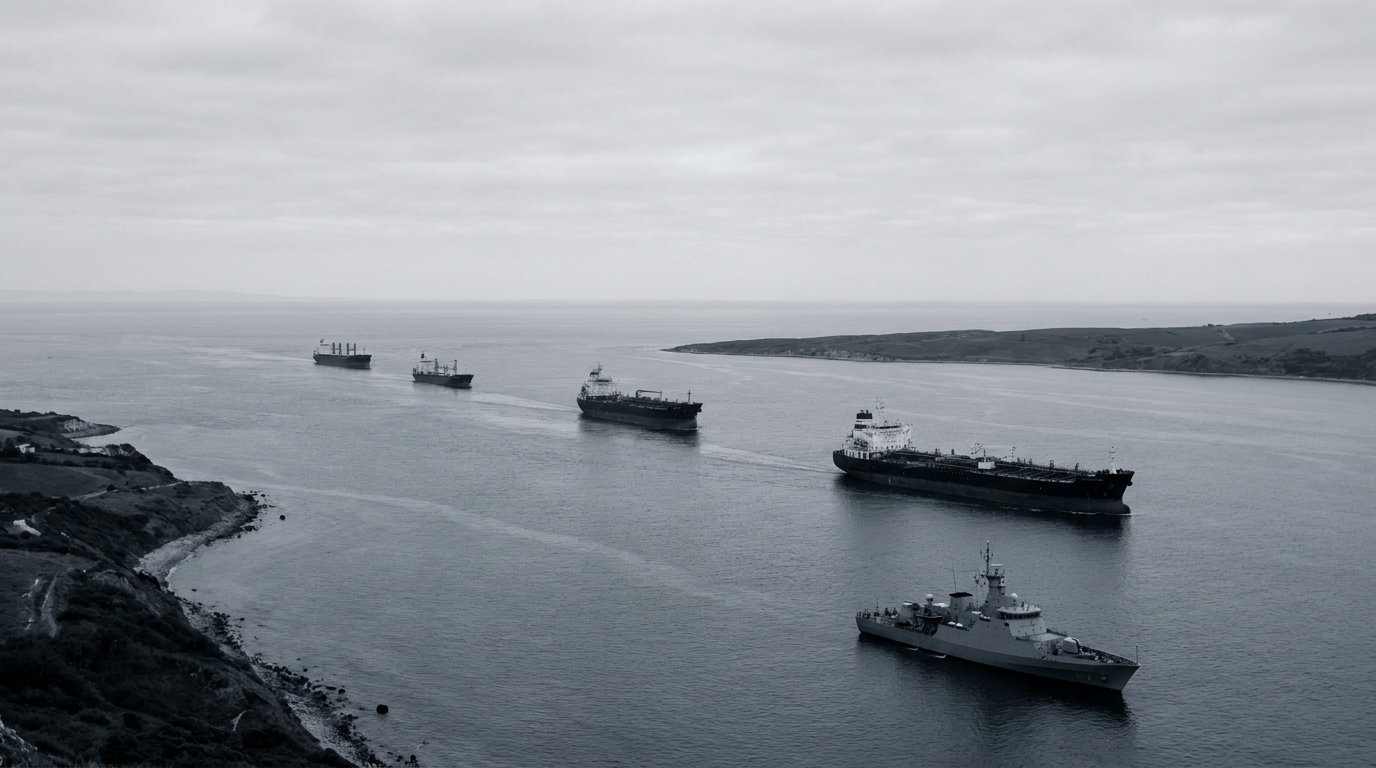
The Hudson Institute published a report on May 12, 2026 that examines how Taiwan might learn from recent conflicts in the Middle East and Ukraine, including the concept labeled the "Hormuz Option." The paper, produced by a Washington think tank, frames the discussion as strategic analysis for U.S. and Taiwanese policymakers rather than as a prescription for immediate action.
The report places the debate in the context of modern maritime and hybrid warfare, exploring how disruption of sea lines — and the political and economic ripple effects that follow — have figured in regional conflicts. It maps parallels between tactics used in the Middle East and the forms of asymmetric resistance and disruption observed during the Ukraine war, and asks what those patterns might imply for Taiwan’s defense planning and crisis signaling.
How the report frames the 'Hormuz Option'
Authors use the shorthand "Hormuz Option" to describe strategic approaches that leverage maritime chokepoints and commercial flows to impose costs or create deterrent leverage. The paper treats the term analytically, reviewing historical examples of how state and nonstate actors have used maritime disruption as a tool during crises and conflict. The analysis emphasizes trade, logistics, and legal considerations rather than operational prescriptions.
The Hudson report underscores the complex interdependence of global trade, insurance, and naval presence, noting that attempts to weaponize commerce or chokepoints can produce cascading economic and diplomatic effects. It highlights that any discussion of maritime disruption carries significant risks for neutral states, commercial actors, and international institutions that manage sea-borne trade.
Policy audience and Washington relevance
The paper is explicitly positioned for a policy audience in Washington, D.C., where think-tank research shapes debate among congressional staff, Defense and State Department officials, and analysts focused on Indo-Pacific security. Hudson’s analysis is likely intended to inform discussion on contingency planning, alliance coordination, and the limits of asymmetric options in a densely interconnected maritime environment.
Rather than advocating a single course, the report sets out trade-offs and questions for policymakers: how would threats to maritime commerce affect allies and neutral partners; what legal and escalation dynamics would follow; and how would the United States calibrate deterrence and assurance to minimize unintended spillovers?
The report also signals that planners should weigh preparedness beyond conventional force posture — including diplomatic, economic, and international legal strategies — when considering scenarios that involve maritime disruption as part of a broader campaign.
Hudson Institute, based in Washington, published the analysis on May 12, 2026. The report contributes to ongoing policy discussions in the capital about Taiwan’s defense options, alliance coordination, and the balance between deterrence and escalation management.
Looking ahead, policymakers in Washington and Taipei will likely use the report as a prompt for further study and debate rather than as an immediate roadmap.